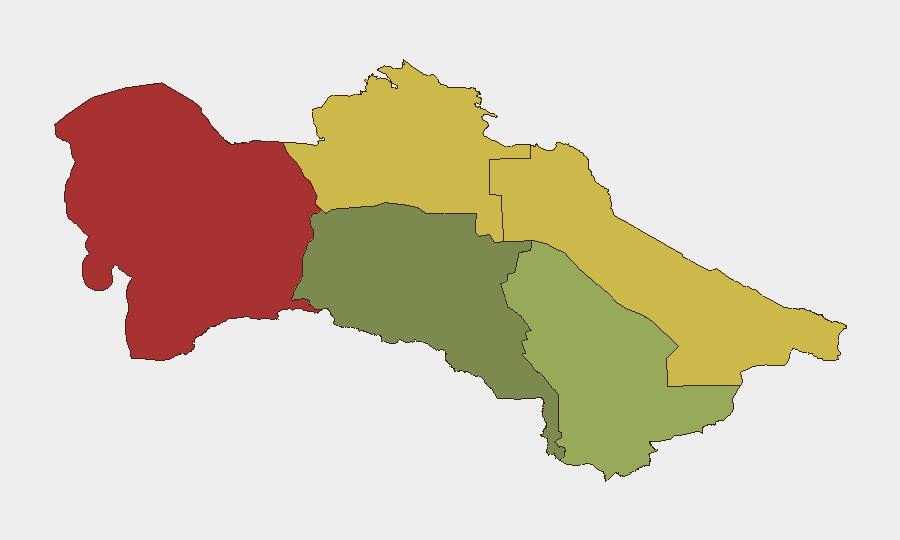
Situation Summary
Turkmenistan remains in a baseline state of authoritarian governance with systematic information controls and restricted civil freedoms, but no acute security incidents or civil unrest have surfaced in accessible reporting during the past 24–48 hours. Routine diplomatic and economic activity continues, with no indicators of imminent conflict, infrastructure disruption, or travel-risk escalation. The overall threat environment is stable but opaque; risk is concentrated in border and peripheral regions rather than the capital.
Key Developments
- Ashgabat – 20 July 2026 – Bilateral diplomatic engagement (routine):
Foreign Minister Rashid Meredov held a standard telephone conversation with Russian Foreign Minister Sergey Lavrov focused on bilateral cooperation; no security incidents, unrest, or conflict issues were referenced in official readouts.
- Ashgabat – mid-July 2026 – UN coordination meeting (administrative):
Turkmenistan's Foreign Ministry received the new UN Resident Coordinator, with discussions centered on development and humanitarian cooperation; no internal security crisis or civil instability was indicated.
- Mary velayat – mid-July 2026 – Energy sector activity (normal operations):
State media reported commercial-scale gas production from a new well, signaling uninterrupted hydrocarbon operations and absence of infrastructure sabotage or security-related disruption.
*No discrete security incidents, civil unrest, crime events, or travel-risk escalations were independently verified in open sources for the 24–48 hour window.*
Highest-Risk Areas
Balkan Region (risk 78) and Lebap Region (risk 68) emerge as the highest-threat sub-national zones, followed by Dashoguz Region (62), likely reflecting proximity to volatile Central Asian borders, limited state-security presence, and historical trafficking and militant activity corridors. Mary Region (42) and Ahal Region (35) carry moderate baseline risk. Ashgabat City (18) remains the lowest-risk area, reflecting central-government control and security-service density. Corporate and NGO personnel should anticipate that movement and incident reporting in peripheral velayats will face greater opacity and slower emergency-response capacity than the capital.
How GeoBit Would Assist
Security teams operating in or supporting Turkmenistan should deploy AOI Monitoring & Early Warning on Balkan and Lebap regions to detect any emergence of trafficking, militant activity, or border incidents with persistent alerting. Intel Sweep (global event feeds, multi-language OSINT, X/Twitter and Telegram monitoring) combined with OSINT fusion & corroboration would surface any credible security events that circumvent Turkmenistan's state-media blackout. Routing & Network Analysis can identify safer transit corridors and alternative logistics networks in high-risk velayats, supporting duty-of-care planning for personnel movement.
7-Day Outlook
No imminent acute security escalation is signaled in available reporting. Structural risks—information opacity, authoritarian constraints on movement, and peripheral-region instability—remain the primary concern for corporate and humanitarian operators rather than any newly emergent event-based threat. Monitoring should focus on border dynamics (particularly Balkan and Lebap) and any disruption to energy infrastructure, given Turkmenistan's export-dependent economy.
Highest-Risk Areas — Ranked
| # | State / Region | Risk |
|---|---|---|
| 1 | Balkan Region | 78 |
| 2 | Lebap Region | 68 |
| 3 | Dashoguz Region | 62 |
| 4 | Mary Region | 42 |
| 5 | Ahal Region | 35 |
| 6 | Ashgabat City | 18 |
Sources
Previous Daily Briefs
A new Turkmenistan brief is written every day — each with its own risk map and downloadable CSV. Here's the last week; use the calendar to go further back.
📅 Browse every day by calendar →
Highlighted days have a brief. Tap a day for that day's map & analysis, or “csv” for that day's dataset ($5).
Atlas — our AI intelligence desk — emails them this snapshot personally. Nothing else, no list.