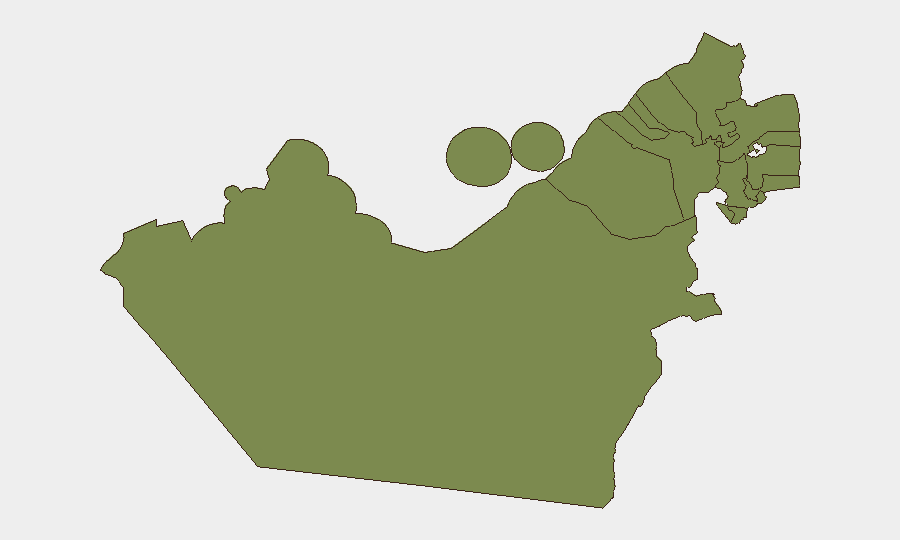
Situation Summary
The United Arab Emirates remains at moderate overall risk (global rank #86, composite score 12) with a stable domestic security posture but elevated regional tensions. Over the last 24–48 hours, no major physical security incidents or civil disruptions have been reported inside UAE territory; however, Iran-related military activity in the wider Gulf—including attacks on regional shipping and continued missile/drone operations—sustains an elevated indirect risk environment. UAE leadership has issued strong diplomatic condemnations of Iranian escalation and reaffirmed security coordination with U.S. partners, signaling active threat awareness and containment.
Key Developments
- Strait of Hormuz tanker attack (2026-07-07–08): Abu Dhabi authorities condemned an Iranian attack on the Qatari tanker *Al Rekayyat* while transiting near the Strait of Hormuz, a maritime corridor adjacent to UAE waters. Direct threat to UAE-bound shipping and regional maritime supply chains.
- Regional Iranian military escalation (2026-07-07–08): UAE officials and senior advisers (including presidential adviser Anwar Gargash) publicly condemned renewed Iranian missile and drone attacks across the wider Gulf region, including strikes reported near Bahrain and Kuwait. Reflects heightened concern about regional conflict spillover.
- UAE–U.S. security reaffirmation (2026-07-07–08): U.S. Senator Marco Rubio publicly thanked the UAE for security "support and leadership" and reaffirmed Washington's commitment to Emirati defense, underscoring active bilateral coordination in response to regional threats.
- UAE financial-sector cyber defense (2026-07-03, background context): The UAE Cybersecurity Council reported successfully thwarting sophisticated AI-enhanced cyberattacks targeting financial organizations. While outside the strict 24–48-hour window, no new breaches have been publicly reported in the most recent period, indicating maintained vigilance.
- No domestic incidents (as of 2026-07-08): Latest available Dubai/UAE situational summaries report no major civil unrest, large-scale crime spikes, or infrastructure disruptions in the past 24-hour cycle, consistent with routine operational stability in main urban centers.
Highest-Risk Areas
Dubai (risk 31.8) and Abu Dhabi Emirate (risk 29.7) together account for the vast majority of tracked threat activity, driven by concentration of financial infrastructure, international shipping, aviation hubs, and diplomatic presence. Both emirates remain the geographic focus of Iran-related regional tensions and cyber-targeting. The remaining emirates (Sharjah, Ajman, Ras al-Khaimah, Fujairah, Umm al-Quwain) report minimal risk (1.8 each), reflecting lower asset density and lower geopolitical exposure. The risk gradient reflects asset concentration and regional salience rather than a pattern of localized instability.
How GeoBit Would Assist
Security and duty-of-care teams operating in the UAE should use Intel Sweep and global event feeds with persistent AOI Monitoring & Early Warning configured for Dubai and Abu Dhabi to detect emerging physical, cyber, or maritime incidents in real time. Maritime & Aviation tracking combined with Routing & Network Analysis would enable alternative supply-chain and personnel-movement planning in response to Strait of Hormuz shipping disruptions. Cyber threat monitoring through Network & Actor Analysis and sector-specific threat feeds would provide early signal of financial-sector targeting, allowing defensive posture adjustment ahead of attempted intrusions.
7-Day Outlook
Regional Iran-UAE tensions are expected to remain elevated through the near term, with continued diplomatic messaging and potential further military posturing in the Gulf. Domestic security inside UAE territory is forecast to remain stable, with no indicators of civil escalation. Security teams should maintain heightened monitoring of maritime corridors affecting UAE ports and review cyber-defense postures for financial and critical infrastructure assets.
Highest-Risk Areas — Ranked
| # | State / Region | Risk |
|---|---|---|
| 1 | Dubai | 31.8 |
| 2 | Abu Dhabi Emirate | 29.7 |
| 3 | Sharjah Emirate | 1.8 |
| 4 | Ajman Emirate | 1.8 |
| 5 | Ras al-Khaimah | 1.8 |
| 6 | Fujairah Emirate | 1.8 |
| 7 | Umm al-Quwain | 1.8 |
Sources
Previous Daily Briefs
A new United Arab Emirates brief is written every day — each with its own risk map and downloadable CSV. Here's the last week; use the calendar to go further back.
📅 Browse every day by calendar →
Highlighted days have a brief. Tap a day for that day's map & analysis, or “csv” for that day's dataset ($5).
Atlas — our AI intelligence desk — emails them this snapshot personally. Nothing else, no list.