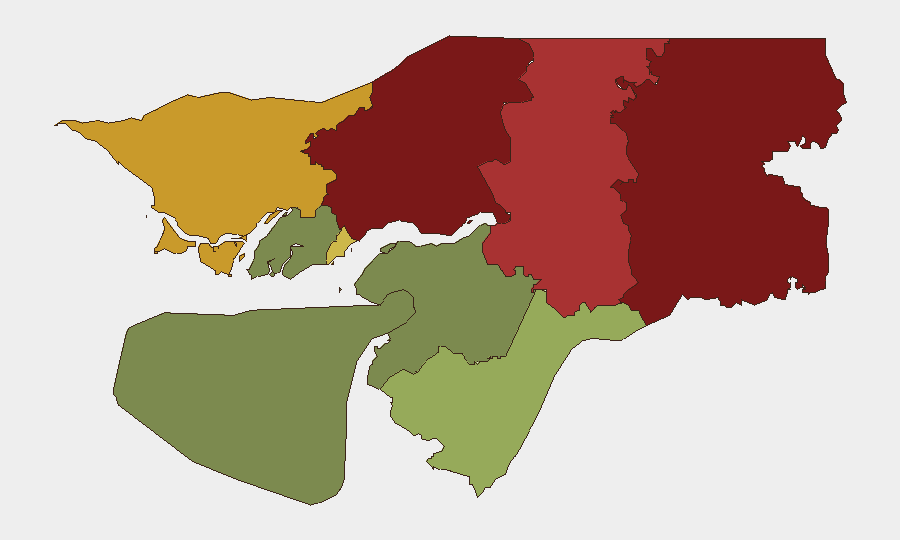
Situation Summary
Guinea-Bissau remains in a low-incident, steady-state security environment with no acute violent events reported in the last 24–48 hours. The primary driver of current risk is political—a constitutional referendum held on 30 August 2026 that would expand presidential powers under military rule—rather than active conflict or crime. Security forces were visibly deployed in Bissau during polling and vote-counting phases but without reported confrontations; voting proceeded peacefully according to electoral authorities. Structural political instability and opposition boycott calls create prospective risk, but the immediate physical security picture in the capital and nationwide remains calm.
Key Developments
- Bissau (capital) – 30–31 August 2026 – Constitutional referendum conducted under heightened security posture. National Guard and police deployed at strategic points, polling stations, and key intersections throughout voting and counting phases. No clashes, obstruction, or mass unrest reported during the referendum day or into vote-counting on 31 August.
- Nationwide polling stations – 30 August 2026 – Referendum voting on presidential-power expansion proceeded without major incidents. Voters cast ballots on constitutional changes that would shift Guinea-Bissau from a parliamentary to a presidential system, granting the head of state power to appoint/dismiss the prime minister and dissolve parliament. Opposition parties called for a boycott, citing restrictions on public freedoms, but no confirmed protests or polling-station disruption documented.
- Bissau – 31 August–1 September 2026 – Vote-counting phase under continued military/police presence. Electoral commission secretary-general Idriça Djaló confirmed voting took place peacefully and without major incident. Provisional results expected from Tuesday onward (1–2 September); heightened political atmosphere but no security incidents verified.
- Nationwide – Late August 2026 – Political opposition and civil-society groups express concern over constitutional change and governance concentration. Analysts report elevated prospective risk of political instability and human-rights concerns tied to the proposed shift to a stronger presidency, but no new targeted political violence, arrests, or detention of opposition figures documented in the last 24–48 hours.
Highest-Risk Areas
Gabu, Oio, and Bafatá regions in the north and northeast carry the highest composite risk scores (92, 85, and 78 respectively), driven by chronic weak state presence, cross-border trafficking networks, and historical patterns of intercommunal tension. Cacheu Region (score 72) and Bissau Autonomous Sector (score 68) also warrant elevated monitoring; Bissau currently faces the most acute political risk due to the referendum and security-force concentration, while Cacheu borders Senegal and remains a trafficking corridor. Southern regions (Tombali, Quinara, Bolama) show substantially lower risk, reflecting better state capacity and lower criminal activity.
How GeoBit Would Assist
A corporate security team with personnel or operations in Guinea-Bissau should deploy AOI Monitoring & Early Warning capabilities on Bissau government buildings and opposition-affiliated venues to detect rapid shifts in security posture or unrest around referendum results. Intel Sweep and multi-language OSINT fusion of local media, Telegram, and radio SIGINT would provide real-time pulse on political sentiment and any emerging protest or roadblock activity, particularly in Gabu and Oio regions. Conflict & Regime-Stability search and prediction capabilities help assess the likelihood of post-referendum unrest or military assertiveness.
7-Day Outlook
Results publication (expected 1–2 September) will be a critical inflection point; opposition reaction and any government response will signal the trajectory of political tension through early September. If results proceed without major unrest, the security environment will likely stabilize into a "new normal" of heightened political control rather than acute violence. Monitoring of border areas (Gabu, Cacheu) for trafficking and intercommunal incidents should continue as a baseline, independent of the referendum cycle.
Highest-Risk Areas — Ranked
| # | State / Region | Risk |
|---|---|---|
| 1 | Gabu Region | 92 |
| 2 | Oio Region | 85 |
| 3 | Bafatá Region | 78 |
| 4 | Cacheu Region | 72 |
| 5 | Bissau Autonomous Sector | 68 |
| 6 | Tombali Region | 45 |
| 7 | Quinara Region | 38 |
| 8 | Biombo Region | 32 |
| 9 | Bolama Region | 15 |
Sources
Previous Daily Briefs
A new Guinea-Bissau brief is written every day — each with its own risk map and downloadable CSV. Here's the last week; use the calendar to go further back.
- August 30, 2026
- August 28, 2026
- August 26, 2026
- August 24, 2026
- August 22, 2026
- August 20, 2026
- August 17, 2026
📅 Browse every day by calendar →
Highlighted days have a brief. Tap a day for that day's map & analysis, or “csv” for that day's dataset ($5).
Atlas — our AI intelligence desk — emails them this snapshot personally. Nothing else, no list.