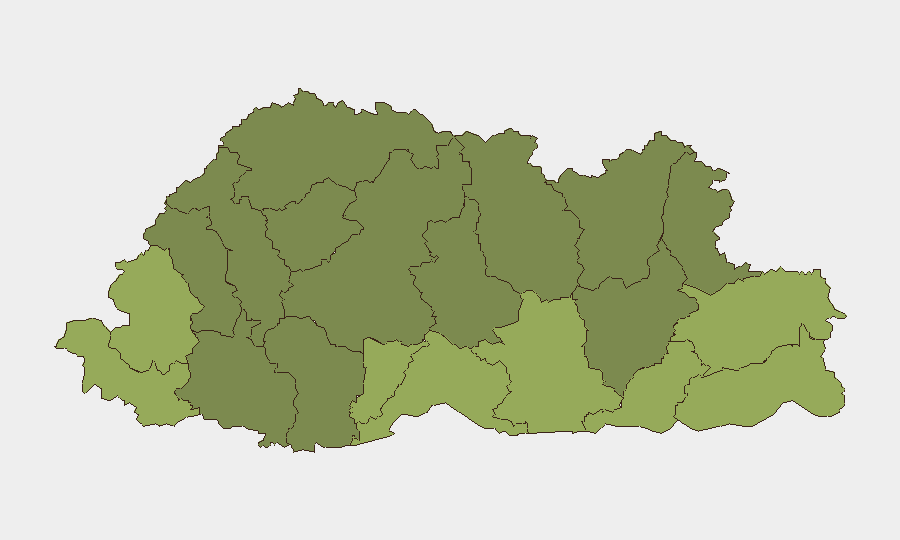
Situation Summary
Bhutan remains one of the world's lowest-threat environments, with a composite threat score of 3 and no confirmed security incidents in the past 24–48 hours. The country's overall stability profile is strong, and no discrete events have been flagged in recent operational windows. Corporate and duty-of-care teams with personnel or assets in-country face minimal acute security risk at present.
Key Developments
No confirmed security, crime, civil unrest, terrorism, or infrastructure incidents were reported in Bhutan during the 24–48 hour window ending 21 August 2026. Web research and threat feeds identified no new discrete events meeting the current reporting threshold. A government Bitcoin transfer was noted on 18 August but does not constitute a security or travel-risk incident. An upcoming connectivity event at the Royal Institute of Management (Thimphu, 23–28 August) is a scheduled corporate activity, not an incident. Background: Bhutan's king expressed solidarity with Assam flood victims on 15 August; this is regional context rather than a domestic security development.
Highest-Risk Areas
Sub-national risk concentration is located in Bhutan's southern border districts. Samtse, Sarpang, and Haa Districts score highest (58, 55, and 52 respectively), followed by Pemagatshel and Samdrup Jongkhar. Risk drivers in these areas typically relate to cross-border smuggling corridors, informal settlement dynamics, and proximity to India's northeast region (where civil unrest occurs periodically). The central and northern districts (Thimphu, Lhuntse, Gasa) carry substantially lower scores, reflecting more stable governance and reduced transnational exposure. Teams operating in the southern belt should maintain heightened situational awareness; those in the capital and central valleys face lower residual risk.
How GeoBit Would Assist
Intel Sweep & OSINT fusion would monitor Bhutan's political and security narrative across official channels, social platforms, and regional media to detect early shifts in stability or civil order. AOI monitoring with alerting on the high-risk southern districts (Samtse, Sarpang, Haa) would provide persistent watch for cross-border incidents, informal activity, or infrastructure disruption affecting personnel routes or supply chains. Routing & network analysis can optimize travel corridors for teams transiting between Thimphu and southern work sites, avoiding known smuggling zones and high-congestion periods. Regime-stability & border search keeps duty-of-care teams informed of any upstream political or administrative shifts in Bhutan or its neighbors that could degrade security.
7-Day Outlook
No material change in Bhutan's threat posture is anticipated over the next seven days. The country's political environment remains stable, and monsoon season activity has not generated secondary crises. Teams should continue standard baseline security protocols; no escalation or new advisories are warranted at this time.
Highest-Risk Areas — Ranked
| # | State / Region | Risk |
|---|---|---|
| 1 | Samtse District | 58 |
| 2 | Sarpang District | 55 |
| 3 | Haa District | 52 |
| 4 | Pemagatshel District | 50 |
| 5 | Samdrup Jongkhar District | 48 |
| 6 | Tsirang District | 45 |
| 7 | Zhemgang District | 42 |
| 8 | Trashigang District | 40 |
| 9 | Mongar District | 38 |
| 10 | Gasa District | 35 |
| 11 | Lhuntse District | 32 |
| 12 | Wangdue Phodrang District | 30 |
Sources
Previous Daily Briefs
A new Bhutan brief is written every day — each with its own risk map and downloadable CSV. Here's the last week; use the calendar to go further back.
- August 18, 2026
- August 16, 2026
- August 14, 2026
- August 12, 2026
- August 10, 2026
- August 8, 2026
- August 6, 2026
📅 Browse every day by calendar →
Highlighted days have a brief. Tap a day for that day's map & analysis, or “csv” for that day's dataset ($5).
Atlas — our AI intelligence desk — emails them this snapshot personally. Nothing else, no list.