Situation Summary
Bolivia maintains a composite threat ranking of #49 globally (score 45) with 188 tracked events in GeoBit's monitoring window. No confirmed security incidents, civil unrest, armed conflict, or infrastructure disruptions have been reported in open sources over the last 24–48 hours. The security environment remains stable in the short term, though underlying vulnerabilities in Cochabamba and La Paz departments warrant continued monitoring.
Key Developments
- 2026-06-30 · Presidential Infrastructure Event, Tarija Department. President Rodrigo Paz promulgated legislation authorizing USD 118 million in road and highway projects. Event proceeded without reported disruption, protest, or security incident; framed as a development initiative by official channels.
- No confirmed civil unrest, armed clashes, or major crime incidents have been reported in Bolivia during the 24–48 hour window ending 2026-06-30. Multi-source verification across international newswires, regional outlets, and verified social platforms yielded no qualifying security events.
- Open-source intelligence coverage for Bolivia remains consistent with regional patterns. Verification constraints similar to those documented in neighboring-country briefs apply; local Bolivian police bulletins, Interior Ministry notices, and departmental transport authorities should be cross-referenced for sub-national incidents not indexed in international open sources.
Highest-Risk Areas
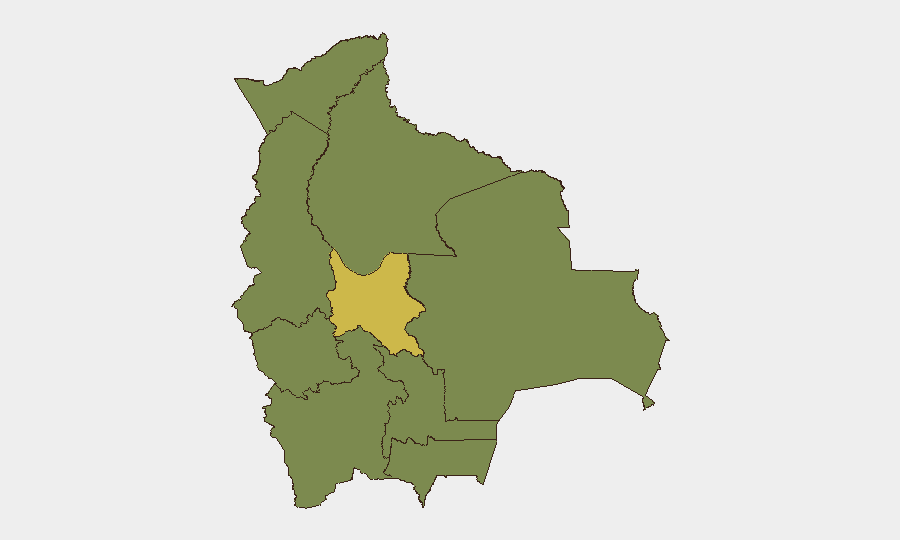
Cochabamba (risk 61.4) is the single dominant driver of Bolivia's overall threat score, representing more than 50% of assessed risk. La Paz (39.8) ranks second and reflects ongoing political sensitivity and dense urban-crime pressure in the capital region. The remaining seven departments cluster at 31.4, indicating diffuse baseline risk without sharp concentration. Cochabamba's elevated score reflects historical patterns of labor unrest, transport disruptions, and localized armed-group activity; security teams with personnel or supply chains in that department should maintain heightened situational awareness and contingency planning.
How GeoBit Would Assist
Security teams operating in Bolivia should deploy AOI (Area-of-Interest) Monitoring & Early Warning on Cochabamba, La Paz, and border regions in Pando and Beni to trigger alerts on protest activity, roadblocks, or armed incidents before they disrupt operations. OSINT fusion (multi-language social, radio SIGINT, Telegram/X intelligence) would surface emerging tensions and actor positioning in real time. Routing & Network Analysis capabilities enable alternative journey planning around known high-risk corridors and can flag transport disruptions before they cascade into supply-chain impacts.
7-Day Outlook
No near-term catalysts for major escalation are evident in the current 24–48 hour window. Cochabamba remains the persistent risk focal point; any labor action, coca-sector unrest, or political mobilization in that region should be treated as a leading indicator of broader instability. Standard vigilance protocols and local-source monitoring should continue.
Highest-Risk Areas — Ranked
| # | State / Region | Risk |
|---|---|---|
| 1 | Cochabamba | 61.4 |
| 2 | La Paz | 39.8 |
| 3 | Potosí | 31.4 |
| 4 | Tarija | 31.4 |
| 5 | Pando | 31.4 |
| 6 | Beni | 31.4 |
| 7 | Oruro | 31.4 |
| 8 | Chuquisaca | 31.4 |
| 9 | Santa Cruz | 31.4 |
Sources
Previous Daily Briefs
A new Bolivia brief is written every day — each with its own risk map and downloadable CSV. Here's the last week; use the calendar to go further back.
📅 Browse every day by calendar →
Highlighted days have a brief. Tap a day for that day's map & analysis, or “csv” for that day's dataset ($5).