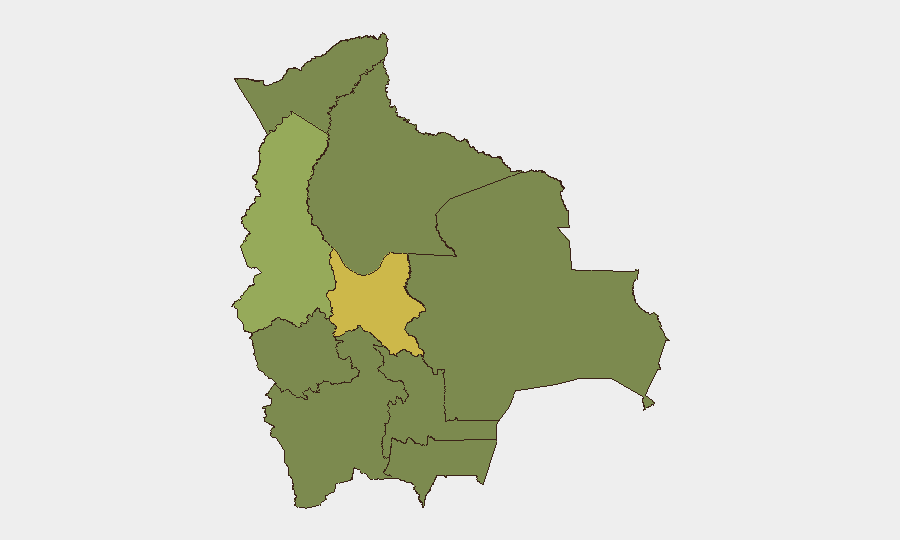
Situation Summary
Bolivia remains under a national state of emergency following weeks of anti-government protests over economic reforms and fuel-price increases. As of 30 June 2026, security forces have begun dismantling roadblocks in key areas, but demonstrations persist across multiple departments—particularly in Cochabamba and La Paz—with organizers signaling intent to maintain or re-establish blockades on major highways. The overall threat environment remains elevated, driven by decentralized protest activity rather than armed conflict, but the unpredictability of labor-union and community-led action is creating operational friction for commerce and transit.
Key Developments
- La Paz city & El Alto corridor (29–30 June, overnight): Security forces conducted overnight operations removing protest barricades on access routes; riot police deployed tear gas against groups attempting to re-establish blockades. Social media video evidence geolocated multiple clashes in central La Paz and the El Alto–La Paz corridor.
- El Alto neighborhoods (30 June, evening): Neighborhood assemblies and union committees announced plans for renewed mobilizations, including night-time vigils and intermittent secondary-road blockades; reports of burning tires and improvised barricades in at least two barrios.
- Chapare region, Cochabamba (30 June): Pro-Evo Morales cocalero groups maintained blockades on highways 4 and 24 near Villa Tunari, threatened expansion of blockades if security operations intensified, and reportedly checked vehicles for food and fuel.
- Central Cochabamba city (30 June, afternoon): Teachers' and public-sector unions held a protest march against subsidy cuts and the state of emergency; march briefly blocked traffic before dispersing peacefully with visible police presence but no intervention.
- Santa Cruz de la Sierra (30 June): Business and civic groups issued statements warning of renewed strike action and road closures if fuel reforms are not reversed; union assemblies and intermittent stoppages reported in the industrial zone, no large-scale police confrontation.
- National highways (30 June): Multiple major routes remain subject to sudden, short-notice blockages by small protest groups, particularly in La Paz, Cochabamba, and Santa Cruz departments; bus services operating under conditional guarantees due to unpredictable closures.
- La Paz and El Alto (29–30 June, overnight): Rights organizations and journalists reported cases of 8-hour detentions of protesters and community leaders under emergency powers, with concerns raised regarding arbitrary arrests and use of force.
Highest-Risk Areas
Cochabamba (risk 62.1) ranks as Bolivia's highest-risk department, driven by sustained cocalero blockades in the Chapare region and ongoing labor-union protest activity in the capital. La Paz department (50.9) follows due to concentrated demonstrator activity in the city and adjoining El Alto, where security operations and attempted re-establishment of barricades create recurring friction points. The remaining departments (Potosí, Tarija, Pando, Beni, Oruro, Chuquisaca, Santa Cruz) cluster at 32.1, reflecting lower-intensity but geographically distributed protest activity and economic disruption across the country.
How GeoBit Would Assist
Organizations with personnel or supply chains in Bolivia should employ AOI Monitoring & Early Warning to track active blockade locations and protest assembly announcements in real time across La Paz, Cochabamba, and Santa Cruz. Routing & Network Analysis capabilities enable identification of alternative routes around active closures and prediction of secondary-road vulnerability. OSINT fusion of social media (X, local radio, community posts) and sentiment & temporal analysis of union and neighborhood committee messaging support 12–48-hour anticipation of new mobilizations.
7-Day Outlook
The immediate risk of renewed barricade construction and flash protests remains elevated, particularly in El Alto, Chapare, and Cochabamba, as organizers explicitly plan night-time vigils and conditional roadblock expansion. If security operations intensify or fuel-price reforms remain unchanged, labor and cocalero groups are likely to sustain blockades; conversely, policy concessions or de-escalation gestures could reduce short-term protest tempo. Supply-chain and personnel-movement disruptions should be anticipated as intermittent and unpredictable over the coming week.
Highest-Risk Areas — Ranked
| # | State / Region | Risk |
|---|---|---|
| 1 | Cochabamba | 62.1 |
| 2 | La Paz | 50.9 |
| 3 | Potosí | 32.1 |
| 4 | Tarija | 32.1 |
| 5 | Pando | 32.1 |
| 6 | Beni | 32.1 |
| 7 | Oruro | 32.1 |
| 8 | Chuquisaca | 32.1 |
| 9 | Santa Cruz | 32.1 |
Sources
Previous Daily Briefs
A new Bolivia brief is written every day — each with its own risk map and downloadable CSV. Here's the last week; use the calendar to go further back.
📅 Browse every day by calendar →
Highlighted days have a brief. Tap a day for that day's map & analysis, or “csv” for that day's dataset ($5).