Situation Summary
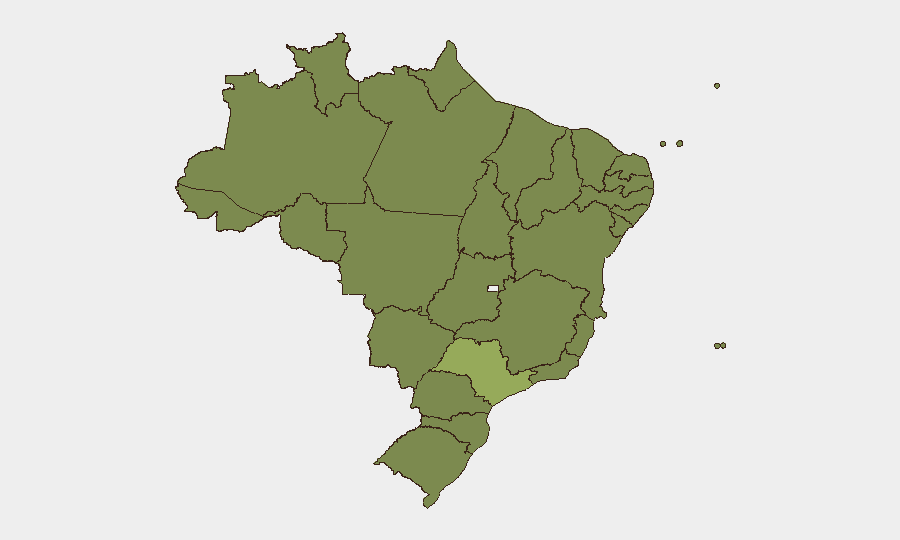
Brazil's composite threat score of 34 places it at #45 globally, with 843 tracked events as of August 3, 2026. São Paulo dominates risk metrics (53.6), driven by organized crime, labor disputes, and airport security incidents; Rio de Janeiro and Rio Grande do Sul remain elevated but secondary concerns. The political calendar—marked by President Lula's formal re-election bid launch on August 3 amid international diplomatic friction—is introducing electoral-period volatility, though no major security incidents have crystallized in the last 48 hours beyond operational and occupational accidents.
Key Developments
- São Paulo International Airport (Guarulhos, Terminal 3) – July 31, afternoon: Federal Police engaged suspected drug traffickers attempting to breach the airport perimeter fence to move narcotics into the terminal. The gunfight caused passenger panic and temporary operational disruption at Brazil's largest airport, underscoring persistent organized-crime pressure on critical infrastructure in São Paulo state.
- Rio de Janeiro – concert infrastructure incident, August 2: A construction worker died from injuries sustained during stage preparation for a public concert event. While classified as an occupational accident, the incident highlights temporary safety risks and emergency-services presence in venue areas during large public events.
- Brasília – political sphere, August 3: President Lula formally launched his re-election bid amid heightened international tensions (rejections/diplomatic friction with China, France, and the United States noted on August 3) and concerns about foreign interference. While no direct violent incident has been reported, electoral campaigns in Brazil historically correlate with localized protest and demonstration risk in major urban centers.
- Labor/workplace tensions – São Paulo, August 2: Worker-versus-company conventional force incident reported, consistent with São Paulo's elevated labor-dispute profile and broader industrial security environment.
- Government-to-population threat signal – August 1: A government entity issued a threat statement directed at Brazilians, suggesting internal political or policy tensions; context and scope remain under analysis.
- Police operations – August 1: Police conducted arrest/detention and conventional-force operations, likely related to ongoing organized-crime or protest-suppression activity in high-risk states.
Highest-Risk Areas
São Paulo's risk score of 53.6 is more than 1.8× that of Rio de Janeiro (28.9), reflecting a concentrated nexus of drug trafficking, port crime, labor unrest, and airport/logistics vulnerability. Rio de Janeiro, Rio Grande do Sul, and Pernambuco form a secondary tier (27–29), each with distinct organized-crime and state-police interaction patterns. Northern and central-west states (Pará, Amazonas, Goiás, Roraima) exhibit persistent scores (23.6–24.7) linked to illegal mining, indigenous-land incursions, and environmental crime. Risk distribution suggests São Paulo is the primary concern for corporate operations; secondary focus should address Rio's volatile police-gang dynamics and the northern tier's remote-area criminal networks.
How GeoBit Would Assist
GeoBit's Intel Sweep and multi-language OSINT fusion enable continuous monitoring of crime, labor, and political signals across Brazil's 27 jurisdictions, with temporal and sentiment analysis to distinguish background noise from emerging threats. AOI Monitoring with alerting on São Paulo's airport, port facilities, and major manufacturing zones would provide early warning of trafficking, labor action, or security incidents. Conflict & Military mapping, combined with Network & Actor Analysis, tracks organized-crime group movements and state-police force posture in high-risk states, supporting route-planning and asset-protection decisions for personnel and supply chains.
7-Day Outlook
Electoral campaign activity will likely drive demonstration and protest risk in Brasília, São Paulo, and Rio through early September; organized-crime operational tempo in São Paulo and Rio is expected to remain elevated as trafficking networks adjust to airport-security enforcement. No major escalation in civil unrest is currently forecast, but labor tensions and police operations will persist as background risk drivers.
Highest-Risk Areas — Ranked
| # | State / Region | Risk |
|---|---|---|
| 1 | São Paulo | 53.6 |
| 2 | Rio de Janeiro | 28.9 |
| 3 | Rio Grande do Sul | 27.4 |
| 4 | Pernambuco | 27 |
| 5 | Bahia | 25.1 |
| 6 | Minas Gerais | 24.9 |
| 7 | Goiás | 24.7 |
| 8 | Pará | 24 |
| 9 | Paraná | 23.8 |
| 10 | Amazonas | 23.8 |
| 11 | Santa Catarina | 23.6 |
| 12 | Roraima | 23.6 |
Sources
Previous Daily Briefs
A new Brazil brief is written every day — each with its own risk map and downloadable CSV. Here's the last week; use the calendar to go further back.
📅 Browse every day by calendar →
Highlighted days have a brief. Tap a day for that day's map & analysis, or “csv” for that day's dataset ($5).
Atlas — our AI intelligence desk — emails them this snapshot personally. Nothing else, no list.