Situation Summary
Cuba faces a convergence of systemic crises—prolonged blackouts, currency collapse, and economic scarcity—triggering a wave of protests and heightened state repression across multiple provinces over the past week. Security presence has intensified markedly in Havana and provincial cities, with documented use of special forces, surveillance drones, and force to disperse gatherings. The combination of infrastructure failure, spontaneous public anger, and security lockdown creates elevated risk for both residents and corporate personnel, particularly in Havana, with secondary risk concentrated in eastern provinces experiencing acute shortages and protest activity.
Key Developments
- Havana, Vedado (Línea Street) – 22 Jul: Heavy security patrols and absence of street crowds reported following days of visible tension; residents describe fear and enhanced police control in this historically active corridor.
- Havana (multiple neighborhoods) – 22–23 Jul, nighttime: Ongoing deployments of special forces ("boinas negras") and police patrols, supplemented by drone surveillance, documented across several districts; social-media video evidence shows checkpoints and pre-emptive crowd dispersal over two consecutive nights.
- Antilla, Holguín – 22 Jul evening: Residents gathered at a police station over power cuts and economic hardship; uniformed agents deployed stun/warning detonations to disperse crowds, with rapid arrests documented in circulating footage.
- Guantánamo City, Loma del Chivo neighborhood – continuing since 21 Jul: At least six protesters from a blackout-related demonstration remain forcibly disappeared and incommunicado; Cubalex human-rights NGO reports risk of state-security charges against detainees and heightened activist vulnerability in the area.
- Nationwide infrastructure – 22–23 Jul: Severe and prolonged blackouts (exceeding 24 hours in some neighborhoods) and water disruptions continue across multiple provinces, degrading traffic safety, food distribution, medical access, and fueling spontaneous public gatherings.
- Havana informal currency markets – 22 Jul end-of-day: U.S. dollar and euro rates surged further, deepening currency depreciation and household budget pressure; condition elevates petty crime, robbery, and informal-transaction scam risk for cash-dependent residents and visitors.
- Camagüey – 22 Jul: Two individuals detained during alleged transfer of a chemical substance from Havana; law-enforcement action on a major provincial transport corridor.
- Nationwide cyber-fraud – 22–23 Jul: Expanding WhatsApp and social-media scams targeting fuel-shortage desperation; fraudsters exploit informal energy-supply channels, increasing financial and personal-security risk for those seeking transport fuel through unvetted channels.
Highest-Risk Areas
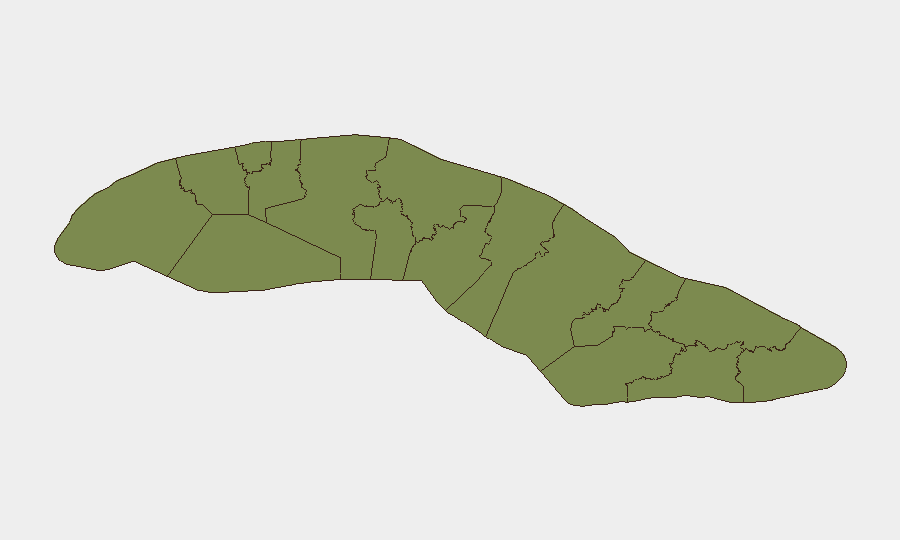
Havana's composite risk score (35.1) dominates the island, driven by protest density, security-force concentration, infrastructure collapse in densely populated areas, and currency-market volatility affecting daily transactions and crime rates. Matanzas, Artemisa, and Camagüey (scores 7.9–6.3) emerge as secondary hotspots, reflecting either economic hardship sparking unrest (Matanzas, Artemisa) or law-enforcement activity on transport corridors (Camagüey). Eastern provinces—Guantánamo, Holguín—show elevated activist detention risk and prolonged power-outage stress, though lower composite scores reflect broader geographic dispersion. All highest-risk areas share a common driver: systemic shortages colliding with state-security response, creating cascading risks in movement, commerce, personal safety, and informal-economy transactions.
How GeoBit Would Assist
Corporate security teams should deploy Intel Sweep and OSINT fusion to track protest locations, security-force movements, and infrastructure outage patterns in real time across Havana and priority provinces. AOI Monitoring & Early Warning on key facilities and neighborhoods (Vedado, port areas, supply routes) with alert thresholds for gatherings, police deployments, and blackout durations would provide advance notice of flash-point risk. Routing & Network Analysis for supply chains and personnel movement would identify secondary routes avoiding high-risk areas and congestion points from failed traffic signals and police checkpoints.
7-Day Outlook
Blackout conditions and economic stress are unlikely to ease in the next week, sustaining protest triggers and security deployments. Risk of further arrests, forced disappearances among activists, and uncontrolled crowd dispersal remains elevated. Expect continued volatility in Havana and eastern provinces, with secondary stress on fuel and food distribution networks affecting travel and access to essential services.
Highest-Risk Areas — Ranked
| # | State / Region | Risk |
|---|---|---|
| 1 | Havana | 35.1 |
| 2 | Matanzas | 7.9 |
| 3 | Artemisa | 7.5 |
| 4 | Camagüey | 6.3 |
| 5 | Villa Clara | 6.1 |
| 6 | Granma | 5.5 |
| 7 | Santiago de Cuba | 5.5 |
| 8 | Pinar del Rio | 5.1 |
| 9 | Mayabeque | 5.1 |
| 10 | Cienfuegos | 5.1 |
| 11 | Isle of Youth | 5.1 |
| 12 | Sancti Spiritus | 5.1 |
Sources
Previous Daily Briefs
A new Cuba brief is written every day — each with its own risk map and downloadable CSV. Here's the last week; use the calendar to go further back.
📅 Browse every day by calendar →
Highlighted days have a brief. Tap a day for that day's map & analysis, or “csv” for that day's dataset ($5).
Atlas — our AI intelligence desk — emails them this snapshot personally. Nothing else, no list.