Situation Summary
Egypt remains a moderate-tier global security concern (rank #21, composite score 67) with 106 tracked threat events. The security environment is dominated by maritime and infrastructure vulnerabilities in high-traffic coastal zones, coupled with persistent interior crime and financial-crime enforcement operations. The confirmed drone strike on LNG tankers at Damietta Port on 29 July represents a material escalation in targeting of critical energy infrastructure, signaling either new adversary capability or intent to disrupt regional supply chains. Overall trajectory remains volatile but contained, with no widespread civil unrest or regime-stability indicators currently evident.
Key Developments
- Damietta Port, Damietta Governorate – 29 Jul 2026
A suspected drone strike hit two LNG tankers (US-owned *Energos Winter* and *Gaslog Salem*) at Damietta's floating LNG terminal during cargo discharge. The attack caused an explosion and fire; vessels were relocated, port operations disrupted, and no casualties reported. Maritime security firm Ambrey and two independent sources attribute the strike to at least one unmanned aerial vehicle; no actor has claimed responsibility as of reporting.
- Cairo, nationwide – 29 Jul 2026 (last 24 hours)
Egypt's Ministry of Interior reported seizure of over EGP 3 million in illegal foreign-currency trading cases across multiple governorates, involving coordinated Public Security and financial-crimes units. Operations targeted black-market FX activity; legal proceedings initiated against suspects.
- Cairo – 29 Jul 2026 (last 24 hours)
Interior Ministry arrested a ride-hailing driver in Cairo following circulation of harassment content on social media, framed as rapid response to online reporting.
- Hurghada, Red Sea Governorate – 29 Jul 2026 (last 24 hours)
Three suspects were arrested in connection with a harassment incident that surfaced on social media, part of the same interior-security enforcement window.
- Nationwide border/desert zones – ongoing context (late July 2026)
Egyptian authorities maintain travel restrictions on Libya and Sudan border regions and remote Sahara areas due to terrorism and regional-conflict spillover risks; status remains in effect with no discrete new attacks reported in restricted zones during the past 48 hours.
Highest-Risk Areas
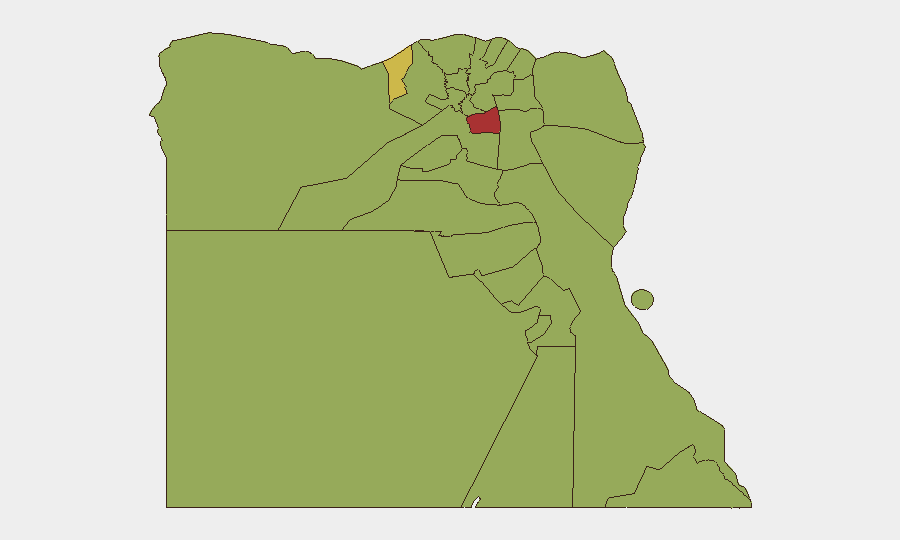
Cairo (76.9) and Alexandria (70) dominate the national risk profile, reflecting their roles as Egypt's largest urban centers, primary economic hubs, and concentration of diplomatic, financial, and tourism infrastructure. Damietta (59.3) and Suez (55) register elevated risk due to their critical maritime and energy positions; the 29 July drone strike on Damietta's LNG terminal validates this classification. North Sinai, South Sinai, and the Red Sea region (all 46.9) remain persistently elevated due to counterterrorism operations, Bedouin militant activity, and maritime security concerns, though they rank below the northern coastal and Delta zones in aggregate threat burden.
How GeoBit Would Assist
Security teams would deploy persistent AOI monitoring and early-warning alerts on Damietta Port, Suez Canal, and other critical maritime infrastructure to detect UAV activity, vessel transits, and attack indicators in real time. Maritime and aviation tracking, combined with OSINT fusion (X/Twitter, maritime security feeds, Ambrey data, and actor networks), would enable rapid attribution of drone strikes and identification of responsible actors. Intel Sweep and sentiment analysis would track interior crime trends, civil unrest, and regime-stability shifts across Cairo and Alexandria, informing duty-of-care assessments for personnel.
7-Day Outlook
The Damietta drone strike suggests either new non-state actor capability or renewed state-level posturing in the Eastern Mediterranean; attribution remains pending. Port operations are expected to resume within 48–72 hours, but maritime insurers and tanker operators will likely increase premiums and security protocols for Egypt-bound LNG traffic. Interior crime enforcement will likely persist; no immediate escalation in civil unrest is forecast, but the combination of energy-infrastructure targeting and financial-crime crackdowns warrants close monitoring for second-order economic or political effects.
Highest-Risk Areas — Ranked
| # | State / Region | Risk |
|---|---|---|
| 1 | Cairo | 76.9 |
| 2 | Alexandria | 70 |
| 3 | Damietta | 59.3 |
| 4 | Suez | 55 |
| 5 | Kafr El Sheikh | 49.3 |
| 6 | Giza | 47.9 |
| 7 | North Sinai | 46.9 |
| 8 | Qena | 46.9 |
| 9 | South Sinai | 46.9 |
| 10 | Red Sea | 46.9 |
| 11 | Halaib Triangle | 46.9 |
| 12 | Matruh | 46.9 |
Sources
Previous Daily Briefs
A new Egypt brief is written every day — each with its own risk map and downloadable CSV. Here's the last week; use the calendar to go further back.
📅 Browse every day by calendar →
Highlighted days have a brief. Tap a day for that day's map & analysis, or “csv” for that day's dataset ($5).
Atlas — our AI intelligence desk — emails them this snapshot personally. Nothing else, no list.