Situation Summary
Germany remains at composite threat level 3 globally (#147), but has experienced a significant spike in security incident activity centered on Berlin following a vehicle-ramming attack during Christopher Street Day Pride celebrations on 25 July. The attacker, identified as a 21-year-old suspect linked to Islamist extremist networks, was neutralized by police on 26 July; however, investigative operations remain active and officials have signaled heightened vigilance against copycat attacks and extremist mobilization. Berlin's risk score (32.3) now dominates the national picture, while secondary concerns around event security and extremist network activity extend cautiously across other high-risk regions.
Key Developments
- Berlin, Tiergarten/Lennéstraße (25 July, ~22:00 local): White minivan/SUV driven into Christopher Street Day Pride gathering; one fatality confirmed, 29 injured (four in intensive care as of 26 July); Pride parade cancelled; authorities classified incident as Islamist terrorist attack.
- Berlin, citywide (25–26 July): Multi-state police mobilization launched to locate suspect Abdul B./Abdul Ballout, 21, described as armed and dangerous; helicopters and specialized units deployed across capital; public alerts issued via social media.
- Berlin, Spandau district allotment complex (26 July, ~18:00 local): Suspect shot and killed by police during armed operation; immediate manhunt concluded; authorities noted two additional persons subject to ongoing police measures.
- Berlin, hospitals and trauma response (26 July): Charité and Fire Service reported four discharged, four remaining in intensive care, none in life-threatening condition; 29 total injured across severity spectrum documented.
- Berlin & nationwide (26–27 July, official response): Interior Minister Alexander Dobrindt and Chancellor Friedrich Merz publicly confirmed Islamist terrorism classification; signaled potential future tightening of event security protocols and intensified extremist-network surveillance measures.
- Berlin, central venues (26–27 July, ongoing): Elevated police presence maintained around Brandenburg Gate, Tiergarten, and LGBTQ+ venues; heightened concern flagged regarding copycat attacks and large-gathering security.
Highest-Risk Areas
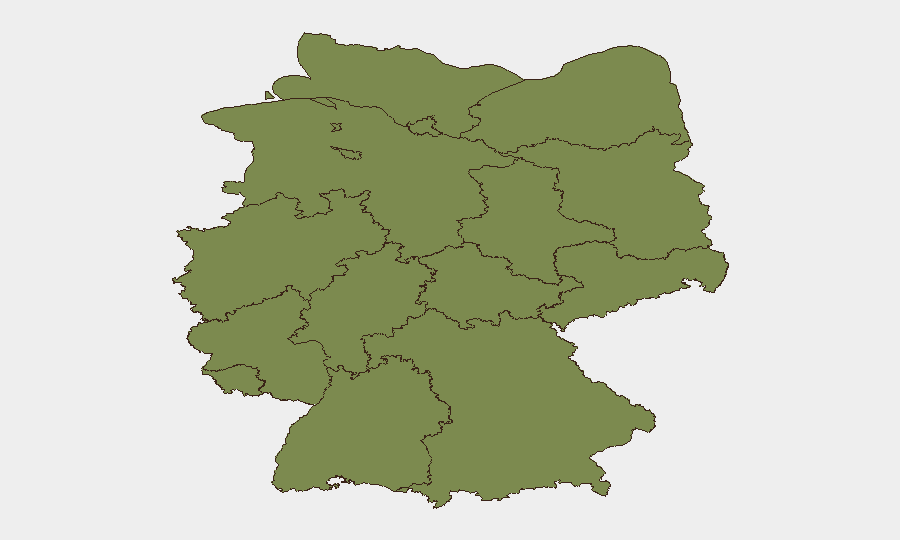
Berlin dominates risk assessment (32.3) due to the Pride attack, ongoing investigative activity, and proximity to critical government and cultural landmarks. Schleswig-Holstein (6.9) and Saxony-Anhalt (6.3) show elevated secondary risk, consistent with longer-standing patterns of extremist organizing and police operations in northern and eastern German states; however, these rankings predate the 25 July spike and do not reflect the current operational focus on Berlin. Lower Saxony, Baden-Württemberg, and Hamburg (4.1–3.3) round the secondary tier; the remainder of the country sits below 3.0 risk per sub-national score.
How GeoBit Would Assist
Security teams operating in Germany should employ Intel Sweep, X/Twitter & Telegram OSINT, and multi-language event-feed monitoring to track extremist rhetoric, mobilization signals, and copycat attack indicators in real time. AOI Monitoring & Early Warning on Berlin's major event venues, transport hubs, and LGBTQ+ community spaces will provide persistent alerting for subsequent gatherings and high-consequence locations. Network & Actor Analysis linked to Islamist circles across the tracked high-risk regions (Berlin, Schleswig-Holstein, Saxony-Anhalt) will help identify emerging threats before operational closure.
7-Day Outlook
Police investigative operations will likely continue at elevated tempo through early August, with formal charges and network-disruption activity expected. Large public gatherings and Pride-related events across Germany face elevated security protocols and potential cancellations or rerouting; corporate and NGO duty-of-care teams should anticipate heightened police presence and possible crowd-management delays at Berlin venues and major cities. Risk trajectory remains elevated in Berlin but is not expected to escalate nationally absent significant new incident or credible threat intelligence.
Highest-Risk Areas — Ranked
| # | State / Region | Risk |
|---|---|---|
| 1 | Berlin | 32.3 |
| 2 | Schleswig-Holstein | 6.9 |
| 3 | Saxony-Anhalt | 6.3 |
| 4 | Lower Saxony | 4.1 |
| 5 | Baden-Württemberg | 3.9 |
| 6 | Hamburg | 3.3 |
| 7 | Bavaria | 3.2 |
| 8 | Saxony | 2.6 |
| 9 | North Rhine-Westphalia | 2.6 |
| 10 | Hesse | 2.6 |
| 11 | Brandenburg | 2.4 |
| 12 | Rhineland-Palatinate | 2.3 |
Sources
Previous Daily Briefs
A new Germany brief is written every day — each with its own risk map and downloadable CSV. Here's the last week; use the calendar to go further back.
📅 Browse every day by calendar →
Highlighted days have a brief. Tap a day for that day's map & analysis, or “csv” for that day's dataset ($5).
Atlas — our AI intelligence desk — emails them this snapshot personally. Nothing else, no list.