Situation Summary
Mauritius remains a low-threat jurisdiction globally (#166 composite ranking) with no verified discrete security incidents in the past 24–48 hours. The country maintains stable governance and security infrastructure, though Port Louis—the capital and primary commercial hub—concentrates substantially higher risk exposure than outlying districts. Current conditions do not indicate acute threats to corporate operations or personnel, but concentration of economic activity and transient populations in urban zones warrants routine monitoring.
Key Developments
No verified security, civil-unrest, crime, or infrastructure incidents were identified in Mauritius during the 24–48 hour window ending 2026-08-10. The most recent dated incident on public record is a 31 July 2026 airport detention case (Nigerian nationals, subsequently released and repatriated to Nairobi), which falls outside the current reporting window and reflects routine immigration/border procedures rather than acute security deterioration.
GeoBit's current event-tracking window shows zero active signals. Ongoing monitoring of airport, port, and financial-sector reporting channels has not surfaced new substantive developments.
Highest-Risk Areas
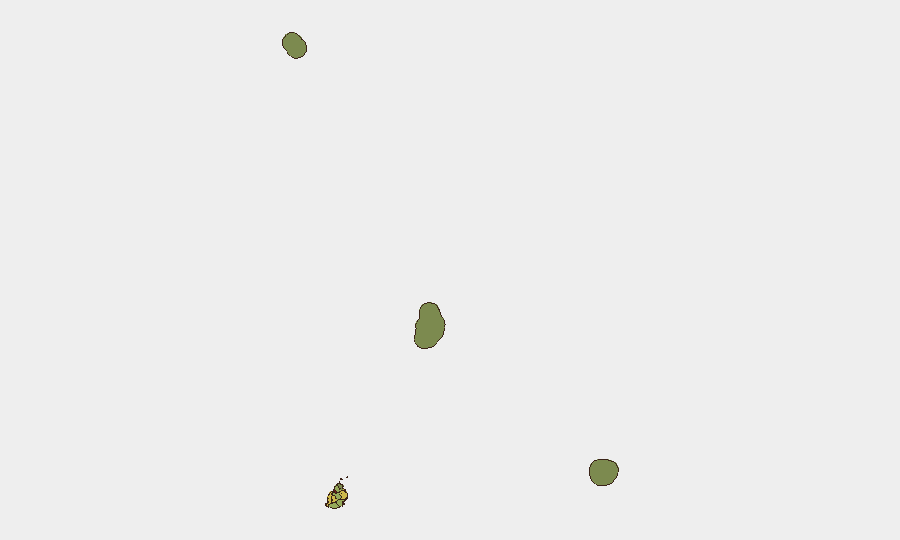
Port Louis (risk score 92) dominates the sub-national threat landscape, driven by its role as the nation's capital, primary port, financial center, and largest population concentration. Risk concentration in the capital typically reflects higher volumes of commercial crime, traffic incidents, and petty theft rather than organized violence or political instability. Secondary elevated-risk districts—Plaines Wilhems (68), Black River (65), and Flacq (62)—warrant monitoring for labor disputes, informal-sector crime, and inter-community tensions, though none currently show acute deterioration. Rodrigues, Saint Brandon, and Agaléga islands present minimal risk profiles, reflecting low population density and limited economic complexity.
How GeoBit Would Assist
Security teams operating in Mauritius should deploy AOI (Area of Interest) Monitoring & Early Warning on Port Louis commercial, port, and financial districts to detect emerging labor actions, supply-chain disruptions, or civil-unrest signals in real time. OSINT fusion across X/Twitter, Telegram, local news feeds, and airport/port event streams would surface incident reports, crime patterns, and sentiment shifts 24–48 hours ahead of official channels. Network & Actor Analysis on criminal and labor-union actors would support threat-specific briefing and personnel routing decisions during high-risk periods.
7-Day Outlook
No acute threat escalation is anticipated over the next seven days. Mauritius' institutional stability, law-enforcement capacity, and low regional terrorism exposure suggest continuity of current conditions. Routine monitoring of Port Louis commercial zones and transport hubs should proceed as standard practice; no emergency posture adjustment is warranted at this time.
Next Update: 2026-08-11 (daily cycle)
Feedback: [GeoBit analyst contact]
Highest-Risk Areas — Ranked
| # | State / Region | Risk |
|---|---|---|
| 1 | Port Louis | 92 |
| 2 | Plaines Wilhems | 68 |
| 3 | Black River | 65 |
| 4 | Flacq | 62 |
| 5 | Grand Port | 58 |
| 6 | Moka | 52 |
| 7 | Savanne | 48 |
| 8 | Pamplemousses | 45 |
| 9 | Rivière du Rempart District | 38 |
| 10 | Rodrigues | 22 |
| 11 | Saint Brandon | 8 |
| 12 | Agaléga | 5 |
Sources
Previous Daily Briefs
A new Mauritius brief is written every day — each with its own risk map and downloadable CSV. Here's the last week; use the calendar to go further back.
📅 Browse every day by calendar →
Highlighted days have a brief. Tap a day for that day's map & analysis, or “csv” for that day's dataset ($5).
Atlas — our AI intelligence desk — emails them this snapshot personally. Nothing else, no list.