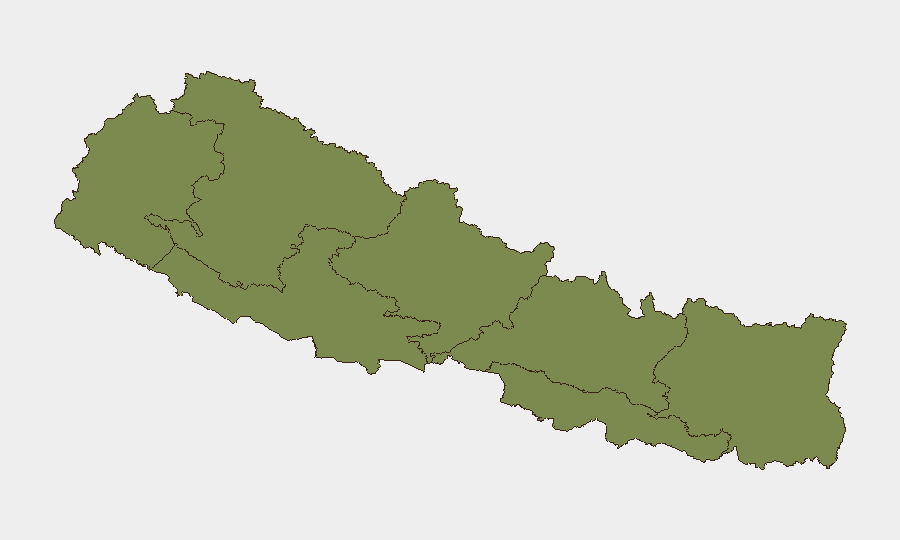
Situation Summary
Nepal remains a moderate-risk environment (global rank #54) with acute volatility concentrated in Kathmandu and Bagamati Province. Youth-led anti-government protests, triggered by the death of a ride-sharing worker on 10 July, have continued into mid-July with demonstrations centered on central administrative areas, while a parallel crisis around squatter evictions and weather-related displacement affects vulnerable communities. Coordinated drug arrests across multiple districts and unexplained deaths in outlying areas add localized crime and public-safety concerns; political maneuvering at the highest levels signals ongoing instability management.
Key Developments
- Kathmandu (Maitighar & central city) – 12–14 July, 2026:
Youth-led anti-government protests demanding PM Balen Shah's resignation have persisted over recent days, centered on Maitighar and other central administrative areas. Demonstrators are linked to anger over the death of 25-year-old Ganesh Nepali and perceived government mishandling of the case.
- Kathmandu (Tripureshwor / Bir Hospital) – 10 July (ongoing impact):
Ganesh Nepali, a ride-sharing worker, died from self-immolation injuries sustained during a confrontation with metropolitan security over a motorcycle wheel clamp at the Department of Passports. His death has become a focal point for youth mobilization and accountability demands.
- Kathmandu (federal & metropolitan level) – 12 July, 2026:
The federal government, Kathmandu Metropolitan City, and Nepali's family signed a nine-point agreement committing to an independent investigation led by a former judge (7-day reporting deadline), financial relief, employment for his spouse, and education support for his daughter. This is a conflict-containment measure aimed at defusing civil-unrest risk.
- Kathmandu (Budhanilkantha) – 12 July, 2026:
Prime Minister Balen Shah and Rastriya Swatantra Party chair Rabi Lamichhane held a four-hour closed-door meeting, signaling high-level political pressure and active maneuvering around the unrest.
- Bhaktapur & Kirtipur (Kathmandu District) – 12 July, 2026:
Heavy rainfall forced the relocation of 89 squatters (31 families) from the flooded Radhaswamy Holding Center in Kirtipur to Kharipati Holding Center in Bhaktapur, underscoring infrastructure fragility and displacement risks affecting politically sensitive communities.
- Multi-district drug operations – 12–13 July, 2026:
Police arrested 20 people on drug charges across Siraha, Jhapa, Jumla, Rupandehi, Morang, Sunsari, Dang, Kapilvastu, Tanahun, and Kathmandu, seizing hashish, heroin, marijuana, and controlled medicines. Coordinated enforcement indicates ongoing localized crime activity.
- Five unexplained deaths – 12–14 July, 2026:
Deaths reported in Jhapa, Jajarkot, Tanahun, Banke, and Kavre districts with limited circumstantial detail. The clustering warrants monitoring for travelers and resident safety.
Highest-Risk Areas
Bagamati Province (risk 31.5) dominates Nepal's threat landscape, driven almost entirely by the political and protest crisis in Kathmandu. The remaining six provinces carry significantly lower composite scores (5.3 to 1.5), indicating that risk is heavily concentrated in the capital and its metropolitan zone. While drug-related arrests and unexplained deaths occur across multiple districts, they have not yet registered as destabilizing factors at the provincial level. Travel and operations in central Kathmandu should reflect heightened civil-unrest protocols; outlying provinces remain lower-risk for security teams unless involved in extractive, infrastructure, or government-contracting work.
How GeoBit Would Assist
Security teams would deploy AOI Monitoring & Early Warning on Kathmandu's central administrative zones (Maitighar, Tripureshwor, Budhanilkantha) to track protest momentum and police responses in near real-time. OSINT fusion (X/Twitter, Telegram, YouTube, local news feeds) combined with sentiment & temporal analysis would identify escalation triggers and de-escalation windows around the 7-day investigation deadline. Intel Sweep and conflict mapping would correlate youth-protest activity with police custody patterns and government statements to anticipate secondary unrest or crackdowns.
7-Day Outlook
The nine-point agreement and investigation deadline (approximately 19 July) present a critical juncture; if the independent committee's findings are perceived as credible and substantive, protest momentum may ease. Conversely, delays, perceived whitewashing, or adverse weather events affecting squatter camps could reignite civil unrest. Political fragmentation between PM Shah and coalition partners (evidenced by the Lamichhane meeting) may complicate a unified response, prolonging uncertainty through late July.
Highest-Risk Areas — Ranked
| # | State / Region | Risk |
|---|---|---|
| 1 | Bagamati Province | 31.5 |
| 2 | Koshi Province | 5.3 |
| 3 | Gandaki Province | 3.3 |
| 4 | Madhesh Province | 3.1 |
| 5 | Lumbini Province | 2.8 |
| 6 | Karnali Province | 1.7 |
| 7 | Sudurpashchim Province | 1.5 |
Sources
Previous Daily Briefs
A new Nepal brief is written every day — each with its own risk map and downloadable CSV. Here's the last week; use the calendar to go further back.
📅 Browse every day by calendar →
Highlighted days have a brief. Tap a day for that day's map & analysis, or “csv” for that day's dataset ($5).
Atlas — our AI intelligence desk — emails them this snapshot personally. Nothing else, no list.