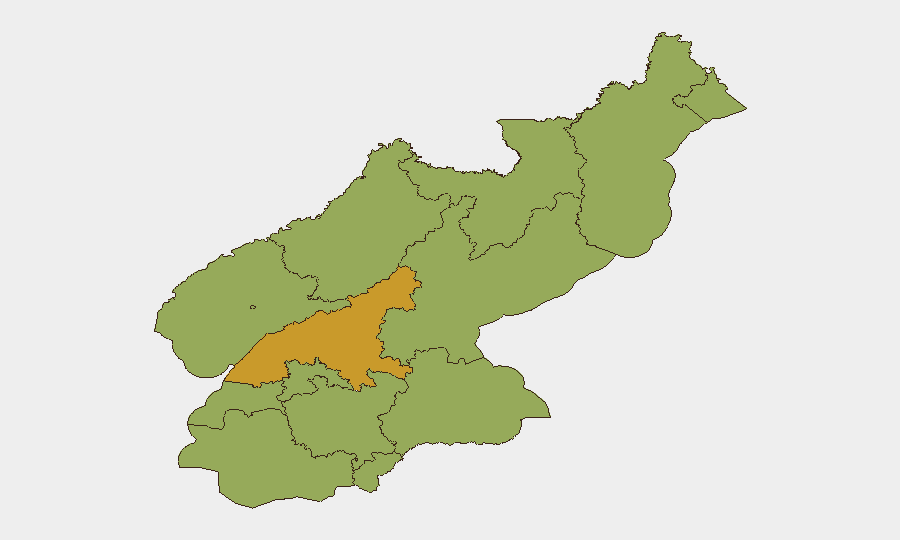
Situation Summary
North Korea remains a high-consequence, low-frequency risk environment with a composite threat score placing it at #37 globally. No new security incidents, military clashes, civil unrest, or acute travel disruptions have been independently confirmed in open sources over the past 24–48 hours. Baseline vigilance is warranted for personnel and assets in-country, particularly in South Pyongan and P'yŏngyang, where sub-national risk scores remain elevated relative to other regions.
Key Developments
- No new security incidents confirmed in the past 24–48 hours across major news wires, regional outlets, or corroborated social media streams. Open-source monitoring does not identify discrete, cross-verified incidents dated 30 June–1 July 2026.
- Public statements issued by North Korea on 30 June and 1 July (nature and content not detailed in available reporting); statements warrant routine monitoring for policy shifts or rhetorical escalation affecting foreign nationals or sanctions enforcement.
- South Korean disapproval statement issued 30 June regarding North Korea; context suggests bilateral friction but no imminent border incident or humanitarian disruption reported.
- Investigation initiated by New Zealand on 30 June involving a North Korean national; specifics unavailable, but flagged as notable for potential impact on diplomatic or visa processing for other nationals.
- Ongoing baseline event signals include two disapprove actions by North Korea toward its military (29 June) and a public statement (1 July); consistent with periodic regime messaging but not indicative of internal instability or sudden policy change.
Highest-Risk Areas
South Pyongan (risk 59.7) and P'yŏngyang (59.7) account for the highest concentration of tracked risk, driven by population density, infrastructure criticality, and proximity to inter-Korean border zones and regime security apparatus. South Pyongan's elevated score reflects historical patterns of military activity and transportation chokepoints. P'yŏngyang risk reflects regime security operations, restricted movement protocols, and diplomatic tensions that can affect foreign-national access and movement permissions. All remaining provinces cluster at risk 41.9, indicating relatively uniform baseline threat across non-capital regions; border provinces (North Hwanghae, Kangwon, Ryanggang) merit particular attention given sanctions-enforcement and smuggling activity.
How GeoBit Would Assist
Security teams should deploy AOI Monitoring & Early Warning on South Pyongan and P'yŏngyang to detect emerging civil unrest, security operations, or infrastructure disruption in real time. Multi-language Intel Sweep and OSINT fusion across regional outlets, social media, and regime communications will provide early signal of policy shifts or enforcement changes affecting visa, travel, or detention protocols. Network & Actor Analysis linked to regime security entities and border commands enables teams to anticipate changes in foreign-national processing or movement restrictions before they are publicly announced.
7-Day Outlook
No imminent acute threat is assessed for the next seven days based on current open-source indicators. Baseline monitoring should continue for rhetorical escalation tied to inter-Korean tensions or sanctions-enforcement activity, which could introduce secondary impacts on foreign nationals (visa delays, movement restrictions, detention risk). Personnel and assets should maintain standard duty-of-care protocols: secure communication, regular check-ins, and pre-positioned evacuation contingencies.
Highest-Risk Areas — Ranked
| # | State / Region | Risk |
|---|---|---|
| 1 | South Pyongan | 71.9 |
| 2 | P'yŏngyang | 59.7 |
| 3 | North Pyongan | 43.7 |
| 4 | Ryanggang | 41.9 |
| 5 | North Hamgyong | 41.9 |
| 6 | Chagang | 41.9 |
| 7 | Nampo | 41.9 |
| 8 | South Hwanghae | 41.9 |
| 9 | North Hwanghae | 41.9 |
| 10 | South Hamgyong | 41.9 |
| 11 | Kaesong | 41.9 |
| 12 | Kangwon | 41.9 |
Sources
Previous Daily Briefs
A new North Korea brief is written every day — each with its own risk map and downloadable CSV. Here's the last week; use the calendar to go further back.
📅 Browse every day by calendar →
Highlighted days have a brief. Tap a day for that day's map & analysis, or “csv” for that day's dataset ($5).