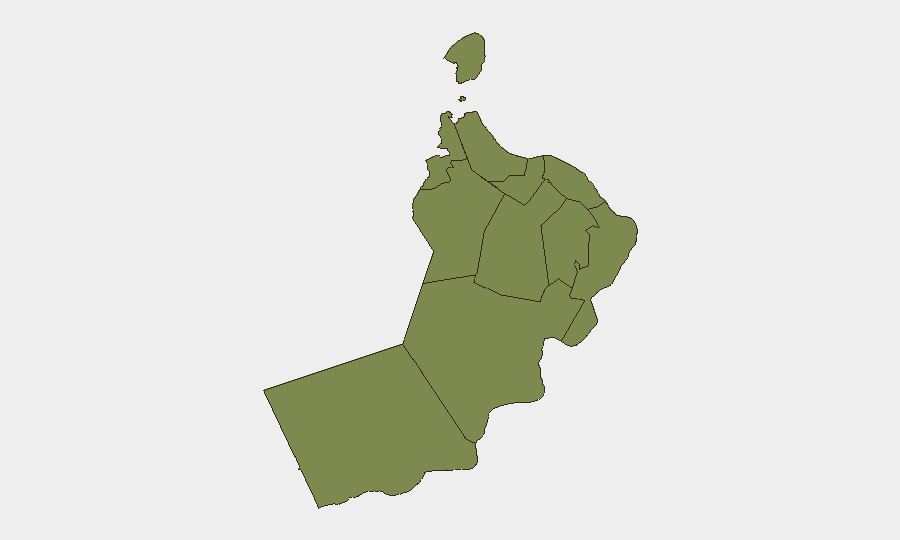
Situation Summary
Oman's security environment has deteriorated sharply over the past 48 hours due to rapid escalation in Iran–Oman diplomatic tensions and confirmed maritime incidents in the Strait of Hormuz adjacent to Omani territory. While no direct attacks or civil unrest have occurred within Oman's cities, the country faces mounting pressure as a critical diplomatic and shipping hub caught between U.S.–Iran hostilities. The U.S. Embassy has suspended non-emergency visa services and authorized departure for non-essential staff, signaling concern about potential escalation or airspace disruption.
Key Developments
- Musandam Governorate, Strait of Hormuz (July 25): A tanker 8 nautical miles northeast of Limah was struck by an unknown projectile and broadcast distress; UKMTO confirmed investigation underway. This represents a direct maritime security incident in Omani coastal waters.
- Oman–Iran bilateral relations (July 26–27): Multiple "reduce relations" signals and public rejections exchanged between Tehran and Muscat over 48 hours, coinciding with diplomatic talks on Strait of Hormuz shipping mechanisms—indicating diplomatic fracture alongside negotiation attempts.
- Strait of Hormuz shipping traffic (July 26–27): Commercial traffic fell to three-week lows as of Sunday, with no new confirmed attacks in 72 hours, but persistent elevated caution among operators.
- U.S. Embassy security posture (July 24, ongoing): Security Alert issued; authorized departure status in effect, non-emergency visa services suspended, reflecting concern over regional escalation and potential airspace closures.
- Oman public statement on Red Sea de-escalation (July 25–27): Muscat called for de-escalation following Houthi attacks on tankers, underlining Oman's diplomatic engagement and recognition of widening maritime risk affecting its trade routes.
- Regional maritime advisory (July 24–27): Australian and other foreign government travel advisories updated to reflect heightened caution in Oman due to unpredictable regional security and Hormuz incidents.
Highest-Risk Areas
Musandam Governorate dominates the risk profile (score 31.3), driven entirely by its position controlling the Strait of Hormuz and the July 25 projectile strike on a tanker in its waters. Muscat Governorate (16.3) and Dhofar (16.3) face secondary risk elevation due to diplomatic fallout, potential airspace disruption, and trade disruption affecting the capital and the southern logistics hub. All other governorates remain at baseline risk (1.3), indicating that current threats are maritime and diplomatic rather than territory-wide.
How GeoBit Would Assist
Security teams should employ Maritime & Aviation Tracking to monitor vessel movements and airspace status near Hormuz in real time, coupled with AOI Monitoring & Early Warning on Musandam and Muscat to detect escalation signals (military movement, port activity, air defense activation). Network & Actor Analysis on Iran–Oman diplomatic and military channels, combined with OSINT Fusion & Corroboration (X, regional media, UKMTO alerts, and embassy statements), enables early detection of further diplomatic breakdown or maritime incidents before they affect personnel or supply chains.
7-Day Outlook
Over the next week, the risk trajectory depends on whether Oman's diplomatic mediation efforts on Hormuz shipping succeed in de-escalating U.S.–Iran tensions. If talks stall, expect further Iranian–Omani relation deterioration, potential tightening of Hormuz access, and extended suspensions of U.S. embassy services. Conversely, any pause or agreement would likely stabilize maritime traffic and reduce airspace closure risk, though the underlying regional conflict will persist.
Highest-Risk Areas — Ranked
| # | State / Region | Risk |
|---|---|---|
| 1 | Musandam Governorate | 31.3 |
| 2 | Muscat Governorate | 16.3 |
| 3 | Dhofar Governorate | 16.3 |
| 4 | Al Buraymi Governorate | 1.3 |
| 5 | Ad Dhahirah Governorate | 1.3 |
| 6 | Al Batinah North Governorate | 1.3 |
| 7 | Al Batinah South Governorate | 1.3 |
| 8 | Ad Dakhiliyah Governorate | 1.3 |
| 9 | Ash Sharqiyah North Governorate | 1.3 |
| 10 | Ash Sharqiyah South Governorate | 1.3 |
| 11 | Al Wusta Governorate | 1.3 |
Sources
Previous Daily Briefs
A new Oman brief is written every day — each with its own risk map and downloadable CSV. Here's the last week; use the calendar to go further back.
📅 Browse every day by calendar →
Highlighted days have a brief. Tap a day for that day's map & analysis, or “csv” for that day's dataset ($5).
Atlas — our AI intelligence desk — emails them this snapshot personally. Nothing else, no list.