Situation Summary
Pakistan faces elevated composite security risk (rank #25 globally, score 89) driven by active militant operations in Sindh and coordinated cross-border strikes in Khyber Pakhtunkhwa and Balochistan. A major attack on security infrastructure in Karachi on 2026-07-03, coupled with ongoing operations against TTP and affiliated groups along the Afghanistan border, signals sustained militant capability and intent. The security environment remains volatile, with both conventional and unconventional violence active across multiple provinces.
Key Developments
- Karachi, Sindh (2026-07-03): Militants attacked a Pakistan Rangers facility with an explosive-laden vehicle and sustained gunfire; at least three Rangers personnel and six militants were killed. Jamaat-ul-Ahrar claimed responsibility. This represents a direct assault on federal paramilitary infrastructure in Pakistan's largest city and financial hub.
- Bajaur district, Khyber Pakhtunkhwa (2026-06-30 to 2026-07-03): Pakistani security forces conducted an intelligence-based ground operation that killed a senior TTP commander and three Jamaat-ul-Ahrar members, followed by airstrikes on positions near the Afghanistan border.
- Pakistan–Afghanistan border region (2026-06-30 to 2026-07-03): Operation Ghazab-ul-Haq continued with "calibrated" military strikes against militant positions in Khyber Pakhtunkhwa and Balochistan border sectors, indicating sustained pressure on cross-border militant networks.
- Paktia, Paktika, and Kunar provinces, Afghanistan (2026-06-30 to 2026-07-03): Pakistani security operations across the international border resulted in civilian casualties on the Afghan side, escalating cross-border tensions and likelihood of Afghan government protest or retaliation claims.
Highest-Risk Areas
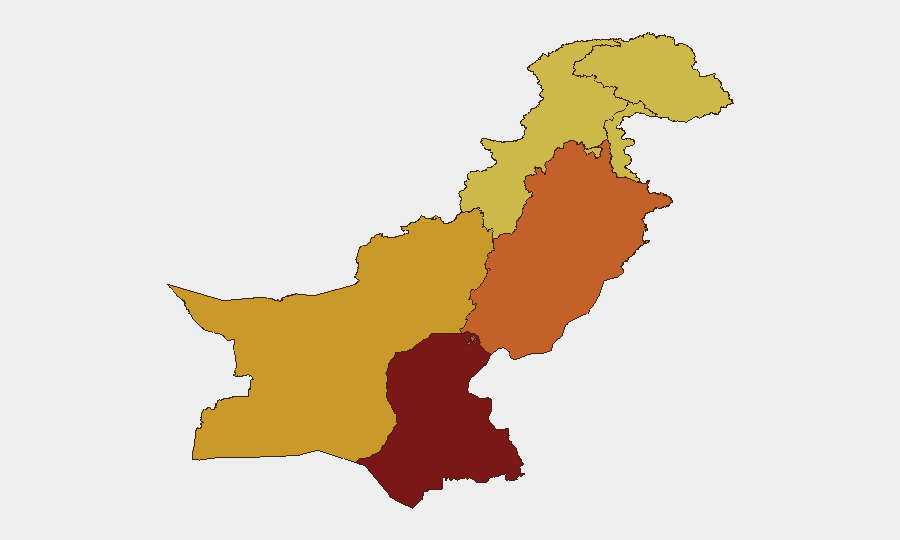
Sindh (92.2) ranks as Pakistan's most volatile province, driven by the Karachi attack and broader criminal-militant nexus activity in urban centers. Punjab (73.7) and Balochistan (72.1) follow, with Balochistan's risk rooted in persistent separatist and militant activity along remote border zones. Islamabad Capital Territory (70.9) and Khyber Pakhtunkhwa (67.5) remain under pressure from cross-border TTP operations and spillover from Afghan conflict dynamics. Sindh's concentration of national economic and diplomatic assets amplifies the impact of any security incident there.
How GeoBit Would Assist
Security teams should deploy AOI Monitoring & Early Warning on Karachi port, banking, and diplomatic facilities, and on Khyber Pakhtunkhwa border crossing points, to detect pre-attack indicators. Network & Actor Analysis and Intel Sweep with multi-language X/Telegram OSINT would track Jamaat-ul-Ahrar and TTP messaging, operational claims, and recruitment signals. Conflict & Military battle mapping and force-structure tracking would provide real-time visibility on Pakistani military operations and cross-border strike patterns, informing duty-of-care assessments for personnel in high-risk provinces.
7-Day Outlook
Militant groups are likely to issue further claims and counterclaims in response to the Bajaur operation and Karachi attack, signaling ongoing operational tempo. Cross-border operations are expected to continue, with elevated risk of civilian-casualty incidents and Afghan government friction. Organizations with presence in Sindh, Balochistan, or northern Punjab should maintain heightened alert posture and review evacuation/relocation protocols.
Highest-Risk Areas — Ranked
| # | State / Region | Risk |
|---|---|---|
| 1 | Sindh | 92.2 |
| 2 | Punjab | 73.7 |
| 3 | Balochistan | 72.1 |
| 4 | Islamabad Capital Territory | 70.9 |
| 5 | Khyber Pakhtunkhwa | 67.5 |
| 6 | Azad Kashmir | 62.3 |
| 7 | Gilgit-Baltistan | 62.2 |
Sources
Previous Daily Briefs
A new Pakistan brief is written every day — each with its own risk map and downloadable CSV. Here's the last week; use the calendar to go further back.
📅 Browse every day by calendar →
Highlighted days have a brief. Tap a day for that day's map & analysis, or “csv” for that day's dataset ($5).