Situation Summary
South Korea remains a stable, low-threat environment globally (rank #151, composite score 5) but faces persistent inter-Korean tensions and localized civility risks driven by economic strain and high public engagement in national affairs. The most significant recent security activity centers on crowd management and threat monitoring around the national football team's World Cup exit, rather than organized violence, terrorism, or infrastructure threats. North Korean activity signals and diplomatic disapprovals dominate the event feed, reflecting ongoing peninsula-level monitoring by Seoul, Japan, and regional partners. Overall security posture is manageable for corporate operations, with heightened awareness required in Seoul and North Chungcheong Province.
Key Developments
- Incheon International Airport, Incheon – 29 June 2026
South Korean police deployed approximately 160 riot police, reinforced fencing, and crowd-control barriers in response to online threats and public anger over the national football team's World Cup elimination. Pre-emptive monitoring of individuals posting threats was conducted. No major violence occurred, but the incident underscores elevated crowd-management risk at transport hubs during high-emotion national events.
- Incheon International Airport, Incheon – 29 June 2026
The national team's arrival proceeded under "intense security," with police buses and separation barriers deployed to prevent fan assaults or harassment of players and coaching staff. The operation reflects institutional readiness to contain flash-mob behavior at major transport nodes.
- Online communities and social media, South Korea – 28–29 June 2026
A wave of online abuse targeting the national coach and federation officials, including calls for harm, triggered law-enforcement monitoring for incitement to violence. Posts demanded resignations and criticized tactical decisions. This represents short-term political/societal tension rather than organized extremism, but demonstrates how sports-related grievance can mobilize rapid threat communication.
- Seoul (Foreign Ministry) – 29 June 2026
The Ministry of Foreign Affairs conducted a routine diplomatic and regional security briefing, signaling continued institutional attention to inter-Korean tensions and regional alignment issues. No new crisis was announced; this reflects standard monitoring rather than acute escalation.
- Defense Ministry policy announcement – 29 June 2026
The Defense Ministry confirmed plans to shrink the military-regulated Civilian Control Line buffer zone near the DMZ starting in 2027, easing civilian and drone-flight approvals in border areas. This future-dated change has long-term implications for border-area security and civilian infrastructure access near sensitive zones.
Highest-Risk Areas
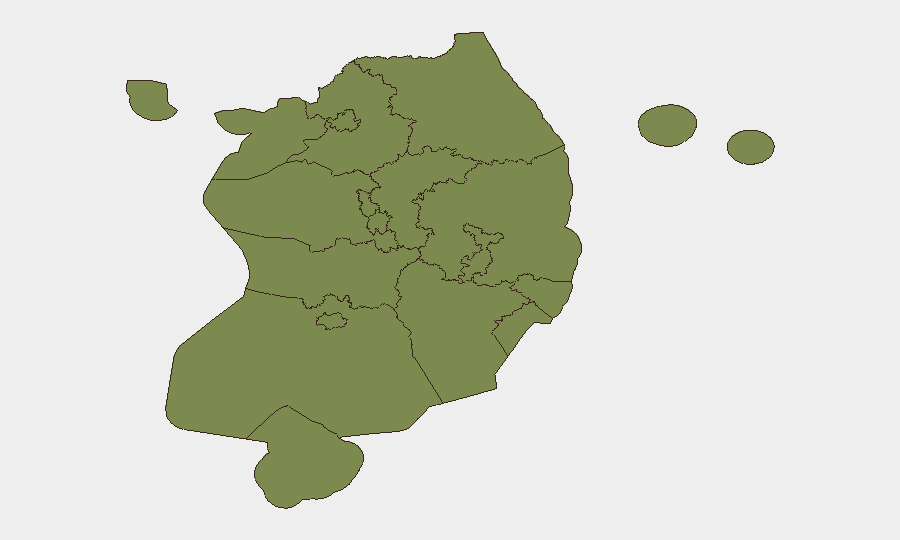
North Chungcheong Province (risk 32) and Seoul (risk 23.2) drive the national threat score, with North Chungcheong's elevation likely reflecting proximity to the inter-Korean border and associated military/security infrastructure sensitivity, and Seoul's score reflecting protest activity, high-density population dynamics, and political engagement around national events. Gwangju (13.7) is a secondary concern, historically a locus of civil grievance and protest mobilization. Corporate facilities and personnel in Seoul should maintain standard situational awareness; operations in border provinces warrant coordination with local security services regarding access restrictions and military exercises.
How GeoBit Would Assist
Security teams should employ AOI Monitoring & Early Warning on Incheon and Seoul transport hubs to detect emerging threat signals (social media, protest announcements, crowd-gathering indicators) in advance of high-profile arrivals or events. Intel Sweep (X/Twitter, Telegram, YouTube OSINT, entity extraction, and sentiment analysis) provides real-time tracking of online threat escalation and incitement language targeting corporate or high-profile personnel. Conflict & Military tracking combined with GIS & Spatial Analysis enables continuous monitoring of North Korean activity signals and DMZ buffer-zone policy changes, informing travel-routing and site-access decisions.
7-Day Outlook
The immediate crowd-management risk associated with the football team's return will subside over the next 2–3 days as media attention wanes. Online threat chatter is expected to dissipate but may resurface if domestic political grievances—economic pressure, inflation burden—intersect with new national events. No escalation of inter-Korean tensions is signaled in current open-source reporting, maintaining the broader security environment within normal operating parameters for international business.
Highest-Risk Areas — Ranked
| # | State / Region | Risk |
|---|---|---|
| 1 | North Chungcheong | 32 |
| 2 | Seoul | 23.2 |
| 3 | Gwangju | 13.7 |
| 4 | North Gyeongsang | 6.5 |
| 5 | Gyeonggi | 3.3 |
| 6 | South Jeolla | 2.9 |
| 7 | South Chungcheong | 2.6 |
| 8 | Incheon | 2.3 |
| 9 | Gangwon State | 2.3 |
| 10 | Jeonbuk State | 2.3 |
| 11 | Daejeon | 2.3 |
| 12 | Jeju | 2 |
Sources
Previous Daily Briefs
A new South Korea brief is written every day — each with its own risk map and downloadable CSV. Here's the last week; use the calendar to go further back.
📅 Browse every day by calendar →
Highlighted days have a brief. Tap a day for that day's map & analysis, or “csv” for that day's dataset ($5).