Situation Summary
Tajikistan remains in a low-frequency threat environment with no confirmed security incidents recorded during the review period (September 21–28, 2026). The country's composite threat score of 14 places it at #127 globally, reflecting a stable baseline. However, persistent structural vulnerabilities—principally the porous Afghan border and transit-route dependencies—continue to anchor elevated risk in the south and east. Regional air-connectivity disruptions and ongoing border-security coordination dialogue suggest a fragile operating environment for international travel and logistics.
Key Developments
- September 24 — Tehran–Dushanbe air route (Turkmenistan airspace). An Iranian flight bound for Dushanbe was denied overflight permission by Turkmenistan and returned to Tehran, signaling air-corridor fragility for Central Asian passenger and cargo movements. Regional overflight restrictions remain subject to diplomatic and political variance.
- September 24 — Azerbaijani airspace (Varesh Airlines, Tehran–Dushanbe). An unconfirmed report indicated Azerbaijan closed airspace to a flight from Tehran destined for Dushanbe. Absent independent corroboration, this should be treated as a possible but unverified connectivity constraint.
- September 23 — Dushanbe (diplomatic-security dialogue, Afghanistan). Tajikistan's foreign minister and incoming UNAMA chief discussed regional instability and border terrorism threats. Tajikistan reiterated concerns about insecurity along the Afghan border, reflecting active diplomatic risk-mitigation effort rather than new incident reporting.
- September 22 — Tajik–Afghan border (travel advisory, follow-up). A Chinese government and embassy warning (originally issued September 14) advising nationals to avoid the Tajik–Afghan border region and relocate inland was re-reported during the period; the advisory remains in effect.
- September 27 — Khujand, Buston, and Guliston, Sughd Region. Authorities announced temporary road closures and traffic restrictions ahead of a presidential visit to northern Tajikistan. Mobility constraints will affect logistics and personnel movement in the three cities during the restricted period.
- September 26 — Russia, CSTO exercises (Tajik military contingents). Tajik military personnel deployed to Russia for multinational exercises ("Interaction-2026," "Search-2026," "Echelon-2026") focused on joint operations, reconnaissance, and logistics. This represents routine regional military coordination, not evidence of domestic conflict.
- September 26 — New York (UN Security Council candidacy). Tajikistan announced its candidacy for a non-permanent UN Security Council seat (2028–2029), a political development unrelated to domestic security threats.
Highest-Risk Areas
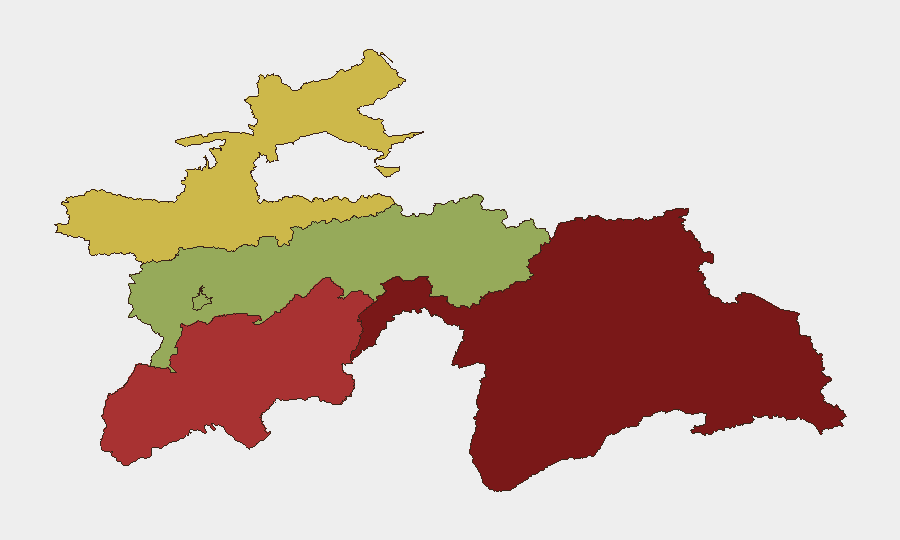
Gorno-Badakhshan Autonomous Region (risk 92) and Khatlon Region (risk 78) drive the country's internal risk profile, reflecting proximity to Afghanistan, limited state presence, and historical militant activity and cross-border trafficking. Sughd Region (risk 65) ranks third, correlating with transit vulnerabilities and ethnic-political tensions. Dushanbe (risk 42) and the Districts of Republican Subordination present lower but still material risk. The risk concentration in the south and southeast reflects ongoing Afghan instability, porous borders, and limited capacity for border interdiction.
How GeoBit Would Assist
Teams with personnel or assets in Tajikistan should employ AOI Monitoring & Early Warning to track Gorno-Badakhshan and the Afghan border zone for cross-border movement, militant activity, or trafficking indicators. Intel Sweep, X/Telegram OSINT, and multi-language search provide real-time detection of security incidents, travel alerts, and diplomatic developments. Routing & Network Analysis can identify alternative air and ground routes when primary corridors (Turkmenistan overflight, direct flights) are disrupted by political or security constraints.
7-Day Outlook
No major deterioration is anticipated in the coming week. Temporary road restrictions in Sughd will resolve post-presidential visit. Air-connectivity disruptions appear episodic rather than systemic, though the volatility of regional overflight authorizations warrants contingency planning. Continued vigilance on the Afghan border and liaison with diplomatic contacts should remain standard practice.
Highest-Risk Areas — Ranked
| # | State / Region | Risk |
|---|---|---|
| 1 | Gorno-Badakhshan Autonomous Region | 92 |
| 2 | Khatlon Region | 78 |
| 3 | Sughd Region | 65 |
| 4 | Districts of Republican Subordination | 58 |
| 5 | Dushanbe | 42 |
Sources
Previous Weekly Briefs
A new Tajikistan brief is written every Monday, covering the week — each with its own risk map and downloadable CSV. Use the calendar to go further back.
- September 21, 2026
- September 14, 2026
- September 7, 2026
- September 3, 2026
- September 2, 2026
- September 1, 2026
- August 31, 2026
📅 Browse past briefs by calendar →
Highlighted days have a brief. Tap a day for that day's map & analysis, or “csv” for that day's dataset ($5).
Atlas — our AI intelligence desk — emails them this snapshot personally. Nothing else, no list.