Situation Summary
The United Arab Emirates remains operationally secure with no confirmed civil unrest, terrorism incidents, or major internal crime spikes in the last 24–48 hours. However, the country is navigating heightened regional tension driven by Iran–U.S. escalation and recent Iranian strikes on neighboring Gulf states (Jordan, Bahrain, Kuwait). UAE authorities have resumed normal air traffic after precautionary disruptions and publicly reasserted a neutral, de-escalatory stance, stating airspace will not be used for offensive military actions against Iran.
Key Developments
- National Airspace (approx. 9–10 July 2026): UAE air traffic operations fully resumed following temporary security-driven disruptions linked to regional Iran–U.S. tensions. No ongoing flight suspensions or airport closures are reported; aviation-security posture remains elevated but normal operations continue.
- Public Information & Reassurance (9 July 2026): UAE authorities used official channels to instruct the public to disregard earlier missile-alert messages and stated the security situation is "safe and under control." This signals temporary public concern over potential missile spillover, though no confirmed new impacts or air-defense interceptions in UAE territory in the last 24–48 hours are reported.
- Strategic Foreign Policy Statement (9 July 2026): The UAE publicly condemned recent Iranian missile and drone strikes on Jordan, Bahrain, and Kuwait, reaffirming political support for regional partners while maintaining its stated policy that UAE territory will not be used for offensive regional military action.
- Maritime Security Alert (9 July 2026): UAE foreign ministry statements condemned a reported Iranian attack on a Qatari vessel near the Strait of Hormuz, highlighting ongoing maritime-domain threats that could indirectly affect Gulf shipping and energy-security risk including UAE port operations.
- OPEC Membership Debate (early July 2026, ongoing): Regional analysis notes internal UAE policy discussion regarding potential withdrawal from OPEC, with major energy-market implications. No associated civil unrest or disruptive actions reported in the last 24–48 hours.
Highest-Risk Areas
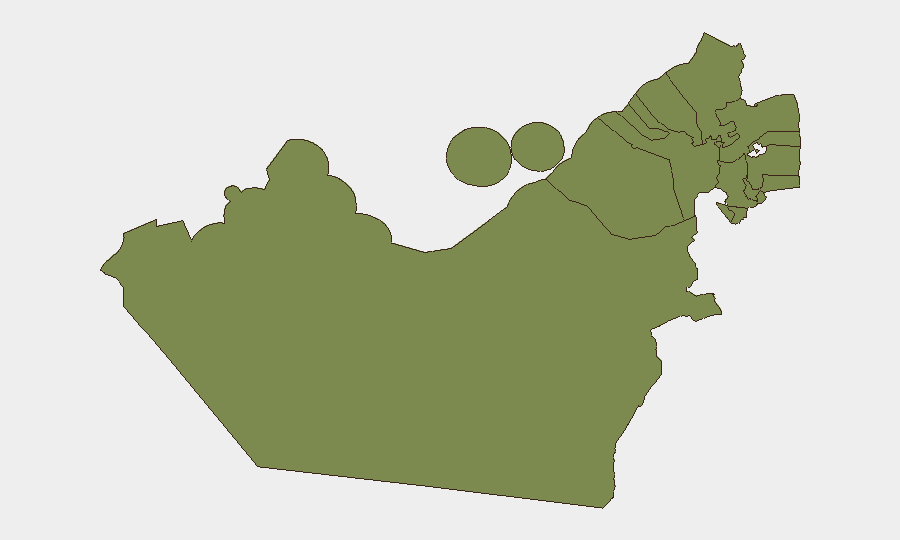
Dubai dominates the sub-national risk ranking (31.5) and accounts for the vast majority of identified threat exposure in the UAE, reflecting its role as a major international business, travel, and maritime hub. Abu Dhabi Emirate (6.5) carries secondary but significantly lower risk. All other emirates (Sharjah, Ajman, Ras al-Khaimah, Fujairah, Umm al-Quwain) score at 1.5 and represent minimal tracked threat surface. The concentration of risk in Dubai reflects its exposure to regional spillover, international transit flows, and economic criticality rather than internal instability.
How GeoBit Would Assist
Security teams should employ Intel Sweep and multi-language OSINT feeds to maintain real-time visibility of Iranian military signaling, Strait of Hormuz maritime incidents, and regional strike activity that could escalate into UAE airspace or territorial waters. AOI Monitoring with alerting on Dubai's major transit hubs (ports, airports) and Abu Dhabi energy infrastructure would provide early warning of indirect regional spillover. Conflict & Military tracking and Maritime & Aviation tracking capabilities enable continuous assessment of Iranian weapon deployments and Gulf-wide traffic disruptions that could affect supply chains or personnel movement through UAE territory.
7-Day Outlook
Regional Iran–U.S. tensions are expected to remain elevated, sustaining heightened aviation and maritime-security posture in UAE airspace and Gulf waters. No significant escalation into UAE territory is anticipated based on current signals, but continued contingency-alert messaging and precautionary security measures should be expected. Commercial and business operations in Dubai and Abu Dhabi are likely to proceed normally, though supply-chain and aviation schedules may remain subject to short-notice disruptions if regional hostilities intensify.
Highest-Risk Areas — Ranked
| # | State / Region | Risk |
|---|---|---|
| 1 | Dubai | 31.5 |
| 2 | Abu Dhabi Emirate | 6.5 |
| 3 | Sharjah Emirate | 1.5 |
| 4 | Ajman Emirate | 1.5 |
| 5 | Ras al-Khaimah | 1.5 |
| 6 | Fujairah Emirate | 1.5 |
| 7 | Umm al-Quwain | 1.5 |
Sources
Previous Daily Briefs
A new United Arab Emirates brief is written every day — each with its own risk map and downloadable CSV. Here's the last week; use the calendar to go further back.
📅 Browse every day by calendar →
Highlighted days have a brief. Tap a day for that day's map & analysis, or “csv” for that day's dataset ($5).
Atlas — our AI intelligence desk — emails them this snapshot personally. Nothing else, no list.