Situation Summary
Argentina remains a moderate global security concern (rank #43, composite threat score 34) with sustained operational tension across multiple sectors. The past 48 hours have seen isolated but recurring street-level crime (armed robbery, police confrontations, commercial theft) concentrated in high-risk urban zones, coupled with ongoing labor unrest and administrative friction. National security posture has remained at "alto" (high) since February 2026, maintaining elevated police presence and checkpoint activity at critical infrastructure, airports, and borders. The threat environment is stable but fragmented—no systemic escalation is evident, but localized volatility in Buenos Aires Province and the capital continues to drive regional composite risk.
Key Developments
- Buenos Aires City, Obelisk area (within last 24–36 hours): Football celebration clashes between fans and police resulted in at least nine arrests and disorder in the surrounding area.
- Avellaneda, Buenos Aires Province (last 24–48 hours): Armed motorcycle robbery attempt against a police officer ended in self-defense shooting fatality; accomplice remains at large.
- Mar del Plata, Buenos Aires Province (last 24–48 hours): Armed theft at an event hall during preparations; gunpoint robbery of staff and cash escape.
- Las Heras, Mendoza Province (last 24–48 hours): Ride-share driver robbed by passenger at knifepoint; approximately 100,000 pesos and documents stolen at Lamadrid/Callejón Moyano intersection.
- Córdoba City, Patio Olmos area (last 24–48 hours): Police dispersal of public gathering following multiple attempted robberies; security incident and forced crowd clearance.
- Santa Fe Province (last 24–48 hours): Two brothers hospitalized in narcotrafficking-linked assault; ex-convict and associate with drug and extortion records arrested.
- National security posture: High-alert status maintained with reinforced controls at government buildings, diplomatic missions, religious sites, critical infrastructure, airports, and border crossings continuing to impose operational friction.
Highest-Risk Areas
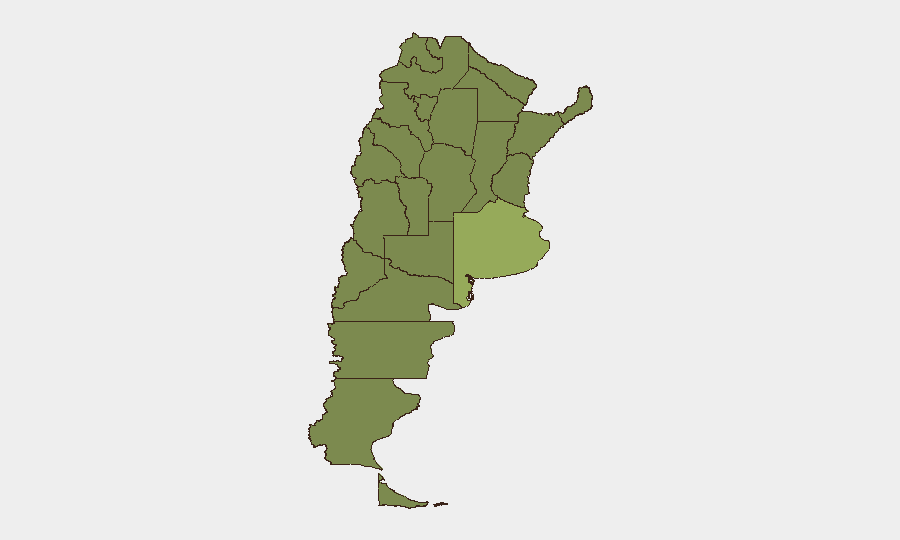
Buenos Aires Province dominates the risk profile (53.5), driven by persistent street crime, armed robbery, and police engagement in high-density urban and suburban zones (Avellaneda, Mar del Plata). The Autonomous City of Buenos Aires (31.2) reinforces capital-area volatility through fan violence and public-order incidents. Santiago del Estero (30.7), Neuquén (30.5), and Río Negro (29.8) reflect secondary concern clusters in the interior and Patagonian regions, likely linked to labor disputes, narcotrafficking exposure, and border-zone activity. Narcotics-linked violence in Santa Fe and Mendoza compounds provincial risk beyond headline rankings. Staff and asset concentration in greater Buenos Aires should be treated as the primary exposure zone.
How GeoBit Would Assist
Intel Sweep, OSINT Fusion & Corroboration, and multi-language social-media monitoring would provide real-time detection of street crime, protest activity, and police operations across provincial hotspots. AOI Monitoring & Early Warning on Buenos Aires Province, Córdoba, and Santa Fe would generate persistent alerts for emerging labor strikes, armed robbery clusters, and narcotrafficking violence—enabling protective posture adjustments before escalation. Routing & Network Analysis would support alternative journey planning and staff movement during high-alert periods, while Sentiment & Temporal Analysis of local feeds would track administrative friction and public unrest trajectories.
7-Day Outlook
No systemic deterioration is anticipated in the near term. Street-level crime and labor tensions are expected to persist at current frequency and severity across Buenos Aires Province and Córdoba. National high-alert posture and checkpoint activity will likely remain in effect, with potential for localized disorder around public gatherings, sporting events, and commercial hubs. Monitoring for secondary cascade effects (police response escalation, organized retaliation, border-zone spillover) remains prudent.
Highest-Risk Areas — Ranked
| # | State / Region | Risk |
|---|---|---|
| 1 | Buenos Aires Province | 53.5 |
| 2 | Autonomous City of Buenos Aires | 31.2 |
| 3 | Santiago del Estero Province | 30.7 |
| 4 | Neuquén Province | 30.5 |
| 5 | Río Negro Province | 29.8 |
| 6 | Chaco Province | 29.4 |
| 7 | Misiones | 28.9 |
| 8 | Córdoba | 27.6 |
| 9 | Salta Province | 24.4 |
| 10 | Catamarca Province | 24.4 |
| 11 | Santa Fe Province | 24.4 |
| 12 | Chubut Province | 24 |
Sources
Previous Daily Briefs
A new Argentina brief is written every day — each with its own risk map and downloadable CSV. Here's the last week; use the calendar to go further back.
📅 Browse every day by calendar →
Highlighted days have a brief. Tap a day for that day's map & analysis, or “csv” for that day's dataset ($5).
Atlas — our AI intelligence desk — emails them this snapshot personally. Nothing else, no list.