Situation Summary
Cuba faces an acute energy crisis driving widespread civil unrest concentrated in Havana and select provincial towns. A cascading pattern of blackouts exceeding 30 hours in some neighborhoods has triggered street protests, barricades, and anti-government demonstrations over 21–24 July 2026. While individual incidents remain localized and police responses have been measured, the national power deficit forecast (2,000 MW) and infrastructure vulnerabilities (substation fires) suggest conditions will persist and likely generate further protests in coming days.
Key Developments
- Havana: Multi-neighborhood blackout protests (21–22 July). Residents in Cerro, La Víbora, Playa, Barbosa, and La Genética neighborhoods staged nighttime street protests, barricades, and cacerolazos (pot-banging) against electricity cuts lasting 24–30+ hours. Police presence was noted but did not forcibly disperse crowds.
- Antilla, Holguín: Anti-government protest at police station (night of 21–22 July). Hundreds marched from Flora neighborhood to the local police station, chanting anti-government slogans over blackouts. Subsequent police and military deployment reported, indicating heightened local security posture and potential movement restrictions.
- Nationwide power deficit alert (evening 22–23 July). Cuba's state utility UNE forecasted a ~2,000 MW power shortfall for the coming night, signaling continuation of rolling blackouts across multiple provinces and high probability of further civil unrest.
- Caibarién, Villa Clara: Electrical substation fire (circa 22 July). Infrastructure incident attributed to system overloading, raising asset-safety concerns and suggesting vulnerability of critical power nodes during the crisis period.
- Religious leader detention (recent, pre–22 July). Pastor Jatniel Pérez detained minutes before a religious service, reflecting ongoing targeting of religious figures and contributing to broader political-repression risk.
- U.S. diplomatic disapproval (22 July). Washington issued a formal statement of disapproval regarding Cuban actions, potentially signaling escalation in bilateral tension or coordination with Cuba-focused policy initiatives.
Highest-Risk Areas
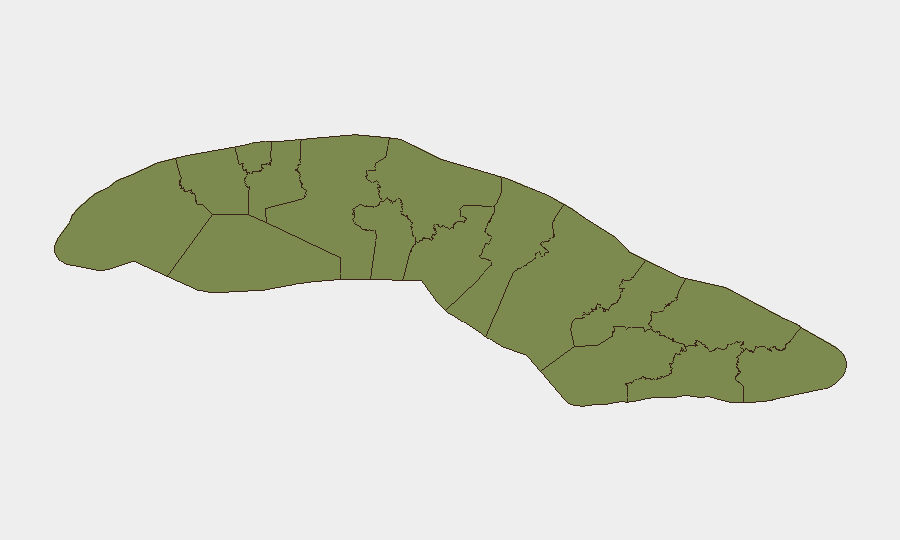
Havana dominates the risk profile with a composite score of 33.4—nearly four times that of the second-ranked province (Artemisa, 8.7). The capital's vulnerability stems from its concentration of population, critical infrastructure, and state institutions, amplifying the impact of service failures and civil unrest. Secondary risk concentrations in Artemisa, Matanzas, and Sancti Spiritus reflect either infrastructure dependencies or emerging protest activity. Holguín's inclusion (Antilla incident) indicates geographic spread of energy-linked unrest beyond the capital, though with lower absolute risk scores. Duty-of-care teams with personnel in Havana should prioritize situation monitoring and contingency planning.
How GeoBit Would Assist
Intel Sweep, global event feeds, and multi-language OSINT fusion provide real-time corroboration of street-level protests and infrastructure incidents across Havana and provincial towns, filling gaps in official reporting. AOI Monitoring & Early Warning can establish persistent watches on high-risk Havana neighborhoods (Playa, Cerro, La Víbora) and Antilla to track protest patterns, police deployments, and barricade activity with automated alerting. Routing & Network Analysis enables security teams to pre-compute alternative transport corridors avoiding protest zones, barricaded streets, and police concentrations, reducing exposure during blackout-driven civil unrest.
7-Day Outlook
Absent material improvement in power generation, rolling blackouts will sustain through at least 24–48 hours, with high probability of additional neighborhood-level protests in Havana and spillover demonstrations in secondary cities. Police and military posture is likely to remain reactive rather than repressive, but heightened deployment in affected areas will create movement friction and checkpoint activity. Risk trajectory remains elevated but contained to civil unrest; no indicators of organized violence or regime instability at present.
Highest-Risk Areas — Ranked
| # | State / Region | Risk |
|---|---|---|
| 1 | Havana | 33.4 |
| 2 | Artemisa | 8.7 |
| 3 | Matanzas | 4.6 |
| 4 | Sancti Spiritus | 4.3 |
| 5 | Villa Clara | 4.1 |
| 6 | Camagüey | 3.7 |
| 7 | Pinar del Rio | 3.4 |
| 8 | Mayabeque | 3.4 |
| 9 | Cienfuegos | 3.4 |
| 10 | Isle of Youth | 3.4 |
| 11 | Ciego de Avila | 3.4 |
| 12 | Las Tunas | 3.4 |
Sources
Previous Daily Briefs
A new Cuba brief is written every day — each with its own risk map and downloadable CSV. Here's the last week; use the calendar to go further back.
📅 Browse every day by calendar →
Highlighted days have a brief. Tap a day for that day's map & analysis, or “csv” for that day's dataset ($5).
Atlas — our AI intelligence desk — emails them this snapshot personally. Nothing else, no list.