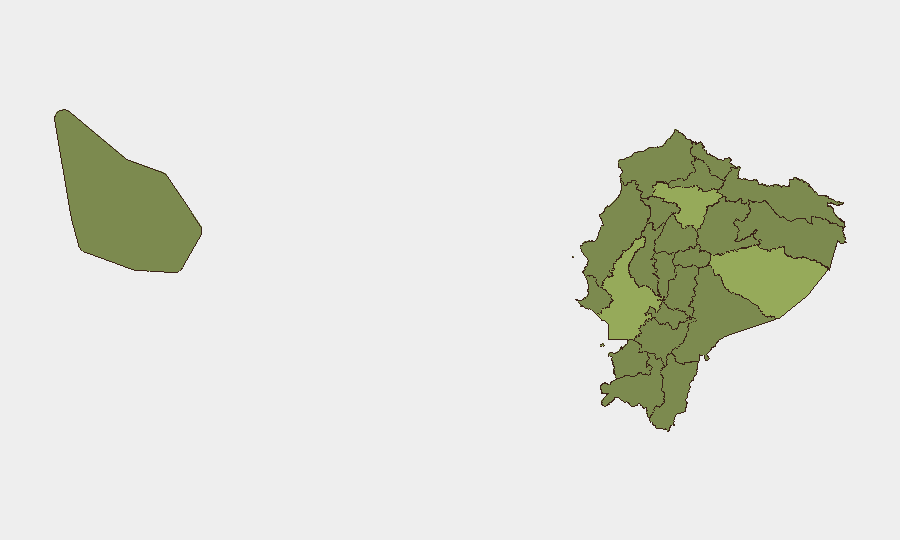
Situation Summary
Ecuador remains at moderate global threat rank (#41) with a composite score of 44 across 49 tracked events, reflecting persistent organized crime, prison instability, and localized civic unrest. The most recent signal cluster (July 4–6, 2026) indicates simultaneous pressure points: military engagement with prison facilities, small-arms criminal activity, alleged telecommunications investigation, and public-facing statements from business and municipal actors. The threat trajectory is stable but fragmented across subnational jurisdictions rather than consolidated—suggesting dispersed rather than systemic instability, though prison sector volatility presents acute near-term flash-point risk.
Key Developments
- 2026-07-06 · Military engagement (Ecuador vs. prison facility): Conventional military force deployed in response to a prison-related incident; location and casualty count not yet clarified in open sources. This represents the most acute acute law-enforcement escalation in the current signal cycle.
- 2026-07-05 · Physical assault on uniformed officer: A lieutenant was assaulted on July 5; location not specified. Concurrent police administrative sanctions issued same date, suggesting internal discipline action.
- 2026-07-05 · Threat against municipal official: A mayor received a credible threat on July 5; jurisdiction not named in available signals.
- 2026-07-04 · Small-arms criminal engagement: Armed confrontation between Ecuador security forces and criminal actor(s); specific location not yet confirmed.
- 2026-07-04 · Telecommunications ministry investigation launched: Formal investigation opened; scope and preliminary findings not disclosed in current open intelligence.
- 2026-07-06 · Presidential investigation initiated: High-level investigation announced or underway as of July 6; subject matter not yet disclosed.
- 2026-07-04/06 · Public statements by business and Guayaquil actors: Business sector and Guayaquil municipal/civic leadership issued public statements; content and tone not specified but flagged as noteworthy.
Note: Web research did not corroborate additional Ecuador-specific incidents in the 24–48 hour window. The above signals derive from GeoBit event feed tracking; open web confirmation is pending.
Highest-Risk Areas
Pastaza Province (risk 57) remains Ecuador's highest-threat subnational zone, driven by remote geography, weak state presence, and organized-crime activity. Pichincha (48.8)—which includes the capital Quito—and Guayas (46.9)—anchored by Guayaquil—together account for concentrated urban risk, reflecting gang violence, prison instability, and administrative dysfunction. El Oro (34.5) and Carchi (28.8) represent secondary concern along the southern and northern borders. The clustering of risk in three provinces (Pastaza, Pichincha, Guayas) suggests that corporate and expat populations concentrated in Quito and Guayaquil face elevated exposure to spillover violence, while southern Amazon and border zones present specialized operational risk for extractive or logistics assets.
How GeoBit Would Assist
Security teams should employ AOI Monitoring & Early Warning with persistent watch on Pastaza, Pichincha, and Guayas jurisdictions to detect prison incidents, gang activity escalation, or municipal disruptions in near-real time. Intel Sweep and multi-language OSINT (X/Telegram, local radio SIGINT) will disambiguate the July 4–6 signal cluster and clarify the nature of the military, telecommunications, and presidential actions. Network & Actor Analysis and Conflict Mapping capabilities will help identify whether recent events signal fragmentation among criminal groups or coordinated pressure on state capacity, informing duty-of-care posture and asset-movement decisions.
7-Day Outlook
Prison sector volatility is likely to persist or escalate as military presence increases; civilian access to affected zones may face temporary disruption. Municipal and business statements suggest political or operational friction; watch for follow-on administrative action or public clarification. Absent major new incidents, risk trajectory should remain stable through mid-July, though Pastaza and Guayas warrant continuous monitoring for criminal-group activity spikes.
Highest-Risk Areas — Ranked
| # | State / Region | Risk |
|---|---|---|
| 1 | Pastaza Province | 57 |
| 2 | Pichincha Province | 48.8 |
| 3 | Guayas Province | 46.9 |
| 4 | El Oro Province | 34.5 |
| 5 | Carchi Province | 28.8 |
| 6 | Manabí Province | 27.6 |
| 7 | Sucumbíos Province | 26.9 |
| 8 | Orellana Province | 26.9 |
| 9 | Galápagos | 26.9 |
| 10 | Esmeraldas Province | 26.9 |
| 11 | Imbabura Province | 26.9 |
| 12 | Santo Domingo de los Tsáchilas Province | 26.9 |
Sources
Previous Daily Briefs
A new Ecuador brief is written every day — each with its own risk map and downloadable CSV. Here's the last week; use the calendar to go further back.
📅 Browse every day by calendar →
Highlighted days have a brief. Tap a day for that day's map & analysis, or “csv” for that day's dataset ($5).
Atlas — our AI intelligence desk — emails them this snapshot personally. Nothing else, no list.