Situation Summary
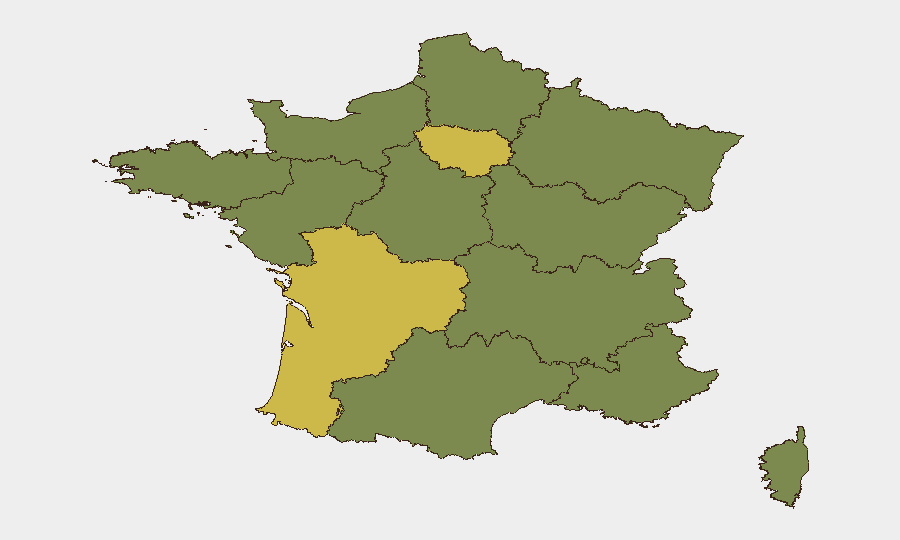
France faces an elevated but manageable security environment dominated by civil-unrest risk, wildfire infrastructure disruption, and an active terrorism investigation following a foiled plot. Île-de-France and Nouvelle-Aquitaine carry the highest composite risk scores (64.1 and 64.4 respectively), driven by a combination of public-order incidents, arson, and counter-terrorism activity. Political tensions—evidenced by recent parliamentary statements and administrative sanctions—add volatility to an otherwise stable baseline threat picture for the country.
Key Developments
- Sarcelles (Val-d'Oise), 18 July 2026, evening: Police evacuated approximately 300 residents after discovering a suspicious vehicle near a synagogue containing military-grade assault rifle, handgun, magazines, and ammunition. An anti-terrorism investigation for suspected "terrorist criminal organisation" and attack preparation is underway; suspects remain unidentified, and no explosives were found. Cordon remains active in a densely populated area near shops and cinema.
- Fontainebleau Forest (Seine-et-Marne), 17–18 July 2026: Confirmed arson; two men have admitted deliberately starting fires that consumed 2,050 hectares and forced ~1,000 evacuations. Four additional suspects remain in custody. Fires are reported as "stabilized" but not fully extinguished; ongoing firefighting operations continue.
- Île-de-France (Paris and suburbs), 15–16 July 2026 overnight: 141 arrests for firing mortar-grade fireworks at police during public-order disturbances. Pre-deployment of police, gendarmes, and firefighters remains elevated in anticipation of July celebrations and further disorder.
- French National Assembly, 17–18 July 2026: Parliament passed the "Ripost Law" and related public-order legislation tightening fines and sanctions for fireworks misuse, rave parties, nitrous oxide, and unauthorized mass gatherings. Signals hardened enforcement posture on civil unrest.
- National wildfire alert, last 48 hours: Significant fires reported across southern France; multiple regional authorities have maintained or tightened fire-related restrictions and fireworks cancellations due to extreme heat and drought conditions.
Highest-Risk Areas
Nouvelle-Aquitaine and Île-de-France dominate the risk ranking, both scoring above 64. Île-de-France remains the epicenter of terrorism investigation, public-order incidents, and political friction; Nouvelle-Aquitaine's elevated score reflects cumulative wildfire, arson, and unrest signals. Grand Est, Normandy, and Brittany follow at 35–36, driven by secondary civil-unrest and infrastructure risks. The clustering of risk in northern and southwestern regions suggests concentrated monitoring should focus on urban centers (Paris, Bordeaux environs) and forestry/rural infrastructure.
How GeoBit Would Assist
Security teams should deploy AOI Monitoring & Early Warning on Paris suburbs, Fontainebleau, and other high-risk regions to detect emerging unrest, arrest clusters, or infrastructure incidents in real time. OSINT Fusion & Corroboration (X/Twitter, Telegram, local news feeds) and multi-language search will track evolving statements from political figures and law-enforcement on the Sarcelles investigation and public-order enforcement. Risk & Threat Assessment and Sentiment & Temporal Analysis capabilities will provide early signals of escalation in civil unrest or terrorism-related activity as the July period progresses.
7-Day Outlook
The foiled Sarcelles plot and heightened police enforcement suggest elevated near-term terrorism vigilance and visible security posture in Île-de-France through the remainder of July. Wildfire risk and arson investigations will continue to disrupt travel and outdoor events in Seine-et-Marne and southern regions. Civil unrest tied to summer celebrations and political messaging is likely to persist, with police maintaining elevated pre-deployment; no major escalation is forecast if the legislative crackdown gains compliance.
Highest-Risk Areas — Ranked
| # | State / Region | Risk |
|---|---|---|
| 1 | Nouvelle-Aquitaine | 64.4 |
| 2 | Ile-de-France | 64.1 |
| 3 | Grand Est | 36.3 |
| 4 | Normandy | 35.8 |
| 5 | Brittany | 35.1 |
| 6 | Occitania | 34.8 |
| 7 | Hauts-de-France | 34.4 |
| 8 | Centre-Val de Loire | 34.4 |
| 9 | Pays de la Loire | 34.4 |
| 10 | Bourgogne – Franche-Comté | 34.4 |
| 11 | Auvergne-Rhône-Alpes | 34.4 |
| 12 | Provence-Alpes-Côte d'Azur | 34.4 |
Sources
Previous Daily Briefs
A new France brief is written every day — each with its own risk map and downloadable CSV. Here's the last week; use the calendar to go further back.
📅 Browse every day by calendar →
Highlighted days have a brief. Tap a day for that day's map & analysis, or “csv” for that day's dataset ($5).
Atlas — our AI intelligence desk — emails them this snapshot personally. Nothing else, no list.