Situation Summary
Germany faces acute security challenges following a terrorist attack in Berlin on 25–26 July and a mass shooting in Lower Saxony on 28 July, both within 72 hours. Federal authorities have classified the Berlin incident as Islamist terrorism and triggered a government-wide security review; the Stade shooting is being treated as a contained family tragedy with no broader public threat. Overall threat posture remains moderate (composite rank #147 globally), but Berlin's risk score (31.8) now dominates national statistics, and coordination gaps between federal and state agencies have been publicly exposed.
Key Developments
- Berlin, Tiergarten / Brandenburg Gate area – night 25 July, official updates 26–27 July: A van was driven into crowds at Christopher Street Day (Pride) celebrations, followed by machete attacks. One woman (Polish national) killed; approximately 29 injured, several seriously. Authorities classified the incident as an Islamist terrorist attack. Suspected attacker—21-year-old German-Lebanese Abdul Ballout—was located in Spandau district and shot dead by police on 26 July when he advanced on officers with a bladed weapon. No additional suspects remain at large.
- Berlin, federal level – 27 July: Interior Minister Alexander Dobrindt announced a security overhaul including tightened monitoring of known extremist threats and closer federal–state coordination. Government stated that ~30 Islamist plots have been foiled in the past decade but acknowledged July 25 attack exposed persistent security gaps.
- Berlin, political level – 27 July: Chancellor Friedrich Merz called for stricter surveillance and controls on high-risk individuals. The case has sparked intense political debate on sentencing, probation, and monitoring, after it emerged the Berlin attack suspect had prior convictions for preparing a serious violent act and was on supervised release at the time.
- Stade, Lower Saxony – residential area – 28 July: Multiple people were killed in a shooting incident described by authorities as an "extended family tragedy." Police arrested two suspects; authorities stated there is no indication of broader public threat.
- Frankfurt am Main, Frankfurt Airport (FRA) – 28 July: Nose landing gear of a Lufthansa Boeing 787 collapsed at gate; aircraft nose dropped, injuring several ground workers. No passengers on board. Local police and fire services responded.
- Erfurt, Thuringia – city center – 27–28 July: Large-scale protests took place around the far-right AfD party congress ahead of state elections. Thousands of demonstrators rallied against the party. Heavy police deployment secured congress site and managed protests; no large-scale violence reported.
- Emden, Lower Saxony – port / transport hubs – 27–28 July: NATO began deploying thousands of troops, vehicles, and equipment through Emden and other German locations for exercise "Steadfast Dart 26." Heightened military presence and potential logistical disruption in northern Germany.
Highest-Risk Areas
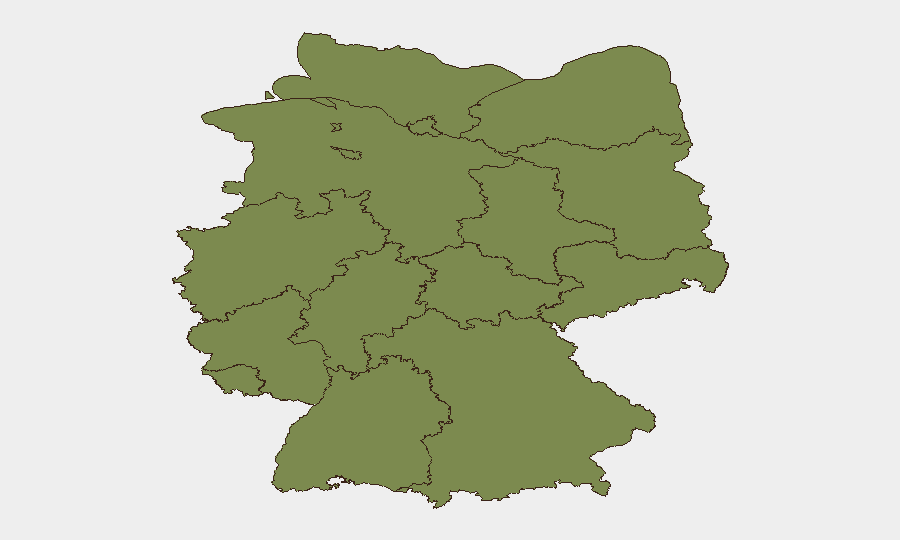
Berlin's composite risk score (31.8) is now 5.7 times higher than the second-ranked state (Schleswig-Holstein, 5.6), driven by the 25–26 July terrorist attack, ongoing security response, and operational gaps. Schleswig-Holstein and Saxony-Anhalt follow at moderate distance, reflecting lower-frequency events. Lower Saxony (rank 4, score 3.6) has added exposure from the Stade shooting and NATO Steadfast Dart logistics activity. All other states remain well below risk 3.5, indicating Germany's risk remains heavily concentrated in Berlin and regionally distributed across the north and east.
How GeoBit Would Assist
Corporate security teams should deploy AOI monitoring and early warning on Berlin (Tiergarten, Mitte, Charlottenburg districts) and Lower Saxony transport hubs; use OSINT fusion and Telegram/X monitoring to track Islamist extremist rhetoric and emerging threat actor networks; and employ network and actor analysis to map links between known extremists and supervised-release cases. Sentiment and temporal analysis of protest activity and political discourse around AfD congresses and federal security debates will provide early signals of escalation or de-escalation.
7-Day Outlook
Federal security agencies will intensify inter-agency coordination and monitoring protocols over the next week as new legislative proposals circulate. Berlin will remain under heightened operational posture through the conclusion of Christopher Street Day events. NATO Steadfast Dart 26 movements will continue through northern and central Germany, adding routine military traffic; no escalation is anticipated unless broader geopolitical events intervene.
Highest-Risk Areas — Ranked
| # | State / Region | Risk |
|---|---|---|
| 1 | Berlin | 31.8 |
| 2 | Schleswig-Holstein | 5.6 |
| 3 | Saxony-Anhalt | 4.7 |
| 4 | Lower Saxony | 3.6 |
| 5 | Bavaria | 3 |
| 6 | Baden-Württemberg | 2.8 |
| 7 | Hamburg | 2.5 |
| 8 | Saxony | 2.1 |
| 9 | North Rhine-Westphalia | 1.9 |
| 10 | Rhineland-Palatinate | 1.8 |
| 11 | Thuringia | 1.8 |
| 12 | Mecklenburg-Vorpommern | 1.8 |
Sources
Previous Daily Briefs
A new Germany brief is written every day — each with its own risk map and downloadable CSV. Here's the last week; use the calendar to go further back.
📅 Browse every day by calendar →
Highlighted days have a brief. Tap a day for that day's map & analysis, or “csv” for that day's dataset ($5).
Atlas — our AI intelligence desk — emails them this snapshot personally. Nothing else, no list.