Situation Summary
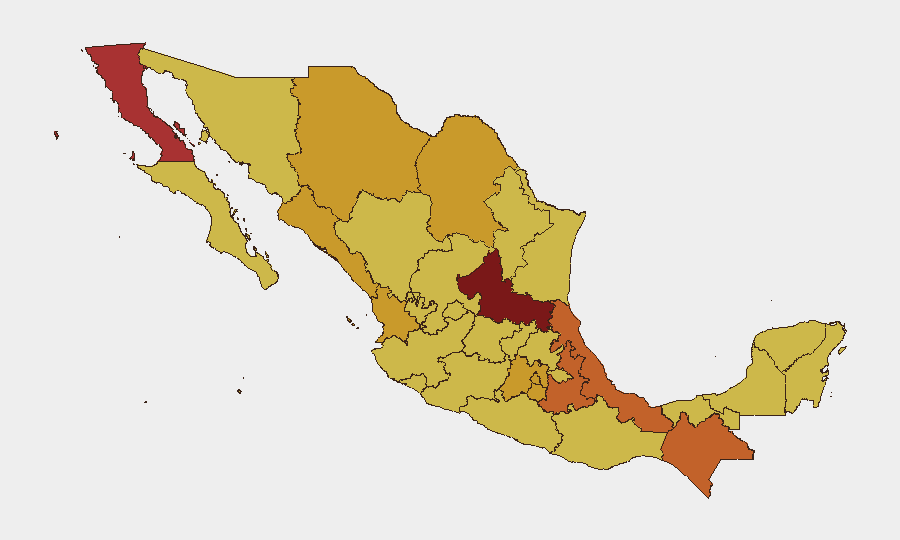
Mexico remains at composite threat level 5 globally (score 100), driven primarily by active organized-crime violence across 12 high-risk states. The 2026 World Cup is now live, creating a convergence of large public gatherings, heightened security operations, and law-enforcement visibility—conditions that typically stabilize immediate event zones but create displacement risk and uneven policing in non-host areas. San Luis Potosí (score 100), Baja California (76.3), and Puebla (73.9) remain the highest-risk sub-national zones; targeted killing of state security personnel in Baja California within the last 48 hours signals organized-crime confidence and sustained anti-authority operations. The trajectory is one of managed event security overlaid on a persistent criminal-insurgency environment.
Key Developments
- Baja California — two state security agents assassinated within 48 hours, reportedly following prior threats (last 48h). Baja California Citizen Security Force confirmed targeted killings linked to organized-crime intimidation, indicating elevated operational risk for law-enforcement and potential retaliatory cycles.
- Guadalajara, Jalisco — World Cup celebrations escalate to civil disorder (6–7 July). Post-Mexico vs Ecuador match celebrations resulted in 48 detentions and 2 police injuries; localized riot behavior and alcohol-fueled crowd volatility documented by La Jornada and social media.
- Mexico City — U.S. Embassy security alert ahead of Mexico vs England match (last 24–48h). Diplomatic alert warning of crowd-related theft, injury risk, and potential unrest; stadium and fan-zone areas flagged for heightened visitor caution.
- Mexico City — special security operation around England team hotel (last 24–48h). FIFA and Mexican government deployed containment measures to prevent fan gatherings and "serenatas" outside team accommodation; demonstrates active crowd-control operations and potential movement restrictions near high-profile facilities.
- Toluca, State of Mexico — England team arrival under heavy security escort (~48h before match, reported last 24–48h). Team convoy heavily protected; fan confrontation occurred despite operational secrecy, illustrating friction between foreign delegations and local populations.
- Nationwide — Mexican authorities executing "mega operativo de seguridad" (announced last 24–48h). Large-scale security deployment across host cities, venues, and critical infrastructure; expect elevated checkpoints, surveillance, and potential movement disruptions around match venues through tournament duration.
- Nationwide — U.S. Embassy reissue of terrorism and kidnapping alerts ahead of World Cup (last 24–48h). Travel advisory highlighting terrorism and kidnapping risk for U.S. nationals and foreign visitors; reinforces elevated perceived threat environment for event attendees.
Highest-Risk Areas
San Luis Potosí (100), Baja California (76.3), Puebla (73.9), and Veracruz (73) account for the four highest composite-threat scores. Baja California's ranking is reinforced by the reported assassinations of state security agents—demonstrating organized-crime operational capacity and willingness to strike at state institutions. San Luis Potosí's maximal score reflects sustained cartel territorial control and active small-arms combat (per 2026-07-08 event signals). Mexico City (72.9) and State of Mexico (72.1) remain elevated despite World Cup security infrastructure, driven by underlying gang and drug-trafficking violence that persists alongside event management.
How GeoBit Would Assist
Intel Sweep, OSINT Fusion & Actor Analysis track organized-crime command structure, cartel territorial claims, and threat actor statements in real time across Telegram, X, and regional news feeds—enabling early identification of criminal operations near corporate assets or travel corridors. AOI Monitoring & Early Warning on Baja California, San Luis Potosí, and State of Mexico with persistent alerting detects localized violence spikes, roadblocks, or security-force deployments before they affect supply chains or personnel movement. Routing & Network Analysis provides alternative travel routes and real-time corridor assessment to avoid active conflict zones, checkpoints, and areas of heightened cartel activity or law-enforcement operations.
7-Day Outlook
World Cup event security will sustain heightened police and military presence in host cities through the week, reducing street-level opportunistic crime but potentially displacing cartel operations to non-host regions. Baja California and San Luis Potosí should be monitored for retaliation cycles or accelerated turf conflicts as criminal organizations exploit diluted state capacity. Foreign visitor influx and associated wealth concentration will attract targeting; personnel traveling beyond event zones face elevated kidnapping and extortion risk.
Highest-Risk Areas — Ranked
| # | State / Region | Risk |
|---|---|---|
| 1 | San Luis Potosí | 100 |
| 2 | Baja California | 76.3 |
| 3 | Puebla | 73.9 |
| 4 | Veracruz | 73 |
| 5 | Chiapas | 73 |
| 6 | Mexico City | 72.9 |
| 7 | Sinaloa | 72.5 |
| 8 | State of Mexico | 72.1 |
| 9 | Nayarit | 71.4 |
| 10 | Coahuila | 71.3 |
| 11 | Morelos | 71.3 |
| 12 | Chihuahua | 71.2 |
Sources
Previous Daily Briefs
A new Mexico brief is written every day — each with its own risk map and downloadable CSV. Here's the last week; use the calendar to go further back.
📅 Browse every day by calendar →
Highlighted days have a brief. Tap a day for that day's map & analysis, or “csv” for that day's dataset ($5).
Atlas — our AI intelligence desk — emails them this snapshot personally. Nothing else, no list.