Situation Summary
Nepal's security environment remains moderately volatile (global rank #56, composite threat 25), with acute political tension concentrated in Kathmandu following the death of a 25-year-old ride-hailing worker on 10 July 2026. Youth-led protests demanding Prime Minister resignation and government accountability have sustained momentum in central administrative zones, while parallel civic grievances (usurious lending, squatter evictions) are mobilizing additional protest clusters across the country. Drug enforcement activity and unexplained deaths across multiple districts suggest concurrent public-order fragmentation, though no systemic breakdown is evident.
Key Developments
- Kathmandu (Maitighar, Tripureshwor, Singha Durbar) – 10–11 July 2026: Gen-Z and activist-led demonstrations persisted over two days following Ganesh Nepali's death from burn injuries; crowds concentrated at Maitighar and core government complexes (Parliament/Singha Durbar area), demanding Prime Minister resignation and accountability for eviction policies. Police presence increased; multiple activists previously detained over eviction protests were highlighted in current rallies.
- Kathmandu (House of Representatives) – 10 July 2026: Home Minister Sudan Gurung announced a five-member probe committee (led by DIG Govinda Thapaliya) into Ganesh Nepali's death and confirmed three Kathmandu Valley Police Office officials taken into custody for questioning.
- Dhanusha (Dhalkebar) – 10 July 2026: Victims of usurious lending ("meter byaj") reached Dhalkebar on day two of a march toward Kathmandu, creating mobile protest clusters along the route and generating secondary mobilization pressure on the capital.
- Multi-district (Siraha, Jhapa, Jumla, Rupandehi, Morang, Sunsari, Dang, Kapilvastu, Tanahun, Kathmandu) – last 48 hours: Police conducted coordinated drug-enforcement operations resulting in 20 arrests; hashish, brown heroin, marijuana and controlled medicines seized. Operations span geographically dispersed zones, suggesting routine enforcement rather than localized crisis.
- Five districts (Jhapa, Jajarkot, Tanahun, Banke, Kavre) – last 24–48 hours: Five unexplained deaths reported across separate districts; authorities investigating with potential public-safety implications flagged in national briefings.
- National political-administrative level – 13–15 July 2026: Signal intelligence indicates internal government friction (Health Ministry vs. Government apparatus, Prime Minister rejection of proposals, Parliament/Government/Media disapproval cycles) concurrent with street-level unrest, suggesting policy disagreement alongside public pressure.
Highest-Risk Areas
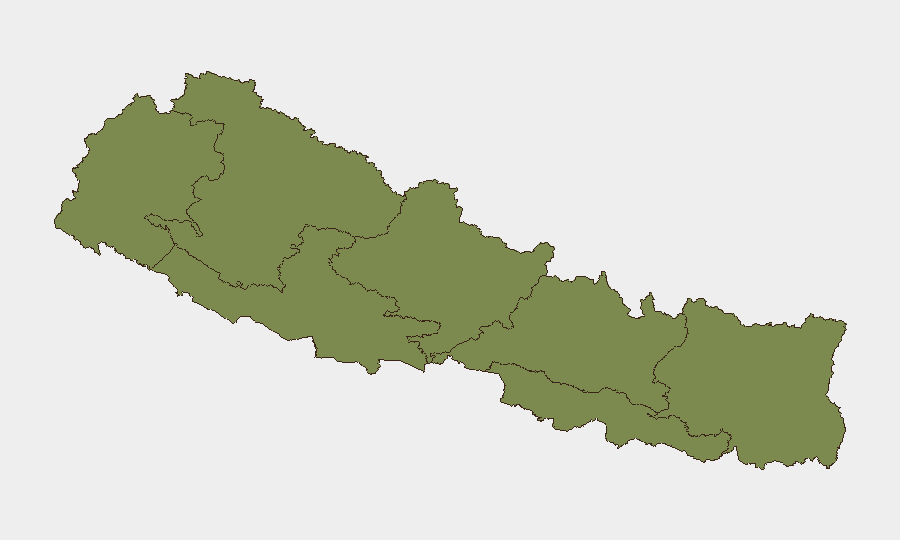
Bagamati Province (risk score 32) dominates the national threat picture, driven by concentrated protest activity and political tension in Kathmandu and surrounding administrative zones. Secondary risk concentration in Koshi Province (4.8) reflects crime and public-safety incidents; remaining provinces (Gandaki, Lumbini, Madhesh, Karnali, Sudurpashchim) register significantly lower composite scores (3.6–2.0), indicating localized rather than systematic provincial instability. Risk is urban-centered and political rather than territorial or insurgent in character.
How GeoBit Would Assist
Teams with personnel or assets in Nepal should deploy AOI Monitoring & Early Warning on Kathmandu's administrative core (Maitighar, Singha Durbar, Tripureshwor) and march routes to Kathmandu to track protest momentum and police response in real time. Entity extraction and sentiment/temporal analysis on social media, news feeds and Telegram channels will discern whether youth mobilization sustains or fragments over the next week. Network & Actor Analysis and cross-checked OSINT fusion can clarify internal government policy disagreement and assess ripple effects on duty-of-care operations.
7-Day Outlook
Kathmandu protests are likely to persist but may moderate if the probe committee gains public credibility or if secondary grievances (evictions, lending practices) receive government acknowledgment. The concurrent march from Dhanusha could converge with Kathmandu demonstrations by mid-week, creating larger but still manageable crowd events. No imminent escalation to violence or broader instability is signaled, though unpredictable individual acts (self-harm, rioting) remain a low-probability, high-impact risk.
Highest-Risk Areas — Ranked
| # | State / Region | Risk |
|---|---|---|
| 1 | Bagamati Province | 32 |
| 2 | Koshi Province | 4.8 |
| 3 | Gandaki Province | 3.6 |
| 4 | Lumbini Province | 3.2 |
| 5 | Madhesh Province | 3 |
| 6 | Karnali Province | 2.1 |
| 7 | Sudurpashchim Province | 2 |
Sources
Previous Daily Briefs
A new Nepal brief is written every day — each with its own risk map and downloadable CSV. Here's the last week; use the calendar to go further back.
📅 Browse every day by calendar →
Highlighted days have a brief. Tap a day for that day's map & analysis, or “csv” for that day's dataset ($5).
Atlas — our AI intelligence desk — emails them this snapshot personally. Nothing else, no list.