Situation Summary
Pakistan remains at composite threat rank #30 globally with 906 tracked security events, driven by elevated militant activity along the Afghanistan border, insurgent operations in Balochistan, and renewed political unrest in Kashmir. Security forces are conducting sustained cross-border operations against TTP and Jamaat-ul-Ahrar positions, while coordinated attacks on military installations continue in major urban centers. The threat environment shows no sign of de-escalation over the next 7 days, with overlapping militant, sectarian, and political drivers sustaining operational risk across multiple provinces.
Key Developments
- Karachi, Sindh (2026-07-03) — Jamaat-ul-Ahrar militants conducted a complex attack on a Pakistan Rangers headquarters facility using an explosive-laden vehicle followed by sustained gunfire, resulting in at least 3 Rangers personnel killed and 6 militants neutralized. This represents a significant tactical escalation in urban strike capability.
- Pakistan–Afghanistan border, Khyber Pakhtunkhwa & Balochistan (through 2026-07-03) — Operation Ghazab-ul-Haq continues with Pakistani military conducting ground operations and airstrikes against TTP and Jamaat-ul-Ahrar militants; multiple senior commanders and fighters killed as of July 3, with cross-border strikes described as "calibrated" and ongoing.
- Bajaur District, Khyber Pakhtunkhwa (through 2026-07-03) — Intelligence-based operations by Pakistani security forces killed a senior TTP commander and three Jamaat-ul-Ahrar members; operations remain active as part of sustained border campaign.
- Pakistan–Afghanistan border (2026-06-30) — Pakistani air-defense forces downed four drones assessed as Taliban-launched incursions; ISPR confirmed readiness to counter further cross-border threats, signaling continued tension in aerial domain.
- Pakistan-administered Kashmir, Rawalakot region (ongoing, escalating ahead of 2026-07-05) — Joint Awami Action Committee-linked protest groups have intensified political agitation with reports of mass protests, detentions, movement restrictions, and supply-chain disruptions; organizers have called for a "complete showdown" on July 5, 2026, indicating acute unrest in the immediate term.
- Balochistan (ongoing through early July 2026) — Continuing reports of insurgent attacks on security forces and subsequent crackdowns; unrest remains active but without discrete incident-level timestamps in the 24–48-hour window.
Highest-Risk Areas
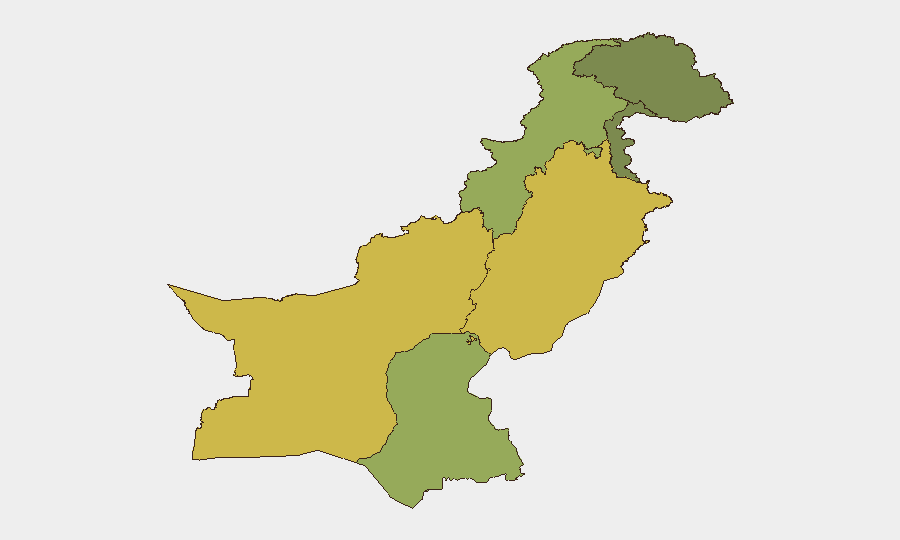
Balochistan (risk 68.8) and Punjab (64.0) drive the national threat composite, with Balochistan sustaining the highest risk due to ongoing separatist and militant insurgency, while Punjab reflects concentrated urban strike risk from organized militant cells operating in Karachi and Lahore. Khyber Pakhtunkhwa (56.7) remains a critical border-conflict zone; the intensity of cross-border TTP/Jamaat-ul-Ahrar operations and Pakistani military responses indicates sustained tactical volatility. Islamabad Capital Territory (51.1) presents administrative and symbolic attack targets; the recent unrest in Kashmir-adjacent regions suggests potential spillover or coordinated political action affecting the capital's security perimeter.
How GeoBit Would Assist
Security teams managing Pakistan operations should employ AOI Monitoring & Early Warning to track persistent threats in Balochistan, Khyber Pakhtunkhwa, and urban Sindh, with real-time alerting on militant movements and security force deployments. Battle Mapping and Force Structure tracking would provide tactical clarity on Pakistan military operations and cross-border strike patterns, enabling asset-movement planning around active conflict zones. Network & Actor Analysis coupled with multi-language OSINT (X/Telegram feeds, militant communiqués, regional media) would surface emerging attack patterns and organizational coordination—critical for duty-of-care assessments in high-risk provinces.
7-Day Outlook
The next week will likely see continued militant pressure along the Afghanistan border and sustained cross-border Pakistani operations, with elevated risk of secondary attacks in urban centers (Karachi, Lahore, Islamabad) by Jamaat-ul-Ahrar and affiliated cells. Kashmir political unrest on July 5 could trigger broader regional instability or security force escalation. Overall risk trajectory remains elevated with no de-escalation indicators evident.
Highest-Risk Areas — Ranked
| # | State / Region | Risk |
|---|---|---|
| 1 | Balochistan | 68.8 |
| 2 | Punjab | 64 |
| 3 | Khyber Pakhtunkhwa | 56.7 |
| 4 | Islamabad Capital Territory | 51.1 |
| 5 | Sindh | 49.8 |
| 6 | Azad Kashmir | 39.3 |
| 7 | Gilgit-Baltistan | 38.8 |
Sources
Previous Daily Briefs
A new Pakistan brief is written every day — each with its own risk map and downloadable CSV. Here's the last week; use the calendar to go further back.
📅 Browse every day by calendar →
Highlighted days have a brief. Tap a day for that day's map & analysis, or “csv” for that day's dataset ($5).
Atlas — our AI intelligence desk — emails them this snapshot personally. Nothing else, no list.