Situation Summary
The Philippines maintains a composite threat rank of #51 globally (score 35), with 113 tracked events indicating sustained but not acute security pressure. Metro Manila dominates risk assessment at 54.8—more than 70% higher than any other region—driven by concentrated urban crime, political tension, and maritime-domain friction in adjacent waters. The last 24–48 hours show isolated incidents rather than systemic escalation: a targeted killing in Caloocan, fresh South China Sea water-cannon confrontations, and diplomatic friction over information warfare, all within routine operational parameters for the country's current risk profile.
Key Developments
- South China Sea – Bajo de Masinloc (Zambales), 24 July 2026: Philippine Coast Guard condemned fresh China Coast Guard water-cannon attacks against PH supply vessels near the disputed shoal, obstructing fuel and food delivery to Filipino fishermen. Maritime transit and supply operations in the West Philippine Sea face elevated operational friction.
- Metro Manila – Caloocan City, 24–25 July 2026: Philippine National Police launched investigation into shooting death of pro-Marcos online commentator ("Mima Alicia") and wounding of her partner by unidentified gunmen. Police are examining whether political online content motivated the attack; manhunt ongoing.
- National – Diplomatic protest, 24–25 July 2026: Department of Foreign Affairs lodged formal protest with China over "racist" AI-generated video (aired by China Daily) depicting Filipinos as monkeys. Reflects escalating information-domain friction alongside physical South China Sea incidents.
- National – Political climate, 24–25 July 2026: Vice President Sara Duterte impeachment trial proceeded with House prosecution seeking subpoena of AMLC-linked bank accounts. Public polling shows declining confidence in President Marcos Jr., elevated political tension but no associated public unrest reported in last 48 hours.
- National – Law enforcement operations, 24 July 2026: Department of Interior and Local Government highlighted ongoing manhunts for multiple high-profile fugitives, indicating sustained police operations across Metro Manila and regional centers. No new fugitive captures or major incidents reported; routine investigative activity.
Highest-Risk Areas
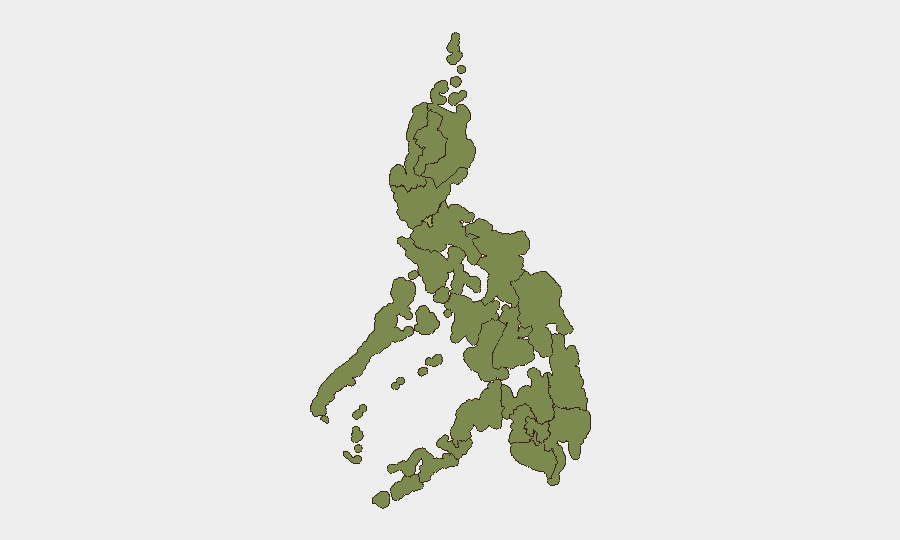
Metro Manila's risk score of 54.8 reflects concentration of urban crime, political sensitivity, and maritime-domain exposure; it accounts for the majority of Philippines-wide threat elevation. The Cordillera Administrative Region (31.7) follows at distant second, driven by remote terrain, historical insurgent activity, and mining-sector disputes. Negros Island, Davao, and Calabarzon (all 25–25.4) show secondary clustering around agricultural-crime, narcotics transit, and regional political volatility. The remaining ten regions cluster tightly (24.8–24.9), indicating relatively even baseline risk distribution outside the capital and its immediate periphery.
How GeoBit Would Assist
Intel Sweep and multi-language OSINT fusion enable continuous monitoring of Philippine news, social-media signals (X, Telegram), and official agency statements to track emerging incidents in real time and distinguish noise from actionable threat. AOI Monitoring & Early Warning with persistent watch on Metro Manila, Cordillera, and West Philippine Sea maritime zones would provide advance notice of criminal activity escalation, protest mobilization, or South China Sea incidents before they impact corporate operations. Routing & Network Analysis supports duty-of-care teams in identifying safe transit corridors and alternative supply routes in high-risk regions and disputed waters.
7-Day Outlook
No major escalation is indicated in the near term; current incidents are isolated rather than synchronized. Continued low-level South China Sea friction and political tension around the VP impeachment trial should be expected, with minimal spillover to broader public order. Monitoring cadence should remain elevated for Metro Manila (crime/politics) and West Philippine Sea (maritime operations), with routine vigilance for regional security developments.
Highest-Risk Areas — Ranked
| # | State / Region | Risk |
|---|---|---|
| 1 | Metro Manila | 54.8 |
| 2 | Cordillera Administrative Region | 31.7 |
| 3 | Negros Island Region | 25.4 |
| 4 | Davao Region | 25.2 |
| 5 | Calabarzon | 25 |
| 6 | Soccsksargen | 24.9 |
| 7 | Ilocos Region | 24.9 |
| 8 | Cagayan Valley | 24.9 |
| 9 | Eastern Visayas | 24.9 |
| 10 | Central Visayas | 24.9 |
| 11 | Bangsamoro | 24.8 |
| 12 | Caraga | 24.8 |
Sources
Previous Daily Briefs
A new Philippines brief is written every day — each with its own risk map and downloadable CSV. Here's the last week; use the calendar to go further back.
📅 Browse every day by calendar →
Highlighted days have a brief. Tap a day for that day's map & analysis, or “csv” for that day's dataset ($5).
Atlas — our AI intelligence desk — emails them this snapshot personally. Nothing else, no list.