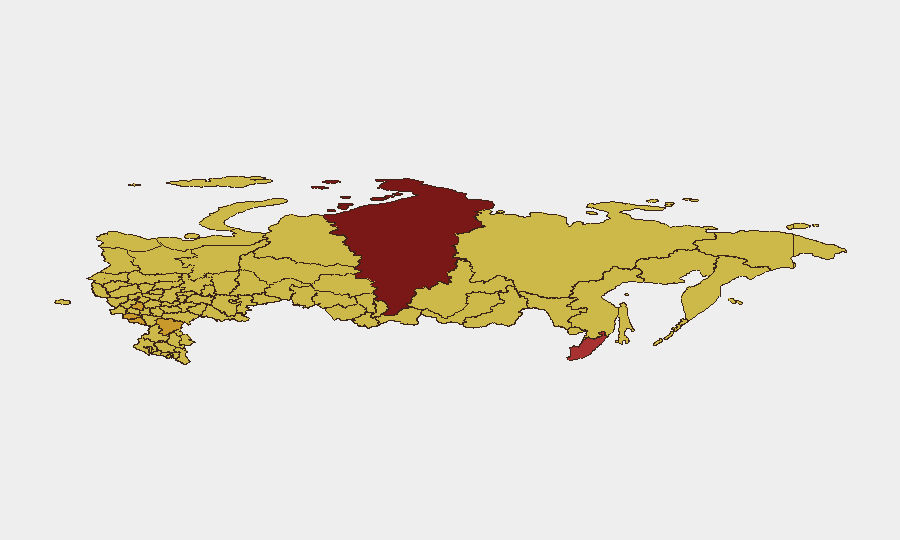
Situation Summary
Russia faces acute energy-infrastructure stress following a sustained Ukrainian campaign of long-range strikes on oil refineries and fuel facilities across multiple regions over 28–29 June. Fuel shortages have materialized on the ground, with petrol-station queuing and civilian rationing now reported in several oblasts and occupied Crimea. Moscow remains the single highest-risk location, but southern and western border regions (Volgograd, Belgorod, Kursk) are simultaneously experiencing both direct conflict activity and cascading logistical disruption. The trajectory is toward continued infrastructure targeting and compounding supply-chain friction across Russian territory.
Key Developments
- Volgograd Oblast, 28–29 June – Ukrainian drone strikes hit oil-refinery and fuel-storage infrastructure; President Zelenskyy confirmed attacks on two Russian refineries in public statements. Regional energy capacity degraded; fuel availability is now a documented constraint for civilian and commercial transport.
- Belgorod Oblast, 28–29 June – Cross-border drone and missile strikes reported by multiple sources; part of coordinated Ukrainian campaign targeting southern Russian logistics and energy nodes. Elevated risk to civilians and local supply routes ongoing.
- Multi-regional (12+ oblasts plus Crimea), night of 28–29 June – Ukrainian forces conducted one of the war's largest aerial offensives to date, with hundreds of drones and missiles striking energy infrastructure, military targets, and transport hubs across Russia and occupied Crimea. Russian air-defense claims intercept of hundreds of systems; independent confirmation of widespread impact pending.
- Russian Oil Refineries (nationwide), 29 June – Zelenskyy announced fresh strikes on two refineries; international media (DW, WION) corroborated timing and scope, indicating sustained targeting of strategic energy assets.
- Fuel Rationing and Shortages, multiple regions, 29 June – State media and Putin's latest remarks confirm "long queues at petrol stations" and regional fuel rationing in response to infrastructure damage. Logistical constraint now affecting civilian mobility and supply chains in real time.
- Crimea, late week into 29 June – Russian authorities declared a state of emergency on civilian fuel sales following earlier Ukrainian strikes. Severe local constraints on fuel access and heightened civil-unrest potential reported.
- Putin Statement, 29 June – Russian president acknowledged "problems" and "certain shortage" of fuel across Russia following Ukrainian strikes, though characterized the situation as "not critical." Public acknowledgment signals systemic pressure on energy security.
Highest-Risk Areas
Moscow (risk 100) dominates the ranking due to concentration of political, financial, and logistical infrastructure; even indirect energy disruption poses operational risk to corporate operations and personnel. The southern and western border oblasts—Volgograd (71.2), Belgorod (71.6), Kursk (72.5), and Tula (71.4)—are now simultaneously subject to direct conflict activity, drone strikes, and cascading fuel-supply failures. Krasnoyarsk Krai (84) and Primorsky Krai (76.9) in the east are elevated by distance and supply-chain dependency on southern refineries, increasing vulnerability to energy-infrastructure disruption. Risk in these regions is now acute and dynamic, driven by active military operations and near-real-time logistical degradation.
How GeoBit Would Assist
Corporate security teams would deploy AOI Monitoring & Early Warning on critical facilities, supply corridors, and petrol stations in key regions (Moscow, southern oblasts, Crimea) to detect strikes and supply disruptions in real time. Routing & Network Analysis would identify alternative logistics pathways and fuel-supply chains before shortages cascade to operational sites. Conflict & Military tracking (battle mapping, force-structure and weapons-capability monitoring) combined with OSINT Fusion (X, Telegram, media corroboration) would provide 24–48-hour early warning of new strikes and regional logistical impacts.
7-Day Outlook
Ukrainian strikes on Russian energy infrastructure are likely to continue, targeting refineries and fuel depots to compound logistics pressure. Regional fuel shortages will probably spread and worsen before stabilizing, heightening travel delays and supply-chain friction across southern and central Russia. Moscow and corporate hubs should anticipate reduced fuel availability and longer transport times; contingency planning for alternative fuel sourcing and route optimization is now operationally warranted.
Highest-Risk Areas — Ranked
| # | State / Region | Risk |
|---|---|---|
| 1 | Moscow | 100 |
| 2 | Krasnoyarsk Krai | 84 |
| 3 | Primorsky Krai | 76.9 |
| 4 | Saint Petersburg | 73.7 |
| 5 | Kursk Oblast | 72.5 |
| 6 | Belgorod Oblast | 71.6 |
| 7 | Tula Oblast | 71.4 |
| 8 | Volgograd Oblast | 71.2 |
| 9 | Krasnodar Krai | 70.9 |
| 10 | Astrakhan Oblast | 70.8 |
| 11 | Khanty-Mansiysk Autonomous Okrug – Ugra | 70.7 |
| 12 | Kirov Oblast | 70.7 |
Sources
Previous Daily Briefs
A new Russia brief is written every day — each with its own risk map and downloadable CSV. Here's the last week; use the calendar to go further back.
📅 Browse every day by calendar →
Highlighted days have a brief. Tap a day for that day's map & analysis, or “csv” for that day's dataset ($5).