Situation Summary
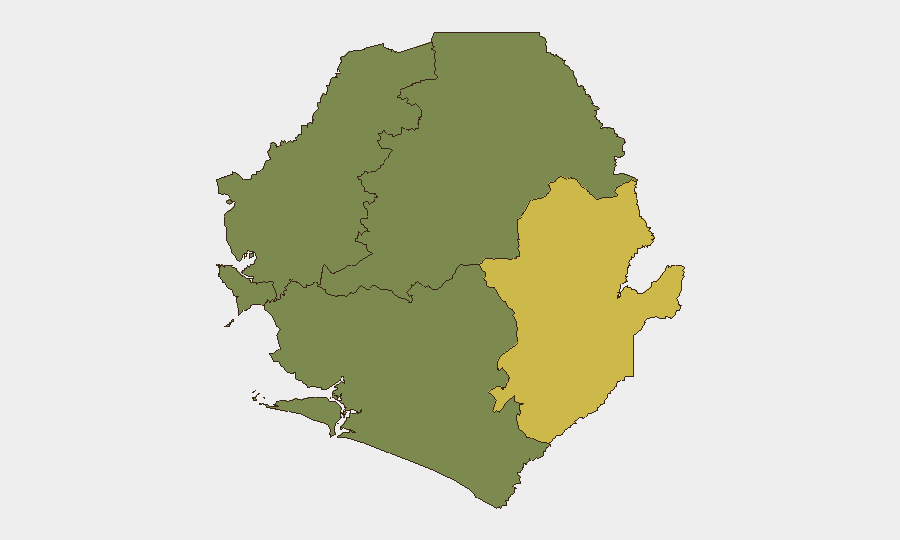
Sierra Leone remains a composite threat level 6 (rank #125 globally), with concentrated risk in the Eastern Province and Western Area (Freetown region). No major security incidents have been publicly confirmed in the last 24–48 hours; the current threat picture reflects structural vulnerabilities—economic pressure, border tensions, and localized violent crime—rather than acute operational crises. The country's stability trajectory remains fragile but not acutely destabilized at the national level.
Key Developments
No reliably confirmed, location-specific security or unrest incidents in Sierra Leone have been identified in the last 24–48 hours from corroborated open-source reporting. GeoBit event signals on 2026-07-14 reference arrests and diplomatic statements (Liberia–Sierra Leone diplomatic exchange, arrests involving New York actors), but these do not indicate active on-the-ground security incidents within Sierra Leone's borders. Structural risk factors—spontaneous violent protests linked to economic hardship, border friction at Yenga (Kailahun District), and violent crime in Freetown and tourist zones—remain persistent but have not escalated into new, dated incidents in the current 48-hour window.
Highest-Risk Areas
The Eastern Province dominates the sub-national risk profile (composite score 68), driven by border instability at Yenga, limited state capacity, and historical conflict legacies. The Western Area (score 35)—home to Freetown and the capital's urban density—faces elevated risk from spontaneous protest activity, economic-motivated crime, and tourism-sector targeting. The Northern, North West, and Southern Provinces register minimal tracked signals, suggesting either lower baseline risk or lower reporting density. Corporate teams with operations or staff in Freetown or eastern mining/agricultural zones should maintain heightened situational awareness; personnel in provincial capitals and smaller towns face lower acute risk but remain exposed to broader crime and infrastructure-reliability issues.
How GeoBit Would Assist
Security teams should deploy Area-of-Interest (AOI) Monitoring & Early Warning focused on Freetown's central business district, Kenema, and the Kailahun–Yenga border zone to detect protest mobilization, incident clustering, and anomalous actor movement before escalation. OSINT Fusion (combining X/Telegram, local media, and entity extraction) would provide real-time sentiment and crowd-movement signals in high-risk urban areas; multi-language search capabilities enable monitoring of Krio and local-language social media where early warnings often surface first. Routing & Network Analysis supports secure staff movement planning around known crime hotspots and border checkpoints.
7-Day Outlook
No acute triggering events are evident in the 48-hour pipeline. Medium-term risk hinges on economic conditions (inflation, fuel availability) and any new diplomatic friction with Liberia or ECOWAS partners, either of which could catalyze spontaneous unrest. Teams should maintain baseline vigilance on protest indicators and cross-border movement; escalation to significant violence remains possible but not imminent based on current signals.
Highest-Risk Areas — Ranked
| # | State / Region | Risk |
|---|---|---|
| 1 | Eastern Province | 68 |
| 2 | Western Area | 35 |
| 3 | North West Province, Sierra Leone | 0 |
| 4 | Northern Province, Sierra Leone | 0 |
| 5 | Southern Province, Sierra Leone | 0 |
Sources
Previous Daily Briefs
A new Sierra Leone brief is written every day — each with its own risk map and downloadable CSV. Here's the last week; use the calendar to go further back.
📅 Browse every day by calendar →
Highlighted days have a brief. Tap a day for that day's map & analysis, or “csv” for that day's dataset ($5).
Atlas — our AI intelligence desk — emails them this snapshot personally. Nothing else, no list.