Situation Summary
South Korea remains at a low-to-moderate composite security threat level (rank #124 globally, score 8/100) with no active terrorism, major civil unrest, or critical-infrastructure disruptions as of 1 July 2026. The primary security concern in the last 48 hours stems from sports-related crowd volatility and online threats tied to the national football team's World Cup exit, concentrated at Incheon International Airport and within digital spaces. North Korea activity has remained in public-statement mode, while political pressure on sports officials has intensified but has not escalated to broader anti-government protest. Overall trajectory is stabilization provided sports-related emotion subsides within 7–10 days.
Key Developments
- Incheon International Airport, 30 June 2026 – Hostile crowd and heavy police deployment upon national football team arrival. Hundreds of angry fans booed and displayed hostile banners ("Korean Football Is Dead") as coach Hong Myung‑bo and players transited the terminal under police and airport-security guard. Approximately 160 riot police were deployed to manage the crowd and prevent physical confrontation; no serious injuries reported.
- Nationwide, 29–30 June 2026 – Online death threat against football coach triggers police alert. Following South Korea's early World Cup exit, police increased security monitoring around coach Hong Myung‑bo and key venues after an online death threat was posted; risk vector identified as targeted harassment rather than systemic extremism.
- Seoul/National, 29–30 June 2026 – Presidential call for inquiry accelerates coach resignation. President Yoon Suk‑yeol publicly called for an investigation into the team's poor performance, amplifying public scrutiny. Within 48 hours, coach Hong Myung‑bo resigned under intensifying political and public pressure.
- Seoul Bankruptcy Court, 30 June 2026 – JoongAng media group placed under court rehabilitation. JoongAng Holdings, JTBC, Megabox cinema operator, and affiliated entities entered court-led rehabilitation due to ~2.8 trillion won in debt tied partly to World Cup and Olympic broadcasting-rights costs. No labor unrest or protests reported yet, but employment uncertainty and reputational risk are present in the media sector.
- Nationwide social media, 29–30 June 2026 – Viral controversy over blurred-face footage fueling online harassment. Disputed allegations that coach Hong's face appeared blurred on national television circulated on Instagram and X, accelerating public outrage and doxxing activity. Illustrates rapid online-anger escalation in South Korea's networked media environment.
- North Korea, 1 July 2026 – Public statement activity recorded. North Korean public messaging continues (no specific operational details in available reporting); simultaneous intelligence investigation activity noted.
- South Korea–United States relations, 1 July 2026 – Military/police power-show coordination and relation reduction. Joint or coordinated military/police activity between South Korea and the United States occurred; simultaneous "reduce relations" signal also recorded. Scope and operational significance require further clarification.
Highest-Risk Areas
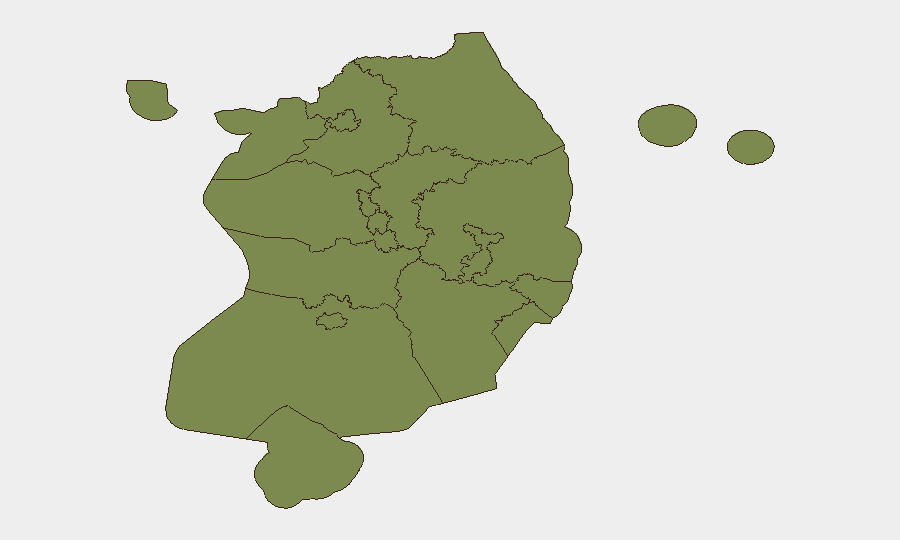
North Chungcheong Province dominates the sub-national risk ranking (31.9), significantly ahead of Seoul (14.7) and Gwangju (14.0), though the nature of North Chungcheong's threat drivers requires deeper investigation via GeoBit's conflict and regime-stability modules. Seoul's elevated risk reflects political attention, media sector volatility, and presidential activity. Gwangju and North Gyeongsang together account for secondary risk vectors. The immediate 48-hour threat footprint, however, is concentrated at Incheon (airport operations) and nationwide digital spaces (online harassment and social media outrage cycles), neither of which appears in the highest-ranked provinces, suggesting a disconnect between baseline regional risk and acute event-driven risk.
How GeoBit Would Assist
Organizations operating in South Korea should leverage Intel Sweep and X/Telegram OSINT to monitor real-time sports-related crowd sentiment and early warning of coordinated online harassment campaigns targeting executives, expatriates, or supply-chain partners. AOI Monitoring & Early Warning focused on Incheon International Airport, Seoul transit nodes, and key corporate facilities would provide persistent alerting if localized crowd activity escalates or political pressure generates labor or protest activity. Sentiment & Temporal Analysis across Korean-language social media would flag accelerating anger cycles hours in advance, enabling duty-of-care teams to adjust travel timing or increase personal-security posture.
7-Day Outlook
Sports-related crowd volatility is expected to dissipate within 7–10 days as the news cycle shifts and the national team departs public view. Online harassment and doxxing of sports figures will likely persist but remain confined to digital channels without clear spillover to corporate or expatriate communities. North Korea's statement activity warrants continued monitoring; any shift from public rhetoric to operational military movement would trigger immediate escalation signals. Barring unexpected geopolitical friction between Seoul and Washington, or labor disputes in the media sector, South Korea's threat posture should return to baseline by mid-July.
Highest-Risk Areas — Ranked
| # | State / Region | Risk |
|---|---|---|
| 1 | North Chungcheong | 31.9 |
| 2 | Seoul | 14.7 |
| 3 | Gwangju | 14 |
| 4 | North Gyeongsang | 5.6 |
| 5 | South Jeolla | 3.5 |
| 6 | Gyeonggi | 3.1 |
| 7 | South Gyeongsang | 2.4 |
| 8 | Gangwon State | 2.1 |
| 9 | Jeonbuk State | 2.1 |
| 10 | Daejeon | 2.1 |
| 11 | Incheon | 1.9 |
| 12 | South Chungcheong | 1.9 |
Sources
Previous Daily Briefs
A new South Korea brief is written every day — each with its own risk map and downloadable CSV. Here's the last week; use the calendar to go further back.
📅 Browse every day by calendar →
Highlighted days have a brief. Tap a day for that day's map & analysis, or “csv” for that day's dataset ($5).