Situation Summary
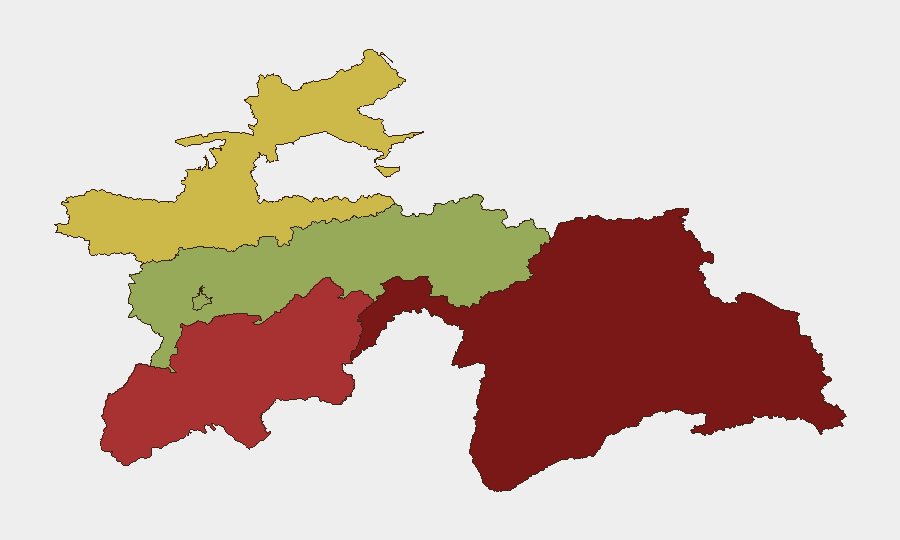
Tajikistan remains at low overall threat level (global rank #127, composite score 14) with no tracked security incidents in the past week. The country's risk profile is sharply concentrated in its southern and eastern border zones, particularly Gorno-Badakhshan (GBAO) and Khatlon Region, where terrain, cross-border activity, and limited state capacity create persistent vulnerability. Recent developments indicate continued regional engagement on trade and infrastructure, with no reported deterioration in the security environment during the week of 28 September–5 October.
Key Developments
- Guliston, Sughd Region (28–29 September): Second Ferghana Peace Forum convened regional dialogue among Tajikistan, Kyrgyzstan, and Uzbekistan on cross-border movement, trade, and cooperation. No security incidents reported; event reflects ongoing diplomatic effort to manage Ferghana Valley tensions.
- Dushanbe (28 September): Central Asian Digital Trade Forum held to address digital infrastructure, data exchange, and online-system integration. No cyberattack, outage, or disruption reported; event signals continued investment in regional digital governance.
- GBAO (29 September): Tajikistan announced expansion of electricity networks in the Gorno-Badakhshan Autonomous Region. Infrastructure development announcement; no outage, attack, or civil-unrest event documented.
- Banking sector (29 September announcement; restrictions effective 1 October): Humo Bank implemented biometric identification requirements for non-resident customers (including Russian nationals) to retain remote card access. Affects travel logistics and financial access for some expatriate populations; not a security incident.
- Tajikistan–Afghanistan energy corridor (2 October): Officials discussed electricity cooperation, including expansion of 110-kilovolt transmission line toward Faizabad, Badakhshan. No attack, outage, or security degradation reported.
- Pension-system modernization (2 October): Asian Development Bank approved $20.5 million grant for Tajik social-service infrastructure, including secure data centers and cybersecurity upgrades. ADB announcement cited underlying economic pressure from food/fuel costs and migrant-labor uncertainty but reported no new incident.
- Background context: The 22 September armed clash between Tajik border forces and smugglers crossing from Afghanistan (three smugglers killed) remains the most-cited recent event in open reporting; no follow-up escalation or related incidents confirmed in the past week.
Highest-Risk Areas
GBAO (risk score 92) and Khatlon Region (78) together account for the majority of Tajikistan's internal threat surface, driven by remote terrain, weak state presence, and proximity to Afghanistan. GBAO's extreme elevation and limited infrastructure compound law-enforcement reach and create environments conducive to smuggling, undocumented cross-border movement, and criminal enterprise. Sughd Region (65) faces secondary risk from Ferghana Valley border complexity and informal trade networks. Dushanbe (42) and Districts of Republican Subordination (58) carry substantially lower operational risk, though urban areas remain subject to low-probability but high-consequence events.
How GeoBit Would Assist
Security teams with personnel or assets in Tajikistan should employ AOI (Area-of-Interest) Monitoring & Early Warning on Khatlon and GBAO to detect emerging cross-border activity, trafficking routes, or force movements. Multi-language OSINT (X/Twitter, Telegram, local news feeds) and Intel Sweep capabilities provide continuous event detection and corroboration, reducing reliance on delayed official reporting. GIS & Spatial Analysis and Routing & Network Analysis allow duty-of-care teams to plan secure travel corridors and identify infrastructure-vulnerability zones in high-risk regions.
7-Day Outlook
No imminent security escalation is indicated. Regional diplomatic engagement (Ferghana Peace Forum, energy cooperation talks) suggests continued commitment to de-escalation. Monitoring for secondary effects from the 22 September smuggling clash and any Afghan Taliban response remains prudent; sustained friction along the southern border remains the highest-probability near-term risk vector.
Highest-Risk Areas — Ranked
| # | State / Region | Risk |
|---|---|---|
| 1 | Gorno-Badakhshan Autonomous Region | 92 |
| 2 | Khatlon Region | 78 |
| 3 | Sughd Region | 65 |
| 4 | Districts of Republican Subordination | 58 |
| 5 | Dushanbe | 42 |
Sources
Previous Weekly Briefs
A new Tajikistan brief is written every Monday, covering the week — each with its own risk map and downloadable CSV. Use the calendar to go further back.
- September 28, 2026
- September 21, 2026
- September 14, 2026
- September 7, 2026
- September 3, 2026
- September 2, 2026
- September 1, 2026
📅 Browse past briefs by calendar →
Highlighted days have a brief. Tap a day for that day's map & analysis, or “csv” for that day's dataset ($5).
Atlas — our AI intelligence desk — emails them this snapshot personally. Nothing else, no list.