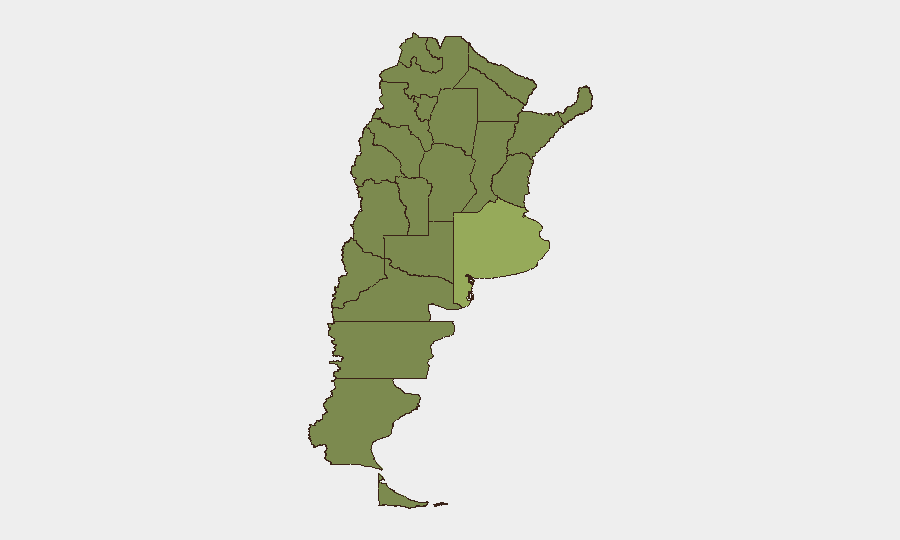
Situation Summary
Argentina remains at mid-range global threat level (#40 globally, composite score 37) with volatile urban crime, organized crime activity, and crowd-control incidents dominating the security landscape. A spike in street robberies, armed assaults, and narcotics trafficking at key transportation hubs has coincided with mass public celebrations tied to the national football team's World Cup performance. A bomb threat evacuation at the US Embassy on 2026-07-29 underscores elevated diplomatic and infrastructure security attention. The security environment is characterized by unpredictable clustering of incidents across Buenos Aires and surrounding provinces rather than systemic instability.
Key Developments
- Buenos Aires (Obelisk), 2026-07-29: Mass celebrations during football team victory resulted in fan-police clashes, with at least nine arrests and significant disorder reported.
- US Embassy (Palermo, Buenos Aires), 2026-07-29: Bomb threat prompted evacuation, major police cordon, and emergency security protocol activation around the diplomatic compound.
- Multiple cities nationwide, 2026-07-29: World Cup–related celebrations triggered escalation in street crime; tear gas deployed in at least five cities, 40+ detained, including armed robbery of a jewelry store.
- La Matanza (Buenos Aires Province), 2026-07-29: Triple homicide execution in public view; investigators treating as narco-related revenge killing, indicating organized crime violence continuation.
- Avellaneda (Buenos Aires Province), 2026-07-29: Police officer fatally shot suspected motorcycle thief during armed robbery attempt; incident video-documented, second suspect at large.
- Ezeiza International Airport, 2026-07-29: Airport Security Police confirmed dismantling of transnational drug-trafficking organization; multiple arrests following narcotics interdiction for European markets.
- Mar del Plata (Buenos Aires Province), 2026-07-29: Armed robbery at party venue with workers held at gunpoint; cash stolen during event preparation.
- Las Heras (Mendoza Province), 2026-07-29: Ride-hailing driver robbed at gunpoint by passenger; approximately 100,000 pesos and identity documents stolen.
Highest-Risk Areas
Buenos Aires Province (risk 55.8) and Autonomous City of Buenos Aires (26.8) drive national risk due to concentration of street robbery, narcotics trafficking, crowd-disorder incidents, and diplomatic-security infrastructure. Neuquén, Santiago del Estero, and Río Negro provinces (31.1–31.0) exhibit secondary elevation linked to organized crime territorial disputes and border-adjacent vulnerabilities. The urban-crime concentration reflects both criminal opportunity in high-density commercial and transportation corridors and transient spikes tied to public celebrations. Provincial risk clustering in the northwest (Jujuy, Salta) and northeast (Chaco) reflects ongoing drug-trafficking corridor activity and limited state capacity in remote areas.
How GeoBit Would Assist
Security teams would deploy AOI Monitoring & Early Warning to flag incident clustering in high-traffic zones (Ezeiza Airport, Obelisk, embassy precincts) with real-time alerting on police activity and crowd events. Intel Sweep and OSINT Fusion across social media, local news, and police scanner data would provide 24-hour tracking of robbery hotspots, narco-violence indicators, and diplomatic security alerts. Routing & Network Analysis would enable alternative-route planning for personnel and assets around flash-mob risks and police cordons, while GIS & Spatial Analysis maps incident density by hour and district to inform duty-of-care scheduling and movement protocols.
7-Day Outlook
Crowd disorder risk will likely persist through the immediate post-celebration period as celebrations wind down over the next 3–5 days. Street robbery and motorcycle-theft activity will remain elevated in provincial capitals and Buenos Aires metro zones; narcotics enforcement at Ezeiza and other transit hubs suggests active organized-crime disruption operations. No systemic political instability or regime-level threat is currently signaled, but localized unrest and opportunistic armed crime will remain the primary duty-of-care driver for corporate operations in the region.
Highest-Risk Areas — Ranked
| # | State / Region | Risk |
|---|---|---|
| 1 | Buenos Aires Province | 55.8 |
| 2 | Neuquén Province | 31.1 |
| 3 | Santiago del Estero Province | 31 |
| 4 | Río Negro Province | 30.6 |
| 5 | Chaco Province | 30.6 |
| 6 | Jujuy Province | 29.9 |
| 7 | Córdoba | 28.5 |
| 8 | Salta Province | 26.8 |
| 9 | Autonomous City of Buenos Aires | 26.8 |
| 10 | Santa Fe Province | 26.5 |
| 11 | Chubut Province | 26.1 |
| 12 | Tucumán Province | 26.1 |
Sources
Previous Daily Briefs
A new Argentina brief is written every day — each with its own risk map and downloadable CSV. Here's the last week; use the calendar to go further back.
📅 Browse every day by calendar →
Highlighted days have a brief. Tap a day for that day's map & analysis, or “csv” for that day's dataset ($5).
Atlas — our AI intelligence desk — emails them this snapshot personally. Nothing else, no list.