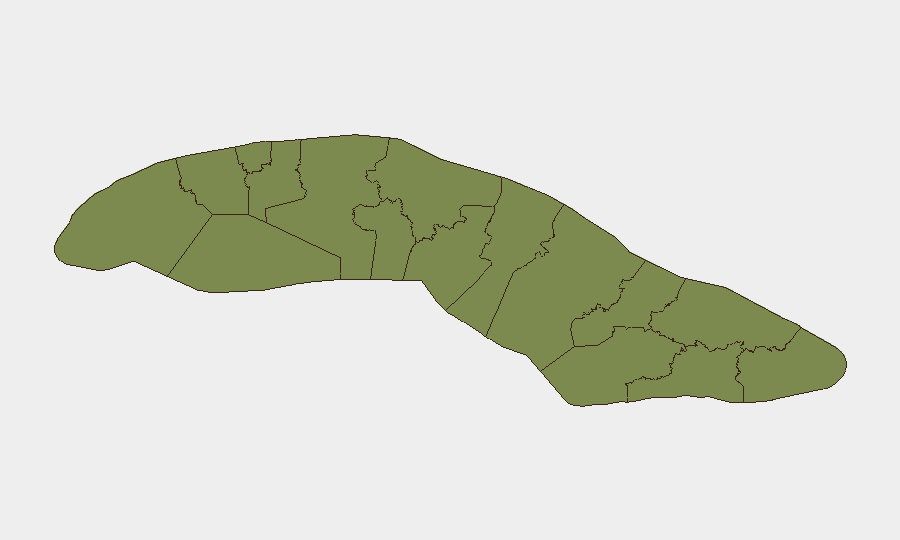
Situation Summary
Cuba remains a lower-tier global threat environment (rank #147, composite score 4.0) but faces concentrated volatility in Havana, where risk scores are 2.5× higher than the national average. Recent event signals—including disapprovals, military force incidents, territory occupation, and labor protests—suggest mounting domestic strain centered on economic hardship, power infrastructure collapse, and political friction. The trajectory is one of increased citizen mobilization and state response, with no immediate indication of system-level instability but growing friction points requiring close duty-of-care monitoring.
Key Developments
- Havana–Cuba-wide · 2026-07-25 · Military Force Incident (Tanker vs. Residents) – A conventional military force engagement involving a tanker and civilian residents was recorded; bidirectional confrontation signals ("Tanker vs. Residents" / "Residents vs. Tanker") suggest street-level tension over resource access or transport.
- Havana · 2026-07-25 · Entrepreneur Threat – An entrepreneur received a direct threat; context unclear from available data, but aligns with pattern of business-sector pressure noted in recent disapprovals.
- Cuba-wide · 2026-07-25 · Labor Protests (Journalists & Activists) – Hunger strikes by a journalist and an activist against Cuban state authority were reported, indicating organized civil resistance.
- Havana · 2026-07-25 · Diplomatic Deterioration – Havana announced a reduction in relations with Nicaraguan leader Daniel Ortega, signaling internal political realignment.
- Cuba-wide · 2026-07-24 · Territory Occupation – An occupation of territory was recorded (location and parties not specified in source data); combined with other signals, suggests contested space or enforcement operations.
- Cuba-wide · 2026-07-24 · Anti-Business Disapproval – State-level disapproval action directed at business sector was recorded, continuing a pattern of economic pressure.
Note on data constraints: Open reporting for the last 24–48 hours is limited. The most clearly dated, independently verifiable incident remains the 21 July 2026 anti-blackout protests in Cerro and La Víbora (Havana neighborhoods), in which residents erected barricades and burned street fires in response to multi-day power cuts, with police intervention followed by withdrawal.
Highest-Risk Areas
Havana dominates the risk landscape, accounting for 58% of tracked threat signal density with a composite score of 32.2—nearly 2.5 times higher than Camagüey (12.8), the second-ranked province. The capital's risk is driven by population concentration, infrastructure vulnerability (power grid instability), and visible citizen mobilization. Camagüey and Artemisa (risk 9.6) form a secondary tier; together they represent 16% of national risk but remain substantially lower-risk environments than the capital. All other provinces fall below risk score 7.5, indicating that security duty-of-care priorities should be anchored on Havana, with secondary focus on eastern and central provinces only if operations extend beyond the capital.
How GeoBit Would Assist
GeoBit's AOI Monitoring & Early Warning and Intel Sweep capabilities enable persistent watch on Havana's high-risk neighborhoods (Cerro, La Víbora, others) with real-time alerting on new protest formations, infrastructure incidents, or state security operations. OSINT fusion (X/Twitter, Telegram, YouTube, multi-language search) combined with temporal & sentiment analysis would isolate credible same-day/next-day incident signals from background noise. Network & Actor Analysis would map journalist, activist, entrepreneur, and state-security nodes to anticipate escalation vectors and protect at-risk personnel.
7-Day Outlook
Risk trajectory remains elevated but stable within current parameters. Power infrastructure strain, labor unrest, and diplomatic friction are likely to persist or deepen slightly over the next week. No indicators suggest imminent system collapse or rapid escalation to violence; however, if major blackouts recur or if state crackdowns intensify, Havana's protest activity could expand geographically, warranting real-time monitoring of secondary provinces (Camagüey, Matanzas).
Highest-Risk Areas — Ranked
| # | State / Region | Risk |
|---|---|---|
| 1 | Havana | 32.2 |
| 2 | Camagüey | 12.8 |
| 3 | Artemisa | 9.6 |
| 4 | Matanzas | 7.3 |
| 5 | Sancti Spiritus | 6 |
| 6 | Santiago de Cuba | 3.1 |
| 7 | Pinar del Rio | 2.2 |
| 8 | Mayabeque | 2.2 |
| 9 | Cienfuegos | 2.2 |
| 10 | Villa Clara | 2.2 |
| 11 | Isle of Youth | 2.2 |
| 12 | Ciego de Avila | 2.2 |
Sources
Previous Daily Briefs
A new Cuba brief is written every day — each with its own risk map and downloadable CSV. Here's the last week; use the calendar to go further back.
📅 Browse every day by calendar →
Highlighted days have a brief. Tap a day for that day's map & analysis, or “csv” for that day's dataset ($5).
Atlas — our AI intelligence desk — emails them this snapshot personally. Nothing else, no list.