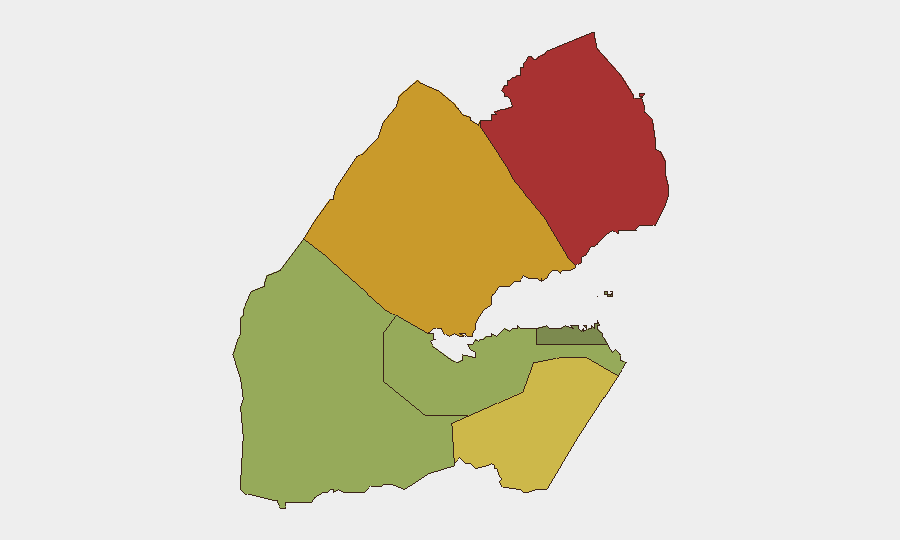
Situation Summary
Djibouti remains a low-incident, strategically positioned state with composite threat ranking #91 globally. The government has signaled heightened focus on internal security, infrastructure resilience, and border control following resumption of political activity, while no discrete security events were recorded in the past seven days. Regional maritime risks tied to Yemen and the Red Sea, as well as persistent terrorism and border-tension concerns near Eritrea, continue to define the threat environment for corporate operations and travel.
Key Developments
- Djibouti City, 2026-09-01: President Ismail Omar Guelleh convened the first Council of Ministers meeting after political resumption and directed the government to strengthen internal security, vital infrastructure protection, border control, cybersecurity, and counter-disinformation capabilities.
- Djibouti (national), 2026-09-02: Presidential messaging reiterated security and peace as prerequisites for development, with explicit emphasis on internal-security vigilance and infrastructure security across government agencies.
- Ali Sabieh, 2026-09-06: At the close of a three-day RPP political gathering, the president warned against foreign interference in domestic affairs, framing sovereignty and internal security as central to national stability amid regional competition.
- Djibouti City/Foreign Ministry, 2026-09-04: Djibouti and Yemen concluded talks on ports, maritime transport, and logistics cooperation; discussions included the security situation in Yemen and developments in the Red Sea and Gulf of Aden, reflecting ongoing maritime-route risk assessment.
- Port Authority (national), 2026-09-03 to 2026-09-06: Djibouti's ports authority publicly deployed AI tools for cargo prediction and transport-infrastructure monitoring, signaling continued investment in critical-infrastructure resilience.
- U.S. Travel Advisory Update, 2026-09-03: Terrorism risk remains flagged nationwide; border tensions near Eritrea continue to be highlighted, with specific concern for areas within 10 miles of the Eritrean border in Tadjoura and Obock regions.
- Djibouti City/Regional Diplomacy, 2026-09-05: IGAD announced an extraordinary ministerial session scheduled for 2026-09-15 in Djibouti City to address regional peace and security, indicating elevated focus on Horn of Africa stability issues.
- Commerce Ministry Enforcement, 2026-09-01 to 2026-09-02: Government issued warnings against sale of expired food products, a compliance enforcement action with potential relevance to informal-sector monitoring.
Highest-Risk Areas
Obock and Tadjourah (composite scores 78 and 72 respectively) dominate sub-national risk, both located in Djibouti's north along the Eritrean border and within designated terrorism concern zones per U.S. advisory. Ali Sabieh (score 65) ranks third and also borders Eritrea, making the northern and western frontier belt the primary driver of national risk. Djibouti City (score 35) remains the lowest-risk major population center, reflecting its role as a cosmopolitan port hub with significant foreign military and diplomatic presence; however, infrastructure and maritime-logistics nodes warrant continuous monitoring given dependence on Red Sea transit.
How GeoBit Would Assist
Security teams operating in Djibouti should employ AOI Monitoring & Early Warning to track Obock, Tadjourah, and Ali Sabieh for border-adjacent activity and cross-border infiltration signals. Maritime & Aviation Tracking combined with Economic & Trade analysis will provide visibility into port operations, cargo flows, and maritime-route disruptions tied to Yemen and Eritrean tensions. OSINT Fusion & Corroboration and Sentiment & Temporal Analysis on government messaging, regional diplomatic channels, and social media will yield early indicators of policy shifts, infrastructure vulnerabilities, or shifts in foreign-interference narratives relevant to duty-of-care planning.
7-Day Outlook
No imminent security incidents are forecast for the coming week. The September 15 IGAD ministerial in Djibouti City will likely drive heightened diplomatic and possibly security activity in the capital; monitor for any secondary event scheduling or heightened security postures. Border and maritime risks remain structural and unchanged; travel and logistics teams should maintain standard protocols for Obock, Tadjourah, and Red Sea transit operations.
Highest-Risk Areas — Ranked
| # | State / Region | Risk |
|---|---|---|
| 1 | Obock | 78 |
| 2 | Tadjourah | 72 |
| 3 | Ali Sabieh | 65 |
| 4 | Arta | 48 |
| 5 | Dikhil | 42 |
| 6 | Djibouti | 35 |
Sources
Previous Weekly Briefs
A new Djibouti brief is written every Monday, covering the week — each with its own risk map and downloadable CSV. Use the calendar to go further back.
- September 1, 2026
- August 30, 2026
- August 27, 2026
- August 25, 2026
- August 23, 2026
- August 21, 2026
- August 19, 2026
📅 Browse past briefs by calendar →
Highlighted days have a brief. Tap a day for that day's map & analysis, or “csv” for that day's dataset ($5).
Atlas — our AI intelligence desk — emails them this snapshot personally. Nothing else, no list.