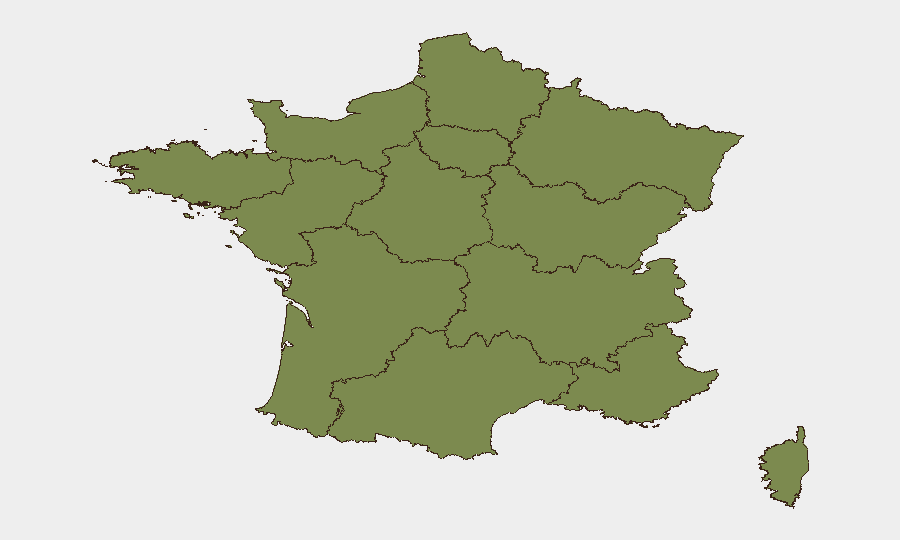
Situation Summary
France remains a moderate-threat environment (global rank #109, composite score 12) with 318 tracked events, but the last 48 hours show a confluence of civil unrest signals, law-enforcement activity, and isolated violent incidents concentrated in Île-de-France. Parliamentary disapproval, media criticism, and multiple arrest/detention events—coupled with diplomatic friction and wildfire infrastructure strain—indicate elevated operational friction across political, public-order, and environmental domains. The risk profile is heavily concentrated in the capital region and northwestern coastal areas; the trajectory suggests sustained but localized instability rather than systemic escalation.
Key Developments
- Dax, Landes (2026-07-21/22) — A 17-year-old was fatally stabbed during local celebrations; incident reflects underlying youth-violence patterns in secondary cities and may prompt localized security response.
- Fontainebleau forest, Seine-et-Marne (2026-07-21–22) — Active wildfires reported contained but not extinguished; traffic disruption and evacuation orders remain in effect, affecting transport corridors and business continuity near Paris.
- Vaulx-en-Velin, Rhône (2026-07-22) — Police arrested four suspects after locating a van with an electric scooter fitted with a Kalashnikov-type assault rifle; suggests organized firearms trafficking or pre-positioned munitions.
- Mulhouse, Haut-Rhin (2026-07-22) — Detained inmate assaulted prison officers, leaving five staff injured (two seriously); reflects penal-system stress and heightened custodial-violence risk.
- Parliamentary/Media Disapproval (2026-07-21–22) — Chamber of Deputies and French media issued disapproval statements; signals political friction or policy dispute that may fuel public demonstrations or institutional gridlock.
- Sino-French Diplomatic Signal (2026-07-23) — China issued public statement toward France; timing and content unknown from available data, but suggests potential trade, sanctions, or geopolitical friction requiring clarification.
- Police Statement (2026-07-20) — Law-enforcement public communication recorded; context unconfirmed but consistent with pattern of civil-order messaging and crowd-management signaling.
Highest-Risk Areas
Île-de-France dominates the risk landscape (score 32.2), reflecting the concentration of government, media, protest infrastructure, and law-enforcement density in Paris and suburbs. The region's elevated composite score is driven by arrest/detention, demonstration, and political disapproval signals; personnel and assets in central Paris, financial districts, and transport hubs face heightened exposure to flash protests, traffic disruption, and public-order operations. Nouvelle-Aquitaine (score 15.5) ranks second, correlating with the Dax stabbing and secondary-city volatility; PACA (Provence-Alpes-Côte d'Azur, score 5) reflects wildfire and evacuation strain. All other regions remain below 3.0, indicating Île-de-France as the primary risk multiplier.
How GeoBit Would Assist
Security teams should deploy AOI Monitoring & Early Warning on Île-de-France protest zones, transport chokepoints, and government districts to detect flash-demonstration onset and route disruption in real time. OSINT Fusion & Corroboration (X/Twitter, Telegram, French media, police radio) will disambiguate the Sino-French diplomatic signal and parliamentary dispute trajectory, enabling duty-of-care teams to anticipate secondary policy or sanctions cascades. Satellite & Imagery analysis supports continuous monitoring of Fontainebleau and other active wildfire zones to track evacuation boundaries and business-continuity impact.
7-Day Outlook
The next 7 days will likely see continued parliamentary/media friction and isolated public-order incidents in Paris and secondary cities, with wildfire-driven traffic disruption persisting in Seine-et-Marne. The Vaulx-en-Velin firearms discovery and Mulhouse custodial violence suggest heightened law-enforcement activity; demonstrations may spike if parliamentary disputes escalate to votes or policy announcements. No indicators of systemic violence or regime instability are present, but operational risk for corporate teams remains above baseline through end-July.
Highest-Risk Areas — Ranked
| # | State / Region | Risk |
|---|---|---|
| 1 | Ile-de-France | 32.2 |
| 2 | Nouvelle-Aquitaine | 15.5 |
| 3 | Provence-Alpes-Côte d'Azur | 5 |
| 4 | Brittany | 2.8 |
| 5 | Bourgogne – Franche-Comté | 2.8 |
| 6 | Auvergne-Rhône-Alpes | 2.6 |
| 7 | Normandy | 2.2 |
| 8 | Hauts-de-France | 2.2 |
| 9 | Centre-Val de Loire | 2.2 |
| 10 | Grand Est | 2.2 |
| 11 | Pays de la Loire | 2.2 |
| 12 | Occitania | 2.2 |
Sources
Previous Daily Briefs
A new France brief is written every day — each with its own risk map and downloadable CSV. Here's the last week; use the calendar to go further back.
📅 Browse every day by calendar →
Highlighted days have a brief. Tap a day for that day's map & analysis, or “csv” for that day's dataset ($5).
Atlas — our AI intelligence desk — emails them this snapshot personally. Nothing else, no list.