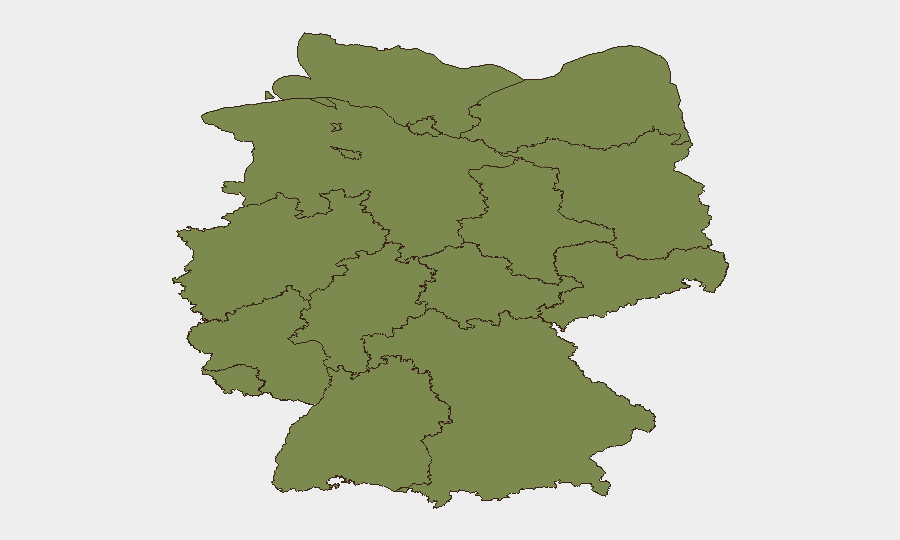
Situation Summary
Germany remains at composite threat level 3 (rank #144 globally), with the security picture dominated by a high-impact Islamist terrorist attack in Berlin on 27 July and a separate mass-casualty incident in Lower Saxony on 29 July. Berlin's risk score (31.4) is sharply elevated relative to all other states, reflecting the concentrated nature of both the attack and the subsequent political and security response. The incident has triggered a national policy debate on extremist monitoring, detention practices, and law-enforcement protocols, with officials confirming no ongoing active threat but signalling imminent security measures.
Key Developments
- Berlin, Tiergarten (27–29 July): A 21-year-old suspect drove a van into Christopher Street Day Pride celebrations, killing one woman and injuring ~29 people, then attacked officers with a bladed weapon in Spandau on 29 July and was shot dead. Interior Minister Dobrindt publicly classified the attack as "Islamist terrorist" and announced a security overhaul; the suspect had been released from detention in May despite a prior conviction for preparing a violent act.
- Stade, Lower Saxony (29 July): Six people were shot dead in a residential area; two suspects were arrested. Police described it as an "extended family tragedy" with no wider public-security implications.
- Frankfurt Airport, Hesse (28–29 July): A Lufthansa Boeing 787's nose landing gear collapsed while on the ground, injuring several workers and potentially affecting airport safety procedures.
- Erfurt, Thuringia (27–29 July): Mass protests were reported around the far-right AfD party congress ahead of state elections, creating localized civil-unrest and crowd-management risks.
- National political response (27–29 July): Chancellor Friedrich Merz and other officials called for tougher monitoring of security-threat individuals and a review of law-enforcement and judicial handling of known extremists, signalling a near-term policy shift on detention and surveillance.
Highest-Risk Areas
Berlin dominates the risk landscape with a score of 31.4—nearly nine times higher than the second-ranked state (Lower Saxony, 3.5). This reflects the direct impact of the 27 July terrorist attack, the concentration of federal governance and media attention, and the ongoing political and security response. Lower Saxony's elevated score is driven by the Stade mass-casualty incident on 29 July. All other states (Bavaria, Saxony, Schleswig-Holstein, and others) remain at low individual risk (1.4–2.0), indicating that the current threat is geographically concentrated rather than distributed.
How GeoBit Would Assist
Security teams can use AOI Monitoring & Early Warning to track Berlin and Lower Saxony for emerging extremist activity or copycat incidents; Intel Sweep, multi-language OSINT, and Telegram/X intelligence to identify radicalization networks and threat signalling ahead of policy implementation; and Network & Actor Analysis to map relationships between known extremists and detention-review cases as officials conduct their threatened review. Sentiment & temporal analysis of German-language social media and news feeds would provide early warning of secondary civil-unrest risks tied to the AfD protests or policy announcements.
7-Day Outlook
Expect continued political and media focus on the Berlin attack and detention-policy reviews over the next 7 days, with potential announcements of new security measures and monitoring protocols. Risk of secondary civil unrest remains elevated in areas hosting AfD activities and large Pride or protest gatherings. No indication of a sustained or coordinated terrorist campaign, but vigilance for copycat incidents or isolated attackers exploiting the heightened political climate is warranted.
Highest-Risk Areas — Ranked
| # | State / Region | Risk |
|---|---|---|
| 1 | Berlin | 31.4 |
| 2 | Lower Saxony | 3.5 |
| 3 | Bavaria | 2 |
| 4 | Saxony | 1.8 |
| 5 | Schleswig-Holstein | 1.6 |
| 6 | Baden-Württemberg | 1.5 |
| 7 | Mecklenburg-Vorpommern | 1.5 |
| 8 | Rhineland-Palatinate | 1.4 |
| 9 | Thuringia | 1.4 |
| 10 | Saxony-Anhalt | 1.4 |
| 11 | Brandenburg | 1.4 |
| 12 | Hamburg | 1.4 |
Sources
Previous Daily Briefs
A new Germany brief is written every day — each with its own risk map and downloadable CSV. Here's the last week; use the calendar to go further back.
📅 Browse every day by calendar →
Highlighted days have a brief. Tap a day for that day's map & analysis, or “csv” for that day's dataset ($5).
Atlas — our AI intelligence desk — emails them this snapshot personally. Nothing else, no list.