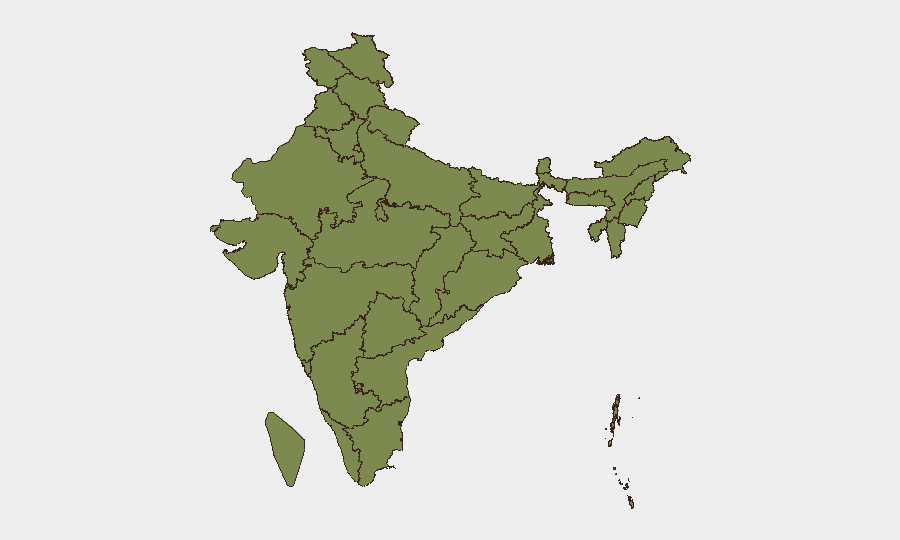
Situation Summary
India's composite threat score of 22 places it at rank #69 globally, with 817 tracked events. The security environment is moderately elevated and concentrated geographically: Delhi accounts for disproportionate risk (score 33.5), while Maharashtra, Uttar Pradesh, Tamil Nadu, and Uttarakhand form a secondary tier of concern. Current developments centre on civil protest management in the capital, coordinated misinformation campaigns, and routine crime enforcement across major urban centres. The trajectory suggests sustained tension around political demonstrations and digital unrest rather than imminent systemic instability.
Key Developments
- New Delhi, 24 July 2026 – Delhi Police imposed prohibitory orders (Section 163 BNSS) across New Delhi district to block the Cockroach Janta Party's *Chalo Sansad* march protesting alleged NEET irregularities. Approximately 5,000 police and paramilitary personnel were deployed; the city was divided into 15 security zones with intensified checkpoints around Parliament, Jantar Mantar, Central Vista, and Connaught Place.
- Nagpur, Maharashtra, 23–24 July 2026 – Nagpur police cyber cell reported a significant surge in fake videos, manipulated posts, and inflammatory rumours on X, Facebook, WhatsApp, and Instagram linked to Delhi protest tensions. Coordinated campaigns circulating old or altered footage prompted high-alert status to prevent digital unrest from translating to street-level disorder.
- Siliguri area, West Bengal, 22 July 2026 – The Sashastra Seema Bal (SSB) seized substantial quantities of Indian currency along the India–Nepal border in the Siliguri sector, indicating possible organized smuggling or illicit financial flows. Investigations are ongoing.
- New Delhi, 21 July 2026 – India's foreign ministry summoned a senior Russian diplomat following the deaths of four Indian nationals aboard commercial vessel MV Golden Leo, attacked while departing Odesa, Ukraine. The ministry conveyed grave concern and condemnation, highlighting domestic political sensitivity around seafarer protection in conflict zones.
- Samardung village, Sikkim, 20 July 2026 – A suspected methane gas explosion in a tunnel at the state-owned NHPC hydropower project on the Teesta River killed at least 10 workers and left 17 feared trapped. Hazardous gas conditions have hampered rescue operations.
- Chintamani town, Karnataka, 23 July 2026 – A first-year engineering student was assaulted at her home by a group after confronting two men for harassment. A police FIR has been filed; neighbourhood-level security and potential retaliation risk are under assessment.
Highest-Risk Areas
Delhi dominates India's threat profile, with a risk score nearly four times that of Maharashtra, the second-ranked state. This reflects both the concentration of central government institutions and ongoing civil-political friction around education policy, protest dynamics, and misinformation amplification in digital channels. Maharashtra (Nagpur) and Uttar Pradesh follow, driven by urban crime, communal sensitivity, and coordinated disinformation campaigns. Tamil Nadu, Uttarakhand, and Bihar round out the immediate concern set. The gap between Delhi and all other states underscores the capital's outsized risk exposure and the need for granular monitoring there.
How GeoBit Would Assist
Security teams in India would deploy AOI Monitoring & Early Warning on high-risk nodes in Delhi (Parliament precinct, Jantar Mantar, Central Vista) to track protest assembly and police positioning in real time. OSINT (X/Twitter, Telegram, YouTube, multi-language search) combined with sentiment and temporal analysis would detect coordinated misinformation campaigns (as now emerging in Nagpur) before offline amplification. Entity extraction and network analysis would map protest organizers, key influencers, and financial/logistical flows across state lines.
7-Day Outlook
The *Chalo Sansad* prohibition is likely to hold through the immediate period, though splinter protests or digital organizing may continue. Misinformation intensity is expected to remain elevated as education-policy tensions persist. Border and cross-border crime (cash seizures, smuggling) will continue as endemic pressure points; workplace safety incidents (e.g., Teesta project) are routine but warrant site-specific monitoring.
Highest-Risk Areas — Ranked
| # | State / Region | Risk |
|---|---|---|
| 1 | Delhi | 33.5 |
| 2 | Maharashtra | 8.8 |
| 3 | Uttar Pradesh | 7.6 |
| 4 | Tamil Nadu | 7.4 |
| 5 | Uttarakhand | 7.4 |
| 6 | Bihar | 6.6 |
| 7 | West Bengal | 6.2 |
| 8 | Ladakh | 5.9 |
| 9 | Rajasthan | 5.9 |
| 10 | Jammu and Kashmir | 5.3 |
| 11 | Telangana | 5.1 |
| 12 | Punjab | 5 |
Sources
Previous Daily Briefs
A new India brief is written every day — each with its own risk map and downloadable CSV. Here's the last week; use the calendar to go further back.
📅 Browse every day by calendar →
Highlighted days have a brief. Tap a day for that day's map & analysis, or “csv” for that day's dataset ($5).
Atlas — our AI intelligence desk — emails them this snapshot personally. Nothing else, no list.