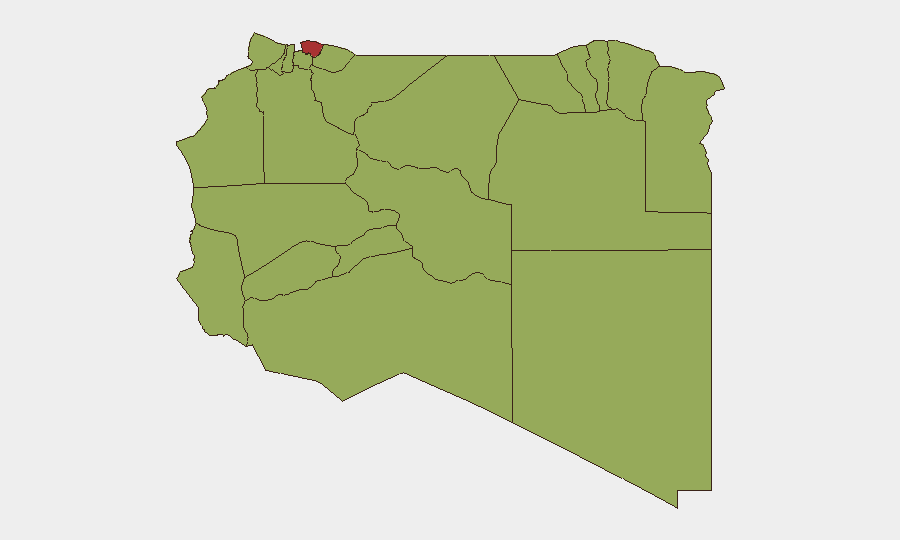
Situation Summary
Libya remains moderately elevated in global threat rankings (composite score 68, rank #23) with security conditions concentrated in Tripoli, where rival armed factions and state forces are conducting large-scale deployments amid political tensions. The capital experienced armed mobilizations on 24 July linked to postponed military dialogue and heightened readiness for potential civil unrest, signaling fragility in the ongoing U.S.-backed stabilization effort. While most regions outside Tripoli maintain lower acute risk, the capital's instability poses direct hazard to resident populations, supply chains, and operations dependent on central government coordination.
Key Developments
- Tripoli (24 July, late night into 25 July early hours): Armed security formations affiliated with western Libyan authorities, including the Counter-Terrorism Force and 222nd Brigade, conducted large-scale night deployments across central Tripoli with armored vehicles and armed personnel. Gunfire was reported, particularly around Al-Mansoura district near the state radio building, forcing residents to shelter indoors. The National Institution for Human Rights in Libya warned that indiscriminate gunfire endangered civilians in residential areas.
- Tripoli (24 July): Mobilization followed the postponement of a planned military dialogue meeting in Sirte between LNA deputy commander Saddam Haftar and GNU Deputy Defense Minister Abdul Salam Al-Zoubi. The delay fueled rumors of potential clashes between rival armed groups and heightened political tension in the capital.
- Tripoli (24 July): Civilian movement disruptions were reported in central districts. Commercial activity was interrupted as residents feared a return to armed militia confrontations similar to earlier clashes in the city.
- Tripoli (23 July): Security forces increased mobilization and readiness in anticipation of potential protests linked to foreign-policy grievances, with armed forces tasked to prevent demonstrations from turning violent or targeting government facilities.
- Tajoura, Tripoli (23 July): The Libyan Security Directorates Support Unit and Fifth Brigade conducted a targeted raid on a migrant-kidnapping gang, freeing two foreign nationals and arresting a Somali suspect accused of torture-based extortion. Authorities indicated other gang members may have fled toward coastal cities.
Highest-Risk Areas
Tripoli dominates the risk landscape with a composite score of 77.7—significantly above all other regions—reflecting active armed deployments, political tensions, and the concentration of rival militia and state-security forces within the capital. The remaining eleven tracked high-risk districts (Nalut, Ghat, Az Zawiya, Wadi al Shatii, Murzuq, Kufra, and others) all register composite scores of 47.7, indicating a secondary tier of concern driven primarily by historical conflict activity, remote location, and limited state presence rather than acute near-term event signals. Risk outside Tripoli remains elevated but substantially less volatile; duty-of-care teams should prioritize Tripoli-area personnel and asset security while maintaining standard precautions in southern and western borderlands.
How GeoBit Would Assist
Security teams operating in Libya should employ AOI Monitoring & Early Warning with persistent watch on Tripoli's central districts and key facilities to capture armed movements, roadblocks, and civilian displacement in near-real time. OSINT fusion and X/Twitter/Telegram sentiment & temporal analysis provide continuous monitoring of local social reporting and government statements to detect shifts in tension or unplanned mobilizations before they escalate. Network & Actor Analysis and force-structure tracking help correlate armed deployments with specific brigades or factions, enabling predictive assessment of confrontation risk and safer transit windows for staff.
7-Day Outlook
Near-term risk remains elevated in Tripoli as dialogue initiatives remain stalled and armed formations maintain heightened readiness. Unless the Sirte meeting is rescheduled or rival factions de-escalate, sporadic armed deployments and civilian disruptions are likely to recur. Southern and border regions are expected to remain at baseline elevated risk without marked deterioration.
Highest-Risk Areas — Ranked
| # | State / Region | Risk |
|---|---|---|
| 1 | Tripoli | 77.7 |
| 2 | Nalut | 47.7 |
| 3 | Ghat | 47.7 |
| 4 | Baladiyah Surman | 47.7 |
| 5 | Az Zawiya District | 47.7 |
| 6 | Wadi al Shatii | 47.7 |
| 7 | Wadi al Hayaa | 47.7 |
| 8 | Murzuq | 47.7 |
| 9 | Kufra | 47.7 |
| 10 | Nuqat al Khams | 47.7 |
| 11 | Jafara | 47.7 |
| 12 | Murqub | 47.7 |
Sources
Previous Daily Briefs
A new Libya brief is written every day — each with its own risk map and downloadable CSV. Here's the last week; use the calendar to go further back.
📅 Browse every day by calendar →
Highlighted days have a brief. Tap a day for that day's map & analysis, or “csv” for that day's dataset ($5).
Atlas — our AI intelligence desk — emails them this snapshot personally. Nothing else, no list.