Situation Summary
Mexico remains GeoBit's highest-ranked country threat globally (composite score 100), driven principally by insurgency-related violence across multiple states. In the past 24–48 hours, incident signals include migrant coercion, armed confrontation between non-state actors, territorial occupation by government forces, and sustained public statements from law enforcement and civilian actors, suggesting active operational tempo and institutional strain. The threat environment is characterized by fragmented security control, organized crime friction, and judicial system pressure. Trajectory remains volatile without significant de-escalation indicators.
Key Developments
- Baja California (last 48 hours): State Secretariat of Citizen Security reported detentions of 45 individuals in connection with attacks on Fuerza Estatal de Seguridad Ciudadana officers, signaling sustained anti-state violence and rapid response operations.
- Small Arms Combat (2026-07-08): Armed engagement between Houston-based and Mexican actors recorded, indicating cross-border or transnational armed activity requiring immediate investigation of location, casualty count, and jurisdiction.
- Federal Judiciary (2026-07-09): Federal judge rejection of bank action signals institutional conflict or regulatory breakdown affecting financial institutions operating in Mexico—potential implications for asset freezes or compliance disruption.
- Territorial Occupation (2026-07-08): Government forces recorded occupying territory; context and location require clarification but consistent with counter-insurgency or cartel-suppression operations in high-risk states.
- Organized Crime Relations Reduction (2026-07-09): Signal indicating fracture or strategic repositioning within organized crime networks, potentially presaging localized turf violence or recruitment disruption.
- Multi-Source Public Statements (2026-07-08 to 2026-07-09): Police, civilian, secretariat, and authority statements issued in rapid succession, suggesting either coordinated messaging or institutional reactive posturing during active incident response.
- Conventional Military Force Deployment (2026-07-07, Mazatlán): Military force deployment in Sinaloa's principal port city indicates state-level counter-insurgency or anti-trafficking operation; requires monitoring for spillover into civilian or commercial zones.
Highest-Risk Areas
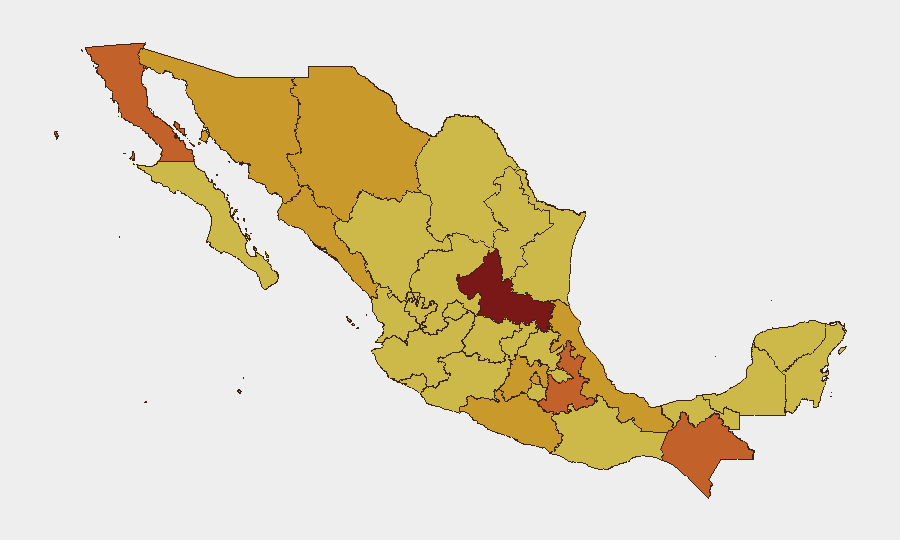
San Luis Potosí (risk 100), Baja California, and Chiapas (both 75.2) represent the acute concentration of threat. San Luis Potosí's maximum rating reflects sustained insurgency violence; Baja California's ranking correlates with border-area organized crime and transnational arms flows; Chiapas combines historical insurgent networks with gang fragmentation. Mexico City and State of Mexico, both at 72.8, carry elevated risk despite urban infrastructure, reflecting gang presence, extortion, and kidnapping activity affecting corporate and diplomatic operations. Northern tier states (Sonora, Chihuahua, Sinaloa) sustain 70–72.6 scores driven by cartel territorial conflict and trafficking corridors.
How GeoBit Would Assist
AOI Monitoring & Early Warning with persistent watch on San Luis Potosí, Baja California ports, and Mexico City commercial districts enables real-time alerting when armed activity, checkpoints, or territorial shifts occur near corporate or personnel locations. Conflict & Military mapping combined with Network & Actor Analysis tracks cartel leadership, state force deployments, and criminal faction realignment to forecast localized violence and inform travel restrictions. Routing & Network Analysis generates alternative supply-chain and personnel transit corridors that avoid high-incident zones and operational checkpoints, reducing exposure during 48–72-hour windows of elevated activity.
7-Day Outlook
No substantial de-escalation expected in the immediate term; military and police deployments (Mazatlán, Baja California) indicate sustained operational posture. Organized crime signaling (relations reduction, territorial occupation by state forces) may produce secondary violence or kidnapping activity as criminal networks adjust. Corporate and NGO personnel in San Luis Potosí, Chiapas, and Baja California should maintain heightened situational awareness and consider temporary relocation of non-essential staff.
Highest-Risk Areas — Ranked
| # | State / Region | Risk |
|---|---|---|
| 1 | San Luis Potosí | 100 |
| 2 | Baja California | 75.2 |
| 3 | Chiapas | 75.2 |
| 4 | Puebla | 73.9 |
| 5 | Veracruz | 72.8 |
| 6 | Mexico City | 72.8 |
| 7 | Sinaloa | 72.6 |
| 8 | State of Mexico | 72.6 |
| 9 | Sonora | 71 |
| 10 | Chihuahua | 71 |
| 11 | Guerrero | 71 |
| 12 | Nayarit | 70.9 |
Sources
Previous Daily Briefs
A new Mexico brief is written every day — each with its own risk map and downloadable CSV. Here's the last week; use the calendar to go further back.
📅 Browse every day by calendar →
Highlighted days have a brief. Tap a day for that day's map & analysis, or “csv” for that day's dataset ($5).
Atlas — our AI intelligence desk — emails them this snapshot personally. Nothing else, no list.