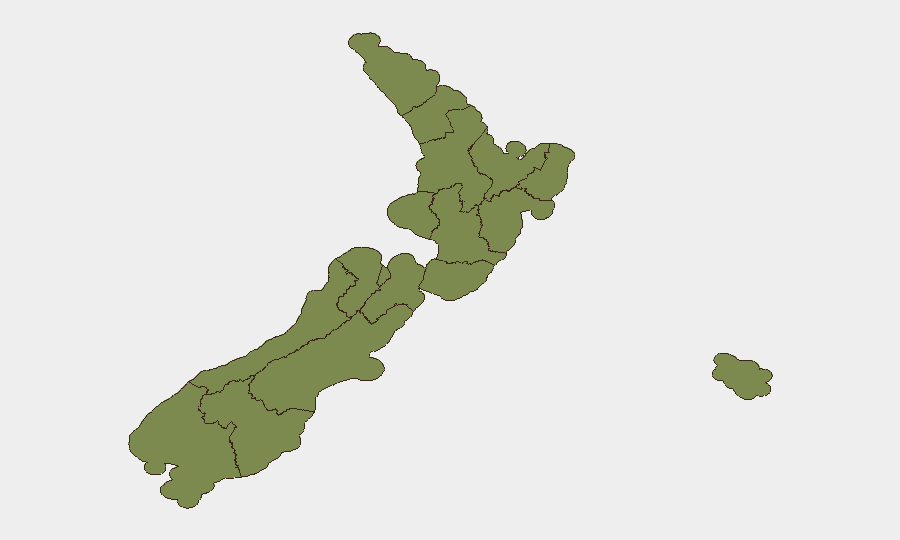
Situation Summary
New Zealand remains a low-threat environment globally (#157 composite score) but has registered a measurable uptick in localized security incidents and law-enforcement activity in the past 48 hours, concentrated in urban areas. Canterbury region is significantly elevated above the national baseline, while Auckland and Wellington have experienced multiple violent-crime incidents including armed burglary, assaults, and disorder near transport infrastructure. The current trajectory suggests contained urban-crime volatility rather than systemic instability, but duty-of-care teams should maintain heightened awareness around major city centers and public transport hubs.
Key Developments
- Auckland (Karangahape Rd/Mercury Lane) – night of 18 Jul 2026: Police charged two men following a disorder incident near the new City Rail Link station entrance that left one person seriously injured; renewed focus on 24-hour policing due to ongoing drug dealing and antisocial behavior in the area.
- Auckland (Karangahape Rd/Mercury Lane) – early morning 19 Jul 2026: Multiple arrests made after a violent bar brawl near the same station entrance, prompting large police response and escalating security concerns in one of Auckland's busiest entertainment and transport corridors.
- Lower Hutt/Wellington region (residential address) – approx. 5–6 am 19 Jul 2026: Three intruders forcibly entered a home, ransacked the property, stole valuables and the victim's vehicle; offenders were arrested within an hour in nearby Moera with recovered stolen items.
- Lower Hutt/Wellington region – 19 Jul 2026: The three arrested suspects (aged 45, 35, and 33) were charged with kidnapping and aggravated robbery in connection with the home invasion; all held in custody pending court appearance, indicating serious organized criminal activity.
- New Zealand (nationwide) – 18–19 Jul 2026: Multi-source security analyses flagged a localized spike in security incidents and infrastructure/cyber disruption, with Canterbury identified as having significantly elevated risk relative to national baseline; specific Canterbury incidents fall just outside the strict 48-hour assessment window but indicate sustained pressure.
- Government travel advisories – current (18–19 Jul 2026): Updated official guidance continues to highlight petty crime in major cities, potential for demonstrations and civil unrest, and a persistent terrorism threat, advising vigilance around public gatherings and transport hubs.
Highest-Risk Areas
Canterbury dominates the sub-national risk landscape (31.8), followed by a considerable gap to Auckland (20.5) and Wellington (14.5); the past 48 hours' incidents align directly with this ranking, with violent crime and disorder clustered in Auckland's inner-city entertainment zones and Wellington's residential burglary spike. The concentration of incidents in proximity to major transport infrastructure (City Rail Link) and residential areas suggests opportunistic urban crime rather than coordinated threat activity, but the speed of incident clustering warrants continued monitoring. Waikato, West Coast, and remaining regions remain substantially lower-risk and are not currently driving elevated alerts.
How GeoBit Would Assist
Security teams should deploy AOI Monitoring & Early Warning on high-risk precincts (Karangahape Rd, Lower Hutt residential corridors) to track emerging incident patterns and enable proactive duty-of-care response. Intel Sweep and OSINT fusion across social media, police statements, and transport operator announcements will provide real-time visibility into disorder, crime hotspots, and infrastructure disruptions affecting personnel movement. Risk & Threat Assessment and Routing & Network Analysis capabilities enable alternative route planning and event-based mobility recommendations for staff operating in or transiting through Auckland and Wellington.
7-Day Outlook
Urban violent crime and disorder are expected to remain the dominant security concern in Auckland and Wellington over the next week, with police enforcement and public-transport operator responses likely to intensify. Canterbury's elevated risk profile warrants continued monitoring for underlying drivers; absent significant escalation, incidents are likely to remain localized and reactive rather than indicative of broader destabilization. Personnel should expect temporary localized disruptions around major city centers and transport corridors and maintain situational awareness in entertainment and nightlife districts.
Highest-Risk Areas — Ranked
| # | State / Region | Risk |
|---|---|---|
| 1 | Canterbury | 31.8 |
| 2 | Auckland | 20.5 |
| 3 | Wellington | 14.5 |
| 4 | Waikato | 8.8 |
| 5 | West Coast | 8.5 |
| 6 | Southland | 5 |
| 7 | Bay of Plenty | 3.4 |
| 8 | Tasman | 2.5 |
| 9 | Taranaki | 2.1 |
| 10 | Otago | 2.1 |
| 11 | Chatham Islands | 1.8 |
| 12 | Northland | 1.8 |
Sources
Previous Daily Briefs
A new New Zealand brief is written every day — each with its own risk map and downloadable CSV. Here's the last week; use the calendar to go further back.
📅 Browse every day by calendar →
Highlighted days have a brief. Tap a day for that day's map & analysis, or “csv” for that day's dataset ($5).
Atlas — our AI intelligence desk — emails them this snapshot personally. Nothing else, no list.