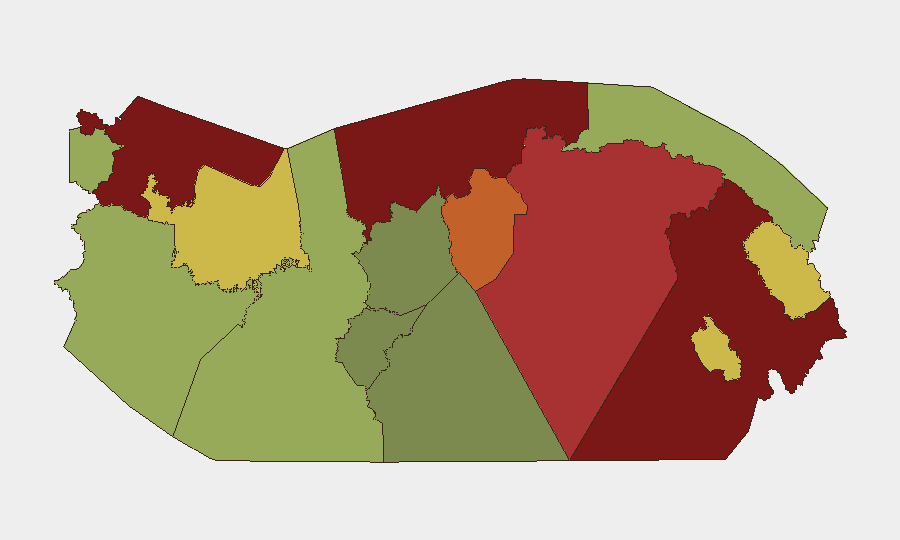
Situation Summary
Panama remains ranked #52 globally with a composite threat score of 35, driven predominantly by drug-trafficking violence, gang activity, and organized-crime operations rather than civil unrest or political instability. Crime concentrations are acute in border and transit regions—particularly Darién, Colón, and Bocas del Toro—where Colombian narcotics networks, illegal mining, and migrant-smuggling operations create ungoverned spaces and high lethality. A nationwide state of emergency declared over El Niño-driven weather (severe rains and drought) adds infrastructure and logistics risk to the security landscape. The security posture remains stable relative to regional standards, but targeted homicides and robbery operations indicate sustained criminal enterprise activity.
Key Developments
- Multi-location gang enforcement action (2026-08-25, Panamá Province & Pacora). Operation Secuela conducted coordinated raids across multiple locations, arresting 15 suspects linked to a gang structure responsible for recent homicides. Over 30 investigative actions were executed, signaling active police pressure on organized criminal networks in populated areas near Panama City.
- Double execution-style homicides (2026-08-25, Villa Lucre, Panamá Province). Two separate armed attacks on vehicles within a 48-hour window resulted in four deaths total, consistent with patterns of planned executions or gang-related settling of accounts. Both incidents occurred in a single district, suggesting territorial or commercial conflict.
- Large cocaine interdiction (2026-08-28, Bayano Checkpoint). Senafront anti-narcotics units intercepted approximately 300 packages of suspected cocaine at a major domestic transit corridor, reflecting continued high-volume drug movement through Panama's interior despite enforcement operations.
- Illegal mining crackdown in ungoverned space (2026-08-29, Darién Province). Senafront conducted three coordinated operations against illegal mining in Darién, apprehending 29 Colombian nationals and 2 Panamanians. The operation underscores both the scale of transnational criminal activity in the border region and the limited state presence in ungoverned zones.
- Armed robbery using unconventional means (2026-08-28, Río Hato, Coclé Province). Two suspects, one a minor, used a horse to commit an armed robbery at a mini-supermarket, illustrating rural crime innovation and the involvement of juveniles in organized theft.
- Minor seismic event with no damage (2026-08-28, Isla San Miguel area). A magnitude 4.5 earthquake was recorded near Isla San Miguel with no reported deaths or structural damage, posing minimal immediate risk.
- Nationwide law-enforcement activity (2026-08-31, countrywide). National Police reported detention of 935 persons, 115 search warrants executed, 12 firearms seized, 150 drug packages recovered, and 5 stolen vehicles recovered over a recent period, indicating sustained enforcement tempo across jurisdictions.
- Infrastructure risk from climate emergency (through 2026-08-31, nationwide). Panama's state of emergency due to El Niño weather disruptions remains in force, with documented risks to Panama Canal traffic, agricultural supply, and electrical generation capacity.
Highest-Risk Areas
Darién Province (risk 95) and Colón (risk 88) drive the national risk profile due to limited state control, Colombian cartel presence, cocaine transshipment routes, and illegal mining operations. Bocas del Toro (risk 82) and Panamá Province (risk 78) sustain high scores from drug trafficking, port vulnerability, and proximity to major urban centers where gang violence clusters. Panamá Oeste and Ngäbe-Buglé round out the top tier, reflecting both rural trafficking transit zones and socioeconomic fragility. The remaining provinces below risk 50 (Chiriquí, Guna Yala, Coclé) experience lower-level crime and are generally safer for corporate operations, though robbery and petty crime remain present.
How GeoBit Would Assist
Corporate security teams would employ AOI Monitoring & Early Warning on high-risk provinces (Darién, Colón, Bocas del Toro) to detect trafficking surges, enforcement operations, and violence clusters with alerting. Conflict & Crime Search combined with multi-language OSINT fusion would surface gang dynamics, cartel movements, and police operations across local and regional sources in real time. Routing & Network Analysis would enable alternative journey planning and checkpoint-avoidance for personnel and supply movements in orange-zone areas.
7-Day Outlook
Enforcement operations show no sign of abating, with Senafront and National Police sustaining high operational tempo against narcotics and mining networks. Gang violence in Panamá Province may continue at current levels absent major arrests of leadership. El Niño weather impacts will persist, potentially affecting canal transit and logistics routes through early September.
Highest-Risk Areas — Ranked
| # | State / Region | Risk |
|---|---|---|
| 1 | Darién | 95 |
| 2 | Colón | 88 |
| 3 | Bocas del Toro | 82 |
| 4 | Panamá Province | 78 |
| 5 | Panamá Oeste | 75 |
| 6 | Ngäbe-Buglé | 68 |
| 7 | Emberá-Wounaan | 62 |
| 8 | Veraguas | 58 |
| 9 | Chiriquí | 48 |
| 10 | Naso Tjër Di | 45 |
| 11 | Guna Yala | 42 |
| 12 | Coclé | 35 |
Sources
Previous Daily Briefs
A new Panama brief is written every day — each with its own risk map and downloadable CSV. Here's the last week; use the calendar to go further back.
- August 31, 2026
- August 30, 2026
- August 29, 2026
- August 28, 2026
- August 26, 2026
- August 25, 2026
- August 24, 2026
📅 Browse every day by calendar →
Highlighted days have a brief. Tap a day for that day's map & analysis, or “csv” for that day's dataset ($5).
Atlas — our AI intelligence desk — emails them this snapshot personally. Nothing else, no list.