Situation Summary
Russia faces acute infrastructure vulnerability and logistical strain from sustained Ukrainian long-range drone strikes on energy and fuel-supply facilities across multiple regions. President Putin's public acknowledgment of fuel deficits and emerging rationing signals operational pressure on Russian military and civilian supply chains. Moscow and energy-producing regions (Krasnoyarsk, Krasnodar, Bashkortostan) remain primary targets, with risk elevated across industrial and strategic infrastructure zones. The trajectory points toward continued deep-strike operations, regional supply disruption, and corresponding tightening of Russian domestic fuel allocation.
Key Developments
- Ufa, Bashkortostan (2026-06-29): Ukrainian drones struck the Bashneft-Ufaneftekhim and Bashneft-Novoil refineries, causing fires and operational disruption to major fuel production capacity; losses corroborated across Ukrainian and Russian reporting.
- Krasnodar Krai, Poltavskaya (2026-06-29): Ukrainian drone strike damaged the Poltavskaya oil depot's fuel-storage facilities, contributing to regional supply strain; video evidence of fires and explosions confirmed across social media.
- Moscow Region, Dubna (2026-06-30): Ukrainian forces conducted a second drone strike against the Dubna satellite communications center near Moscow, targeting Russian space-based communications infrastructure; attack reported by Ukrainian officials and corroborated by live media coverage.
- Russia, National Level (2026-06-29–30): President Putin publicly acknowledged fuel-supply deficits and infrastructure damage caused by Ukrainian strikes, with reports of fuel queues and regional rationing measures now in effect across multiple oblasts.
- Russia, Infrastructure Response (2026-06-29–30): Russian authorities responded with maximized refinery operations, deferred maintenance schedules, and introduction of regional fuel-rationing protocols to stabilize supply chains.
- Ukraine vs. Russia Operational Tempo (2026-06-29–30): Ukrainian deep-strike drone campaign targeted oil facilities and logistics nodes up to ~1,500 km inside Russian territory, sustaining systematic pressure on fuel and military logistics infrastructure.
Highest-Risk Areas
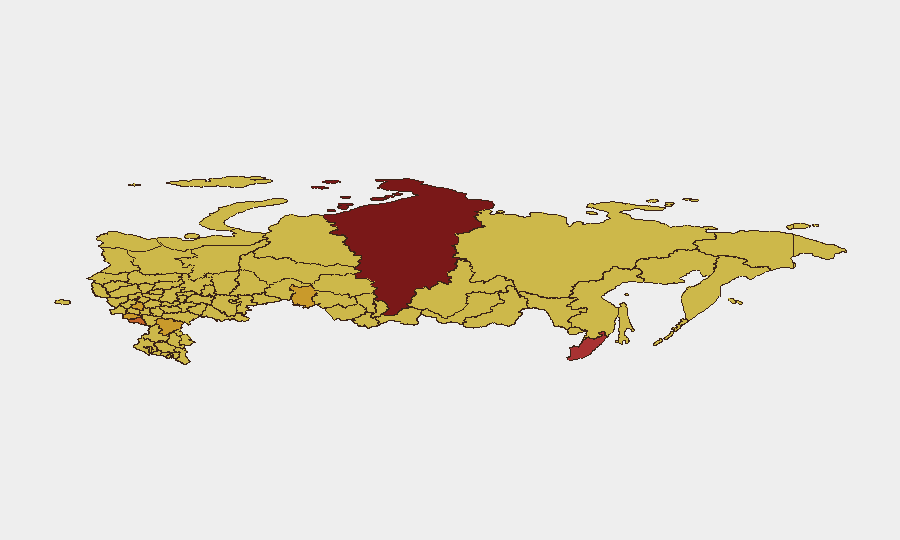
Moscow (risk 100) and Krasnoyarsk Krai (85.4) anchor the risk profile, with Krasnodar Krai (70.9) elevated by recent direct strikes on fuel storage. Belgorod, Kursk, and Volgograd oblasts (74.9–72.4) remain at heightened risk due to proximity to active conflict zones and strategic infrastructure concentration. Energy-producing regions are primary targets for Ukrainian strikes, driving fuel-supply cascades into downstream civilian and military logistics. Regions beyond the top five are not immune; Omsk, Tula, and Astrakhan oblasts (71–70.6) house refineries and logistics nodes now within effective Ukrainian strike range.
How GeoBit Would Assist
Security teams should deploy AOI Monitoring & Early Warning on critical energy infrastructure sites (refineries, depots, power plants) in high-risk oblasts to detect pre-strike activity and receive real-time alerts. Conflict & Military battle-mapping and weapons-capability tracking, combined with OSINT fusion (X, Telegram, Ukrainian official briefings), enable rapid confirmation of strike location, target type, and estimated operational impact. Routing & Network Analysis can model fuel-supply cascades and identify alternative logistics corridors as primary routes degrade, supporting continuity planning for operations dependent on Russian transport networks.
7-Day Outlook
Ukrainian drone strikes on Russian energy infrastructure will likely sustain or intensify over the coming week, with focus on remaining operational refinery capacity and fuel depots in Krasnodar, Volgograd, and Omsk. Fuel rationing and supply bottlenecks will expand regionally, affecting civilian commerce, transportation, and industrial operations. Moscow will remain a secondary target for communications and administrative infrastructure; organizations with personnel or supply chains in Krasnodar, Bashkortostan, and Volga-region oblasts face elevated near-term logistics and fuel-availability risk.
Highest-Risk Areas — Ranked
| # | State / Region | Risk |
|---|---|---|
| 1 | Moscow | 100 |
| 2 | Krasnoyarsk Krai | 85.4 |
| 3 | Primorsky Krai | 76.8 |
| 4 | Belgorod Oblast | 74.9 |
| 5 | Saint Petersburg | 73 |
| 6 | Kursk Oblast | 72.7 |
| 7 | Volgograd Oblast | 72.4 |
| 8 | Omsk Oblast | 71.5 |
| 9 | Tula Oblast | 71.2 |
| 10 | Krasnodar Krai | 70.9 |
| 11 | Astrakhan Oblast | 70.6 |
| 12 | Khanty-Mansiysk Autonomous Okrug – Ugra | 70.5 |
Sources
Previous Daily Briefs
A new Russia brief is written every day — each with its own risk map and downloadable CSV. Here's the last week; use the calendar to go further back.
📅 Browse every day by calendar →
Highlighted days have a brief. Tap a day for that day's map & analysis, or “csv” for that day's dataset ($5).