Situation Summary
South Korea's security posture remains stable but faces overlapping pressures: domestic political tension following the national football team's World Cup elimination, ongoing DMZ monitoring after a North Korean soldier's June 23 border crossing, and U.S.–South Korea coordination signaling amid strategic OPCON transfer discussions. The nation ranks #128 globally with a composite threat score of 7; open-source reporting for July 1–2 indicates no acute civil unrest, infrastructure disruption, or major incident escalation, though political temperature and inter-Korean monitoring remain elevated.
Key Developments
- Incheon International Airport (Seoul metropolitan area), June 30, 2026 – National football team's arrival from World Cup group-stage exit prompted heavy police response, with approximately 160 riot police deployed to manage hostile crowds numbering in the hundreds; coach Hong Myung‑bo faced public anger, death threats, and organized booing.
- Seoul / National broadcasters, June 30–July 1, 2026 – Coach's televised image blurring and team's tournament elimination triggered intense online backlash and political pressure; president ordered an investigation within 48 hours, prompting Hong Myung‑bo's resignation and reflecting elevated domestic political sensitivity.
- Defense Ministry, Seoul, July 1, 2026 – Officials confirmed ongoing investigation into a North Korean soldier who crossed the DMZ on June 23 (no new incident reported); case remains under multi-agency review with no reported clash or escalation.
- Defense Ministry / senior commanders meeting, Seoul, July 1, 2026 – Defense Minister Ahn Gyu‑back directed military leadership to complete a capability review and propose a timeline for wartime OPCON transfer from the United States to South Korea by year-end 2026, signaling focus on strategic autonomy.
- U.S.–South Korea statement, July 2, 2026 – Public statement issued (specific content not detailed in current open sources); classified with other recent U.S.–ROK messaging around defense posture and regional coordination.
- Military Manpower Administration, nationwide, second-half 2026 announcement – Conscription rule changes announced for implementation in H2 2026; no immediate civil unrest reported in response, though policy affects civil–military relations.
- North Korea activity, July 2, 2026 – Artillery/tank movement detected; assessed as routine activity but monitored in context of recent border incident and elevated U.S.–ROK coordination.
Highest-Risk Areas
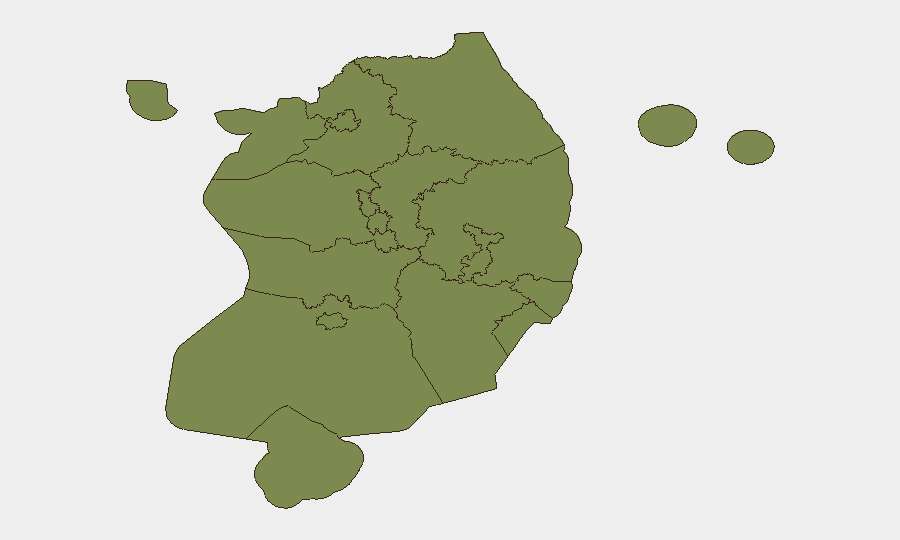
North Chungcheong (31.6) and Seoul (26.5) account for the vast majority of tracked risk, with North Chungcheong's elevated score likely reflecting its proximity to the DMZ and sensitivity to North Korean activity. Seoul's composite risk reflects the capital's concentration of political institutions, large crowds, and media focus; the football team incident and presidential investigation both centered there. Remaining regions (South Jeolla, Gwangju, North Gyeongsang) score in the low single digits, indicating dispersed, lower-level event activity rather than acute threats.
How GeoBit Would Assist
Security teams should use AOI Monitoring & Early Warning to track DMZ crossings, military movements, and protest activity in Seoul and North Chungcheong in real time. Intel Sweep and multi-language OSINT (X/Twitter, Telegram, Korean-language forums) combined with sentiment & temporal analysis enable early detection of political backlash, online threats, and civil unrest before they escalate to physical disruption. Entity & network analysis can map protest organizers, state actors, and threat actors operating across political and cross-border incidents.
7-Day Outlook
No imminent escalation is indicated; the football-team political crisis is likely to cool as media focus disperses and resignations satisfy immediate demands. DMZ monitoring will remain heightened given the June 23 border crossing; routine military posturing and OPCON coordination discussions are expected to continue. Open-source reporting density should increase if North Korean activity accelerates or Seoul-based political demonstrations resume.
Highest-Risk Areas — Ranked
| # | State / Region | Risk |
|---|---|---|
| 1 | North Chungcheong | 31.6 |
| 2 | Seoul | 26.5 |
| 3 | South Jeolla | 7.6 |
| 4 | Gwangju | 4.6 |
| 5 | North Gyeongsang | 4.2 |
| 6 | Daegu | 3.9 |
| 7 | Gangwon State | 3.7 |
| 8 | Gyeonggi | 3.1 |
| 9 | Busan | 2.2 |
| 10 | Jeonbuk State | 2 |
| 11 | Daejeon | 2 |
| 12 | South Gyeongsang | 2 |
Sources
Previous Daily Briefs
A new South Korea brief is written every day — each with its own risk map and downloadable CSV. Here's the last week; use the calendar to go further back.
📅 Browse every day by calendar →
Highlighted days have a brief. Tap a day for that day's map & analysis, or “csv” for that day's dataset ($5).