Situation Summary
Ukraine remains under sustained Russian conventional attack, with ballistic missiles, guided aerial bombs, and drone strikes striking civilian and military targets across multiple oblasts over the past 48 hours. Kyiv and key logistics/infrastructure nodes in eastern and southern regions (Kharkiv, Zaporizhzhia, Odesa, Dnipropetrovsk) have been targeted in a pattern consistent with attrition of military supply chains and civilian morale. Domestic political friction—manifested in public protests demanding personnel changes in the Defense Ministry and command structure—compounds operational risk and may signal fractures in civil-military coordination at a critical moment.
Key Developments
- Kyiv (overnight 19–20 July): Russia launched one of the largest ballistic missile and drone barrages on the capital since the full-scale invasion began, killing 1 and injuring 16–17 across multiple districts; extensive damage reported.
- Zaporizhzhia city (19 July evening): Guided bomb strikes killed 2 civilians and injured 42 (including 8 children), damaging residential infrastructure in one of Ukraine's largest eastern population centers.
- Kharkiv suburbs (19 July early): Russian missile strike on a Nova Poshta logistics terminal killed at least 4 and injured at least 19, causing major damage to a critical supply-chain node.
- Pavlohrad, Dnipropetrovsk Oblast (19 July): Russian guided aerial bomb attack on this major eastern city marked first documented use of this weapon class in the area, indicating expansion of strike geography.
- Odesa city infrastructure (20 July): Russian strike on an unnamed infrastructure facility killed at least 3 and injured 3; significant structural damage reported.
- Black Sea merchant vessel (20 July): Russian strike near Odesa hit a Guinea-Bissau-flagged merchant ship, killing 10 including the pilot; 8 crew rescued after overnight SAR and firefighting operations.
- Kyiv command-structure statement (20 July): Ukrainian military leadership issued public denial of social-media rumors that Commander-in-Chief Syrskyi would be dismissed, confirming he and Chief of General Staff Hnatov remain in post despite political pressure.
- Nationwide protests (18–20 July, ongoing): Demonstrations across multiple Ukrainian cities demanding reinstatement of ousted Defense Minister Fedorov and removal of Commander-in-Chief Syrskyi; indicates domestic civil-military tension.
Highest-Risk Areas
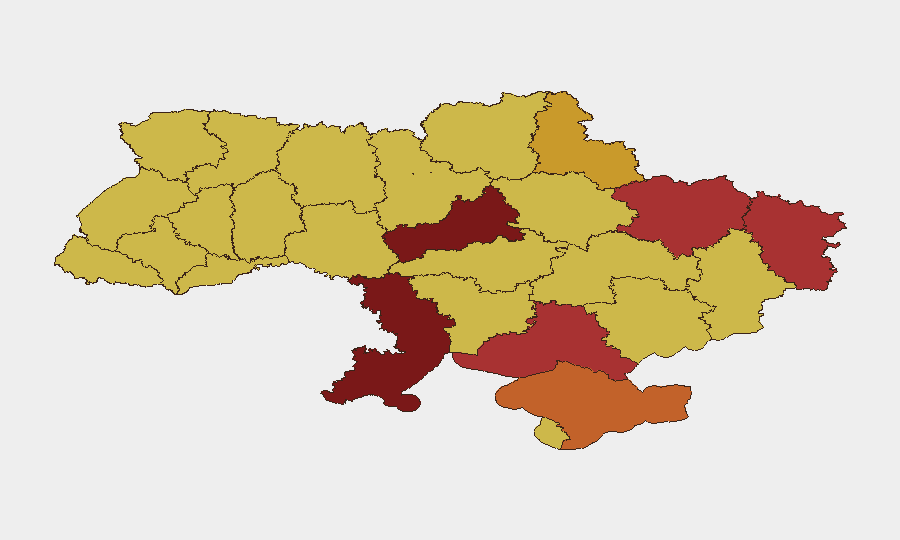
Kyiv (composite risk 100) remains the primary target for ballistic and drone strikes; the capital's administrative, military, and logistics infrastructure sustains near-daily pressure. Cherkasy and Odesa Oblasts (risk 89.4 and 84.6 respectively) show elevated risk driven by port infrastructure, command nodes, and proximity to active lines of contact. Kharkiv Oblast (77.5) and eastern regions (Luhansk, Donetsk, Dnipropetrovsk) face both conventional military engagements and strikes on civilian supply chains, civilian populations, and logistics terminals. The concentration of recent strikes on logistics (Nova Poshta) and maritime targets (Odesa) suggests a deliberate campaign to degrade supply chains and economic activity.
How GeoBit Would Assist
Security teams should deploy AOI Monitoring & Early Warning on high-value facilities (logistics nodes, ports, power infrastructure) in Kyiv, Odesa, and Kharkiv to provide persistent, near-real-time alerting ahead of strikes. Conflict & Military battle mapping and force-structure tracking enable scenario planning and movement-risk assessment for personnel near active engagements or command structures. Maritime tracking applied to the Black Sea and port approaches would flag hostile activity and merchant-vessel risk before strikes occur.
7-Day Outlook
Russian strike tempo is likely to remain elevated, with continued targeting of logistics, energy, and command infrastructure in central and eastern Ukraine. Domestic political pressure on military leadership may complicate operational decision-making and civil-military communication, increasing friction and reducing response efficiency. Civilian casualties and infrastructure damage will likely continue absent a de-escalation signal, sustaining high risk for organizations with personnel or assets across all major urban centers.
Highest-Risk Areas — Ranked
| # | State / Region | Risk |
|---|---|---|
| 1 | Kyiv | 100 |
| 2 | Cherkasy Oblast | 89.4 |
| 3 | Odesa Oblast | 84.6 |
| 4 | Kharkiv Oblast | 77.5 |
| 5 | Luhansk Oblast | 76.6 |
| 6 | Kherson Oblast | 76.3 |
| 7 | Autonomous Republic of Crimea | 73 |
| 8 | Sumy Oblast | 72.4 |
| 9 | Donetsk Oblast | 70.8 |
| 10 | Chernihiv Oblast | 70.7 |
| 11 | Zakarpattia Oblast | 70.6 |
| 12 | Ternopil Oblast | 70.6 |
Sources
Previous Daily Briefs
A new Ukraine brief is written every day — each with its own risk map and downloadable CSV. Here's the last week; use the calendar to go further back.
📅 Browse every day by calendar →
Highlighted days have a brief. Tap a day for that day's map & analysis, or “csv” for that day's dataset ($5).
Atlas — our AI intelligence desk — emails them this snapshot personally. Nothing else, no list.