Situation Summary
The United Arab Emirates remains at composite threat rank #105 globally (score 8) amid elevated regional missile and drone tensions involving Iran, but official UAE authorities confirm that detected threats were outside national borders in the last 24–48 hours with no corroborated damage or casualties inside UAE territory. Abu Dhabi and Dubai maintain heightened air-defense and crisis-management readiness, and regional condemnation of missile attacks on neighboring states (Bahrain, Kuwait, Qatar) underscores broader Gulf instability. Maritime and aviation channels remain operationally normal, though regional flight disruptions continue to affect travelers and residents. The overall security trajectory in UAE proper is stable, though regional volatility warrants sustained monitoring.
Key Developments
- Abu Dhabi & Dubai – 12 July 2026 (Sunday): UAE Ministry of Defence confirmed via official statement that missile threats detected early Sunday were outside national borders; national monitoring and air-defense systems remain at highest readiness around the clock.
- UAE (National) – 12 July 2026 (Sunday): National Emergency Crisis and Disaster Management Authority (NCEMA) declared a "stable situation" following precautionary alerts, clarifying that detected incoming threats occurred outside UAE territory with no confirmed impacts or casualties.
- Gulf Region – 11–12 July 2026: Regional reporting indicates Iranian missile and drone attacks on Bahrain, Kuwait, and Qatar; Iran claimed strikes against UAE as part of a broader response to U.S. actions, but UAE authorities contest this and report no successful strikes on UAE soil in the last 48 hours.
- UAE (Diplomatic Position) – 12 July 2026: Official UAE condemnation of recent missile and drone attacks on neighboring states, characterizing them as sovereignty violations and threats to regional stability, signaling alignment with Gulf partners and elevated regional concern.
- UAE Travel & Visa Administration – 10 July 2026 onward: Special 30-day grace period for visitors and residents affected by regional airspace closures ended on 9 July; standard overstay rules and fines re-applied from 10 July, affecting travelers experiencing ongoing flight disruptions.
- Northern Arabian Sea – Through 11–12 July 2026: UK Maritime Trade Operations (UKMTO) advisories indicate no confirmed maritime security incidents in northern Arabian Sea approaches to UAE in the last 48 hours; routine naval patrols and normal commercial traffic ongoing.
Highest-Risk Areas
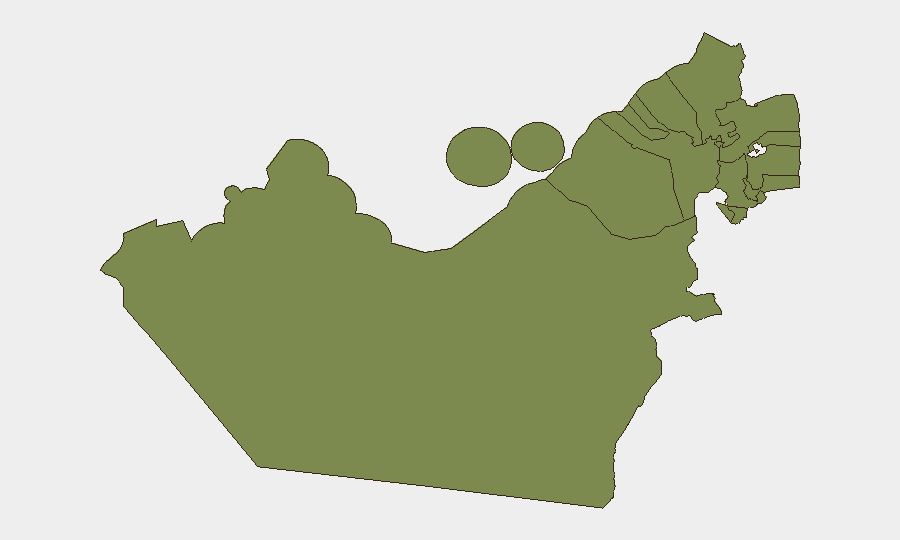
Abu Dhabi Emirate (risk 31.5) and Dubai (26.5) drive the bulk of tracked threat signals, primarily due to heightened regional missile tensions, population density, critical infrastructure (oil, ports, aviation, telecom), and diplomatic/governance concentration. Sharjah, Ajman, Ras al-Khaimah, Fujairah, and Umm al-Quwain carry minimal residual risk (1.5 each), reflecting lower population exposure and distance from primary tension zones. Risk in both high-ranking emirates remains chiefly external and precautionary rather than active internal conflict, crime, or instability.
How GeoBit Would Assist
Corporate security teams in UAE should deploy GeoBit's AOI Monitoring & Early Warning to maintain persistent watch on Abu Dhabi and Dubai for missile/air-defense activity and official statements; Intel Sweep and OSINT Fusion to corroborate official versus non-official threat claims in real time; and Conflict & Military tracking (force structure, weapons-capability updates) to anticipate regional escalation or de-escalation signals. Routing & Network Analysis supports alternative journey planning for personnel and shipments during airspace disruptions.
7-Day Outlook
Regional tensions are unlikely to abate within 7 days, but UAE authorities' demonstrated capability and transparency in confirming that threats remain external suggest continued operational stability within national borders. Monitoring should focus on any shift in official tone, renewed missile detections, or secondary effects (aviation delays, administrative complications for residents). Risk to personnel and assets in UAE remains low relative to global ranking, provided standard duty-of-care protocols remain in place.
Highest-Risk Areas — Ranked
| # | State / Region | Risk |
|---|---|---|
| 1 | Abu Dhabi Emirate | 31.5 |
| 2 | Dubai | 26.5 |
| 3 | Sharjah Emirate | 1.5 |
| 4 | Ajman Emirate | 1.5 |
| 5 | Ras al-Khaimah | 1.5 |
| 6 | Fujairah Emirate | 1.5 |
| 7 | Umm al-Quwain | 1.5 |
Sources
Previous Daily Briefs
A new United Arab Emirates brief is written every day — each with its own risk map and downloadable CSV. Here's the last week; use the calendar to go further back.
📅 Browse every day by calendar →
Highlighted days have a brief. Tap a day for that day's map & analysis, or “csv” for that day's dataset ($5).
Atlas — our AI intelligence desk — emails them this snapshot personally. Nothing else, no list.