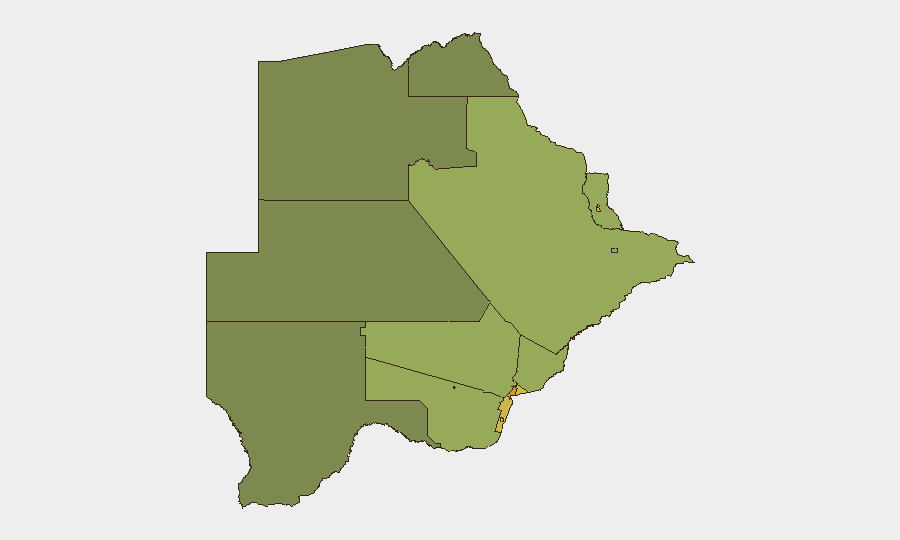
Situation Summary
Botswana remains a low-threat environment regionally (rank #163 globally; composite score 7) with no tracked security incidents in the past seven days. Urban centers—particularly Gaborone, South-East District, and Lobatse—carry elevated composite risk scores (68–72), driven primarily by crime and civil-order factors rather than active political instability or organized conflict. The security posture is stable; no deterioration is evident.
Key Developments
- Across Botswana — October 1, 2026: The government authorized the culling of 23 elephants and other wildlife for meat as part of the country's 60th-independence celebrations. Conservation groups have criticized the decision, citing hygiene concerns and disease risks amid an active foot-and-mouth outbreak in the region.
Highest-Risk Areas
Gaborone (risk 72) and South-East District (risk 68) are the country's highest-risk zones, followed by Lobatse (65) and Francistown (62). These urban and peri-urban areas drive the national risk profile primarily through recorded crime, property crime, and petty violence rather than large-scale civil unrest or armed activity. Risk scores decline sharply in rural and northern districts (North-West at 38, North-East at 45), suggesting that personnel and asset exposure in Gaborone and the southern corridor warrants heightened vigilance relative to more remote regions.
How GeoBit Would Assist
Security teams operating in Botswana should employ AOI Monitoring & Early Warning to maintain persistent watch over Gaborone and South-East District, with alerting thresholds set for civil unrest, criminal activity spikes, and mass gatherings. Intel Sweep and OSINT fusion (leveraging X/Twitter, Telegram, and local media feeds) will detect emerging security events in real time and corroborate reports before operational decisions are made. GIS & Spatial Analysis can overlay crime hotspots, transportation corridors, and facility locations to optimize routing and identify safer movement patterns for duty-of-care compliance.
7-Day Outlook
No acute security deterioration is forecast for the coming week. Routine urban crime patterns should persist in Gaborone and secondary cities; foot-and-mouth disease management and wildlife-culling activities may generate localized protests but are unlikely to escalate into organized civil disorder. Continued low-level monitoring of urban centers remains prudent; wider Botswana remains a permissive operating environment.
Report Date: 2026-10-06 | Coverage Period: 2026-09-30 to 2026-10-06
GeoBit Threat Rank (Botswana): #163 globally | Composite Score: 7 | Tracked Events (7d): 0
Highest-Risk Areas — Ranked
| # | State / Region | Risk |
|---|---|---|
| 1 | Gaborone | 72 |
| 2 | South-East District | 68 |
| 3 | Lobatse | 65 |
| 4 | Francistown | 62 |
| 5 | Jwaneng | 61 |
| 6 | Selebi Phikwe | 58 |
| 7 | Southern District | 55 |
| 8 | Kgatleng District | 50 |
| 9 | Kweneng District | 48 |
| 10 | North-East District | 45 |
| 11 | Central District | 42 |
| 12 | North-West District | 38 |
Sources
Previous Weekly Briefs
A new Botswana brief is written every Monday, covering the week — each with its own risk map and downloadable CSV. Use the calendar to go further back.
- September 29, 2026
- September 23, 2026
- September 16, 2026
- September 9, 2026
- September 3, 2026
- August 31, 2026
- August 29, 2026
📅 Browse past briefs by calendar →
Highlighted days have a brief. Tap a day for that day's map & analysis, or “csv” for that day's dataset ($5).
Atlas — our AI intelligence desk — emails them this snapshot personally. Nothing else, no list.