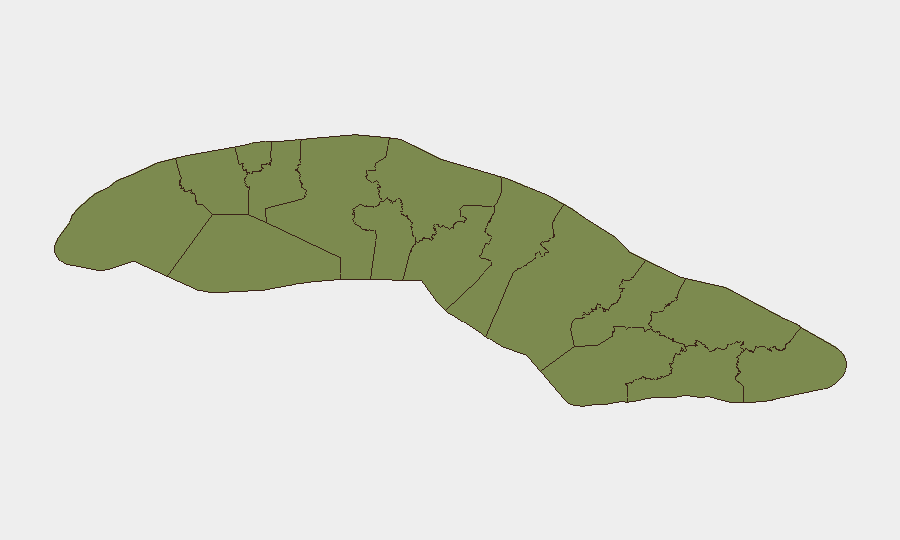
Situation Summary
Cuba is experiencing an acute infrastructure crisis and widespread civil unrest spanning 24–26 July 2026, with cascading blackouts exceeding 30 hours in some areas triggering coordinated cacerolazo protests across multiple provinces. Security forces, including special operations units ("boinas negras"), have been deployed to contain demonstrations in at least seven municipalities, indicating government escalation in response to simultaneous antigovernment rallies and service-sector grievances. The national power grid deficit has reached approximately 2,000 MW, affecting travel, communications, water supply, and economic activity island-wide. The concurrent hunger strikes by journalists and activists, combined with government rejection statements and presidential public remarks, suggest deepening polarization and potential for sustained unrest.
Key Developments
- Havana (Playa, Barbosa, La Genética, Centro Habana, Boyeros) – night of 24–25 July 2026: Multiple neighborhood-level cacerolazos reported across western Havana in response to blackouts exceeding 30 hours; road blockages and police/security force presence documented; at least one truck-load of agents deployed to Playa to disperse demonstrators.
- Artemisa (Candelaria, Godínez barrio) – evening of 24 July 2026: Special forces ("boinas negras") deployed to contain blackout-related protests; armored vehicles and heavily armed personnel documented via social media and independent media sources.
- Santiago de Cuba and Holguín (Santa Bárbara, Contramaestre, Antilla) – night of 24–25 July 2026: Widespread antigovernment protests reported; Antilla saw hundreds march from Reparto Flora to police station; heavy police and military deployment followed; street blockages and chanting documented across multiple municipalities.
- National power grid – 24–25 July 2026: Unión Eléctrica confirmed sustained generation deficit of ~2,000 MW; rolling blackouts across western and central provinces directly triggering protest wave; infrastructure failure affecting water, fuel distribution, and transportation networks.
- Journalist and activist hunger strikes – 25 July 2026: Active hunger strikes by imprisoned journalist and activist reported, concurrent with cacerolazo wave and government rejection statements, signaling escalation in political dissent.
- Presidential public statement and government demonstration rally – 26 July 2026: Government organized counter-rally; president issued public statement; indicates official attempt to control narrative and mobilize counter-messaging during period of high civil unrest.
Highest-Risk Areas
Havana dominates the risk profile (composite score 33.9) due to population density, critical infrastructure concentration, and multiple simultaneous protest zones across Playa, Centro Habana, and Boyeros. Santiago de Cuba (16.1) and Camagüey (13.3) follow as secondary flashpoints, with reports of sustained antigovernment mobilization and military deployments. Artemisa (9.2) has moved into elevated risk following armed special-forces intervention in Godínez. The concentration of incidents in western and central provinces reflects both the severity of the blackout crisis and the organizational capacity of activist networks to mobilize rapid, coordinated responses.
How GeoBit Would Assist
Security teams with personnel or assets in Cuba should employ AOI Monitoring & Early Warning to track neighborhood-level protest activity in Havana, Santiago de Cuba, and Artemisa in real time; OSINT fusion (X/Twitter, Telegram, and independent media) to cross-check protest locations, police deployments, and infrastructure status; and Routing & Network Analysis to identify alternative transportation corridors bypassing blackout zones and protest areas. Conflict & Military tracking of special-forces mobilization patterns and Intel Sweep of government communications provide early warning of escalation or containment operations.
7-Day Outlook
Blackout conditions are forecast to persist through the near term, sustaining the infrastructure grievance driving current unrest. Police and military deployments are likely to remain elevated, with potential for additional targeted crackdowns if protest organization spreads to critical infrastructure or provincial capitals beyond current hotspots. Risk of secondary incidents (fuel shortages, water system failures, transport disruptions) remains high and could compound civil unrest or restrict movement of corporate personnel and supply chains.
Highest-Risk Areas — Ranked
| # | State / Region | Risk |
|---|---|---|
| 1 | Havana | 33.9 |
| 2 | Santiago de Cuba | 16.1 |
| 3 | Camagüey | 13.3 |
| 4 | Artemisa | 9.2 |
| 5 | Matanzas | 7.4 |
| 6 | Sancti Spiritus | 7.4 |
| 7 | Cienfuegos | 5 |
| 8 | Guantánamo | 4.2 |
| 9 | Pinar del Rio | 3.8 |
| 10 | Mayabeque | 3.8 |
| 11 | Villa Clara | 3.8 |
| 12 | Isle of Youth | 3.8 |
Sources
Previous Daily Briefs
A new Cuba brief is written every day — each with its own risk map and downloadable CSV. Here's the last week; use the calendar to go further back.
📅 Browse every day by calendar →
Highlighted days have a brief. Tap a day for that day's map & analysis, or “csv” for that day's dataset ($5).
Atlas — our AI intelligence desk — emails them this snapshot personally. Nothing else, no list.