Situation Summary
Equatorial Guinea remains a low-threat environment at the national level (global rank #137, composite score 11), with no discrete security incidents affecting the general population or business operations during the reporting period. However, a concentrated pattern of escalating abuse and arbitrary detention of U.S. deportees held at Hotel Bamy in Malabo has intensified over the past week, marked by armed confrontations, phone confiscations, incommunicado detention, and reprisal arrests. While geographically contained to a single facility, the pattern signals dysfunction in rule-of-law enforcement and poses acute duty-of-care risks for any organization with exposure to migrant populations or deportation processes in Equatorial Guinea.
Key Developments
- Malabo, Hotel Bamy (2026-09-08): Armed National Police officers pointed semi-automatic assault rifles at detained U.S. deportees during a dispute over mobile phone access; incident documented by Reuters and multiple eyewitnesses.
- Malabo, Hotel Bamy (2026-09-09): International media coverage confirmed approximately 31 deportees held at the hotel, with widespread complaints of inadequate medical care, denial of legal assistance, and severe psychological distress.
- Malabo, Hotel Bamy (2026-09-11): Egyptian deportee Ahmed Soliman arrested and removed from the facility following his public criticism of security-force conduct and media sharing of detention incident videos; held incommunicado.
- Malabo, Hotel Bamy (2026-09-11): Security forces conducted room searches and confiscated mobile phones from detainees; human-rights monitors report beatings occurred during searches, effectively rendering detainees incommunicado from legal counsel and family.
- Malabo, Hotel Bamy (2026-09-11): Coalition of U.S.-based human-rights organizations and lawyers issued public alert describing "arbitrary arrest, escalating violence and loss of communication," citing three escalating incidents within one week and marking rapid deterioration in detainee safety.
- Malabo, Hotel Bamy (2026-09-11): Media reports confirmed police officer threat to "shoot" unarmed migrants; Soliman's arrest characterized as reprisal for journalist cooperation and evidence-sharing.
- Malabo, Hotel Bamy (2026-09-08–09, repeated 2026-09-14): Pattern of repeated phone seizures documented; Brazilian deportee subjected to armed police confiscation of mobile phone in second round of confiscations within days.
- Malabo, Hotel Bamy (2026-09-11–14): Deportees including Soliman remain incommunicado; lawyers and international coalitions unable to confirm location or condition; Equatorial Guinea government and embassy unresponsive to inquiries.
Highest-Risk Areas
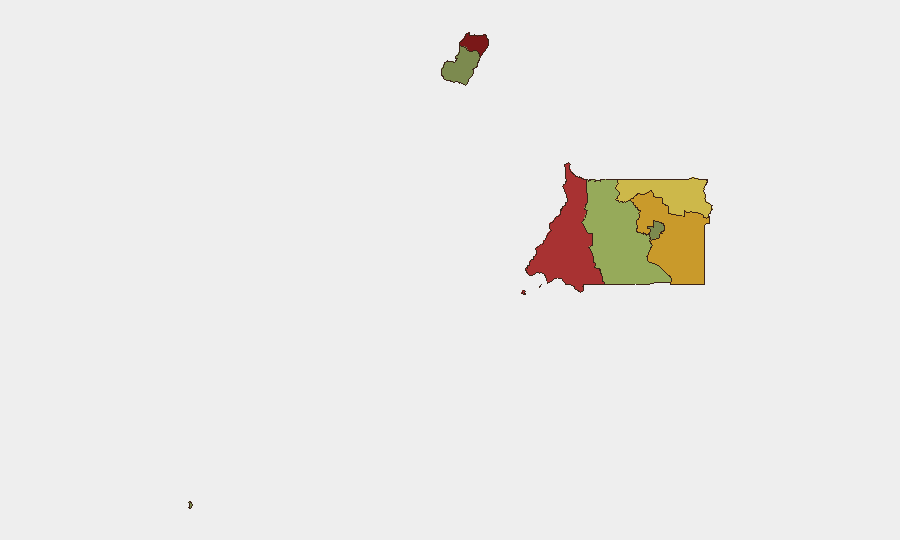
Bioko Norte (risk 85) and Litoral Province (risk 78) drive the composite threat ranking, with Malabo—capital and commercial hub on Bioko Norte—accounting for all documented incidents this week. Risk elevation in these coastal and urban zones reflects governance and rule-of-law vulnerabilities, capacity constraints in security-force oversight, and demonstrable patterns of arbitrary detention and violence against vulnerable populations. Centro Sur, Wele-Nzas, and Kié-Ntem provinces carry moderate-to-elevated scores, likely reflecting border permeability and limited state capacity, though no incidents were reported in these regions during the reporting period.
How GeoBit Would Assist
Security teams should employ AOI Monitoring & Early Warning with persistent watch on Malabo detention facilities and police-related activity, coupled with multi-language OSINT & Telegram/X monitoring to detect further detainee-related incidents or government statements. Entity extraction and network analysis can map relationships between police units, detention sites, and official actors involved, enabling targeted tracking of repeat actors and escalation patterns. Sentiment and temporal analysis on migrant-related sources will signal deterioration or de-escalation in real time.
7-Day Outlook
Incident frequency and severity suggest continued risk of reprisal against detainees who engage media or legal advocacy; communication blackout and incommunicado detention will persist absent international pressure or policy intervention. No broad civil unrest or infrastructure disruption is anticipated, but duty-of-care exposure for organizations with migrant or detained-person populations remains acute and elevated.
Highest-Risk Areas — Ranked
| # | State / Region | Risk |
|---|---|---|
| 1 | Bioko Norte | 85 |
| 2 | Litoral Province | 78 |
| 3 | Wele-Nzas Province | 72 |
| 4 | Kié-Ntem Province | 68 |
| 5 | Centro Sur Province | 45 |
| 6 | Bioko Sur | 38 |
| 7 | Djibloho | 15 |
| 8 | Annobón Province | 8 |
Sources
Previous Weekly Briefs
A new Equatorial Guinea brief is written every Monday, covering the week — each with its own risk map and downloadable CSV. Use the calendar to go further back.
- September 8, 2026
- September 1, 2026
- August 29, 2026
- August 26, 2026
- August 24, 2026
- August 22, 2026
- August 20, 2026
📅 Browse past briefs by calendar →
Highlighted days have a brief. Tap a day for that day's map & analysis, or “csv” for that day's dataset ($5).
Atlas — our AI intelligence desk — emails them this snapshot personally. Nothing else, no list.