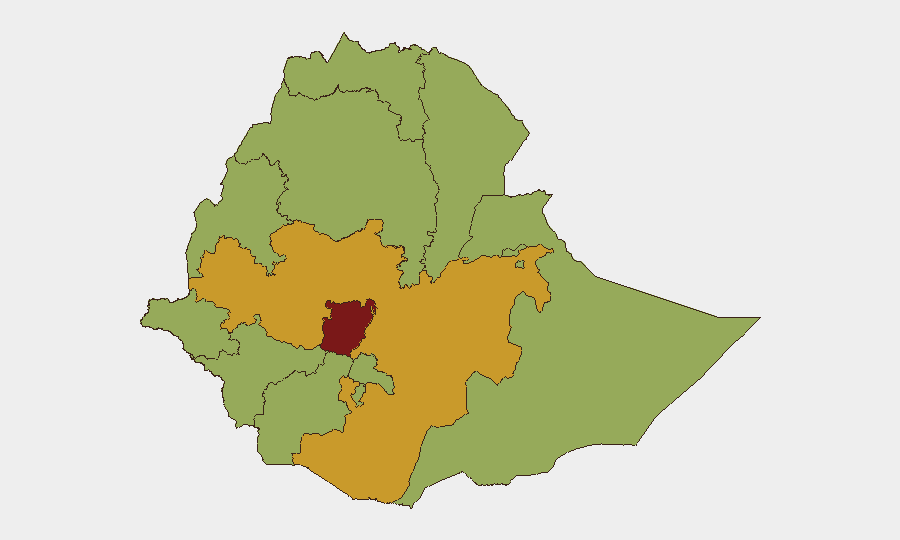
Situation Summary
Ethiopia remains in a state of acute political and military fragmentation, with the civil conflict between federal forces and the TPLF unresolved and active recruitment pressures mounting in Tigray as both sides prepare for renewed confrontation. Cross-border violence involving Sudan and allied militias has intensified in Benishangul-Gumuz, destroying critical infrastructure and killing civilians in border zones. Intra-ruling-party tensions over constitutional reform and regional autonomy are escalating political instability in Oromia and Amhara, while documented extrajudicial killings and forced conscription are driving acute humanitarian risk across northern and central regions.
Key Developments
- Kurmuk area, Benishangul-Gumuz Region (c. July 20–21): A civilian bulldozer operator employed by Kurmuk Gold Mining was killed when his machine was struck by suspected RPG fire after crossing the Ethiopia–Sudan border during road work, signaling heightened risk to civilian workers and mining operations in this volatile cross-border corridor.
- Kumruk Bridge, B40 highway, Ethiopia–Sudan border (reported July 17, impacts ongoing through last 48h): Heavy artillery destroyed the strategic B40 crossing, severing critical trade and logistics routes between Benishangul-Gumuz and Sudan; the attack is attributed to Sudanese federal forces under Gen. Al-Burhan and allied militias, with cascading disruption to cross-border commerce and movement.
- Addis Ababa (last 24–48h): TPLF spokesperson Michael Asgedom publicly urged Tigrayans to boycott an upcoming federal rally, characterizing it as a government conspiracy to mobilize support for renewed conflict, indicating elevated political polarization and risk of mass protest activity in the capital.
- Adama, Oromia Region (last 24–48h): Regional president Shimelis Abdisa issued a stern public warning against forces seeking to "destroy Oromia," interpreted as signaling deep ideological ruptures within the ruling Prosperity Party over constitutional changes and heightening intra-party conflict risk.
- Tigray Region (ongoing, July 2026): Human Rights Watch and local sources document systematic forced recruitment and abductions of civilians and children (ages 15+) by Tigray Defense Forces and regional authorities through night-time house sweeps and workplace raids, indicating preparation for large-scale conflict and acute civilian-protection risk.
- East Gojjam & West Gojjam Zones, Amhara Region (July 15–17, reported last 48h): The Amhara Association of America documents deadly attacks, extrajudicial killings, and artillery shelling attributed to federal/Prosperity Party forces across multiple rural districts, underscoring acute security and travel risk in Amhara's rural zones.
- Asmara / Northern Ethiopia–Sudan–Eritrea border (last 24–48h): Sudan's Gen. Al-Burhan made a surprise diplomatic visit to Eritrean President Isaias Afwerki, signaling intensified regional military coordination around disputed border zones and elevating strategic risk for northern Ethiopia.
Highest-Risk Areas
Central Ethiopia Regional State carries the highest composite risk score (87.5), driven by proximity to federal capital instability, intra-party factional tensions, and spillover from Oromia-Amhara conflict dynamics. Oromia Region (72.5) faces acute risk from constitutional reform fractures within the ruling coalition and documented security-force abuses. Benishangul-Gumuz (57.5) is now the operational epicenter of Sudan–Ethiopia cross-border violence, with destroyed infrastructure and civilian casualties. Tigray (57.5) and Amhara (57.5) remain zones of active conflict preparation, forced recruitment, and documented extrajudicial violence, with civilians caught in escalating mobilization.
How GeoBit Would Assist
Security teams should deploy AOI Monitoring & Early Warning on Benishangul-Gumuz border zones, Oromia political hotspots, and Tigray recruitment areas to detect imminent escalation. Conflict & Military mapping (force structure, weapons capability, battle-line tracking) and Network & Actor Analysis (tracking TPLF, OPP, and federal military command coordination) enable situational awareness of mobilization timelines. Routing & Network Analysis provides alternative logistics and personnel movement corridors around destroyed infrastructure (e.g., B40 highway) and active conflict zones.
7-Day Outlook
Expect continued cross-border raids and artillery exchanges in Benishangul-Gumuz, with further damage to trade infrastructure. Political rallies and counter-mobilization in Addis Ababa and Oromia will likely generate mass protest risk and potential security-force responses. Tigray recruitment operations will intensify as conflict preparation accelerates, raising civilian displacement and humanitarian risk across northern zones.
Highest-Risk Areas — Ranked
| # | State / Region | Risk |
|---|---|---|
| 1 | Central Ethiopia Regional State | 87.5 |
| 2 | Oromia Region | 72.5 |
| 3 | Tigray | 57.5 |
| 4 | Amhara Region | 57.5 |
| 5 | Afar Region | 57.5 |
| 6 | Benishangul-Gumuz Region | 57.5 |
| 7 | Somali Region | 57.5 |
| 8 | Gambela Region | 57.5 |
| 9 | South West Ethiopia Peoples | 57.5 |
| 10 | Addis Ababa | 57.5 |
| 11 | South Ethiopia Regional State | 57.5 |
| 12 | Sidama | 57.5 |
Sources
Previous Daily Briefs
A new Ethiopia brief is written every day — each with its own risk map and downloadable CSV. Here's the last week; use the calendar to go further back.
📅 Browse every day by calendar →
Highlighted days have a brief. Tap a day for that day's map & analysis, or “csv” for that day's dataset ($5).
Atlas — our AI intelligence desk — emails them this snapshot personally. Nothing else, no list.