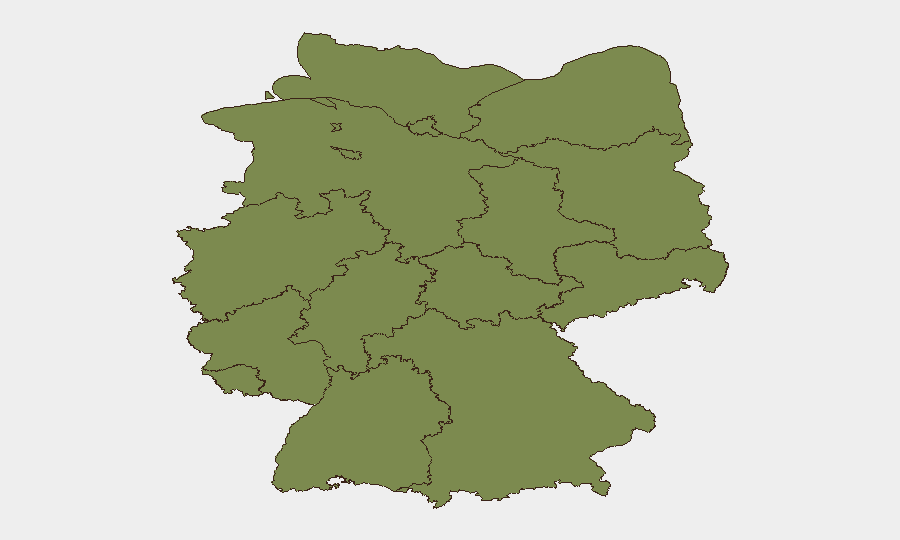
Situation Summary
Germany remains at relatively low composite threat (rank 122 globally, score 6), but a confirmed Islamist terrorist attack on Berlin Pride (July 25) and the fatal shooting of the suspect (July 30) have triggered a national security posture shift, with expanded monitoring of large gatherings and public events now underway. Berlin's risk score (31.5) dominates the country's profile, reflecting concentrated extremist and protest activity; Hamburg and Bavaria follow at significantly lower risk. The near-term trajectory depends on whether the foiled Pride attack stabilizes public confidence or catalyzes secondary incidents or large counter-protest disruptions.
Key Developments
- Berlin, Spandau – July 30, 2026: Berlin police fatally shot 21-year-old Abdul Ballout during a counter-terror operation at an allotment garden complex after he attacked officers with a bladed weapon. Ballout was the fugitive suspect in the July 25 van-ramming at Christopher Street Day (Berlin Pride) that killed one person and injured 20–29; authorities confirmed Islamic State-inspired motivation and declared no ongoing active threat, though security operations continue.
- Berlin Central (Tiergarten / Brandenburg Gate) – July 25–30, 2026: Security services maintain heightened alert posture around major tourist and political landmarks following confirmation that the Pride van-ramming was an Islamist terrorist incident; visible police presence, vehicle checks, and crowd controls expected to persist at central-city venues and transport hubs.
- Germany-wide – July 30–31, 2026: Federal interior ministry and regional authorities announced expanded security measures for large gatherings (Pride events, political rallies, mass transit) and a review of extremist monitoring and detention protocols; uniformed and plainclothes police reinforcements now visible at major public events and transport nodes.
- Frankfurt am Main Airport – July 30, 2026: Boeing 787 nose landing gear collapsed during servicing, causing aircraft to drop and triggering emergency response and temporary apron closure; no security or terrorism link confirmed; occupational safety and operational disruption remain local concerns.
- Stade, Lower Saxony – July 30, 2026: Multiple fatalities in a shooting at or near a youth welfare facility; police arrested two suspects and classified the incident as a family-related homicide rather than random or terror-motivated attack; no broader public-security impact beyond immediate area.
- Erfurt, Thuringia – July 30–31, 2026: AfD party congress drew large counter-protests with significant police deployment; thousands of demonstrators, occasional scuffles, road closures, and crowd-control operations ongoing; no major violence reported to date.
Highest-Risk Areas
Berlin's risk score (31.5) is a stark outlier, driven by the active Islamist extremism cluster (Pride attack, ongoing counter-terror operations, protest activity) and heightened police/security presence in central districts. Hamburg (5.0) and Bavaria (2.4) trail far behind, indicating that terrorism and mass-gathering risk are concentrated in the capital. Erfurt's current protest activity around the AfD congress adds temporary political-stability risk to Thuringia but does not approach Berlin's baseline profile.
How GeoBit Would Assist
Operational teams should deploy Intel Sweep and multi-language OSINT (X/Twitter, Telegram, local news feeds) to track emerging extremist narratives and protest scheduling in real time. Early Warning & Prediction and AOI Monitoring of central Berlin, transport hubs, and planned mass events enable duty-of-care teams to anticipate police cordons, travel delays, and secondary incident risk. Network & Actor Analysis of extremist recruitment and radicalization pathways post-attack inform longer-term exposure assessment.
7-Day Outlook
The confirmed death of the primary suspect and official "no ongoing threat" assessment should reduce acute attack risk in the immediate term, but heightened police presence and security protocols at public events will persist for weeks. Political turbulence around AfD activity and pro/anti-immigration sentiment may sustain protest-related disruptions in eastern states; Berlin remains the primary focus for both counter-terror operations and demonstration management.
Highest-Risk Areas — Ranked
| # | State / Region | Risk |
|---|---|---|
| 1 | Berlin | 31.5 |
| 2 | Hamburg | 5 |
| 3 | Bavaria | 2.4 |
| 4 | Lower Saxony | 1.9 |
| 5 | Saxony | 1.9 |
| 6 | Baden-Württemberg | 1.7 |
| 7 | Schleswig-Holstein | 1.7 |
| 8 | Hesse | 1.7 |
| 9 | Rhineland-Palatinate | 1.5 |
| 10 | Thuringia | 1.5 |
| 11 | Mecklenburg-Vorpommern | 1.5 |
| 12 | Saxony-Anhalt | 1.5 |
Sources
Previous Daily Briefs
A new Germany brief is written every day — each with its own risk map and downloadable CSV. Here's the last week; use the calendar to go further back.
📅 Browse every day by calendar →
Highlighted days have a brief. Tap a day for that day's map & analysis, or “csv” for that day's dataset ($5).
Atlas — our AI intelligence desk — emails them this snapshot personally. Nothing else, no list.